First in Falmouth

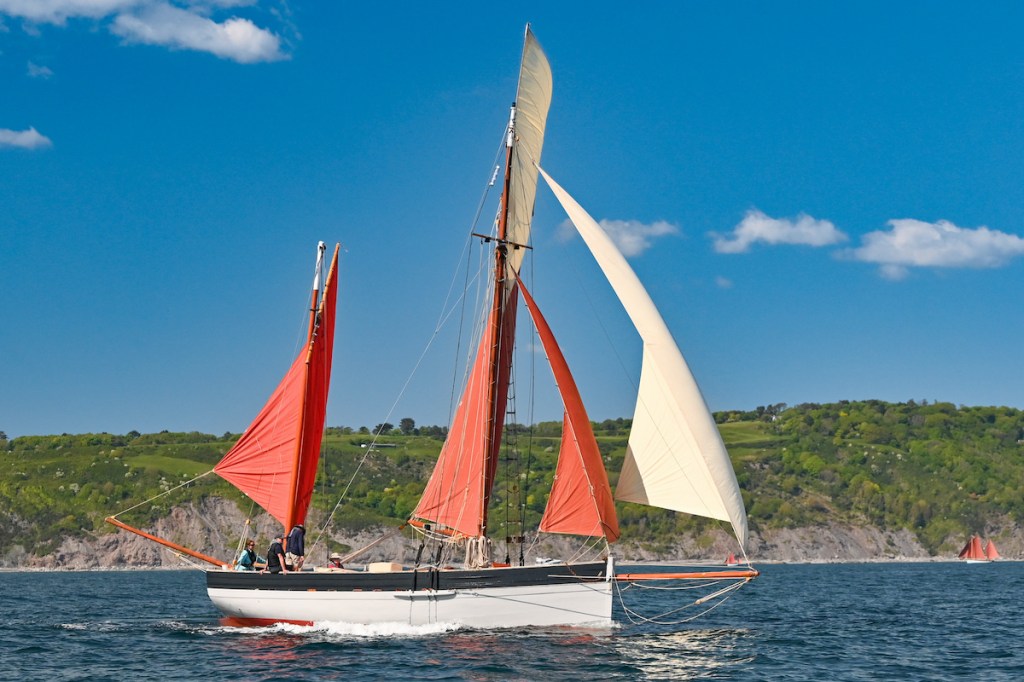
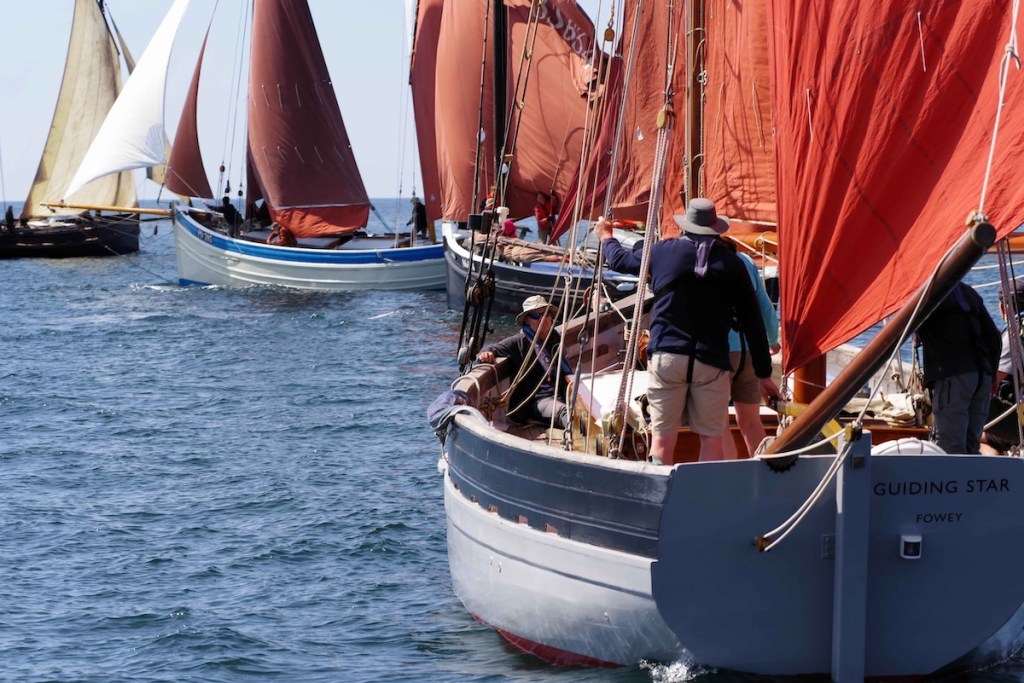
Guiding Star sailed beautifully in light airs at the Falmouth Classics in June. We won the Lugger class, admittedly against weakened competition. Our Boys didn’t come because Phil and Liz were sailing their new boat Alice back from Antigua, Barnabas had been crippled by having to chop five feet off their mainmast because of rot, and Grayhound was not sailing as fast under her new owners as she used to under Marcus and Freya.
Pirates ahoy

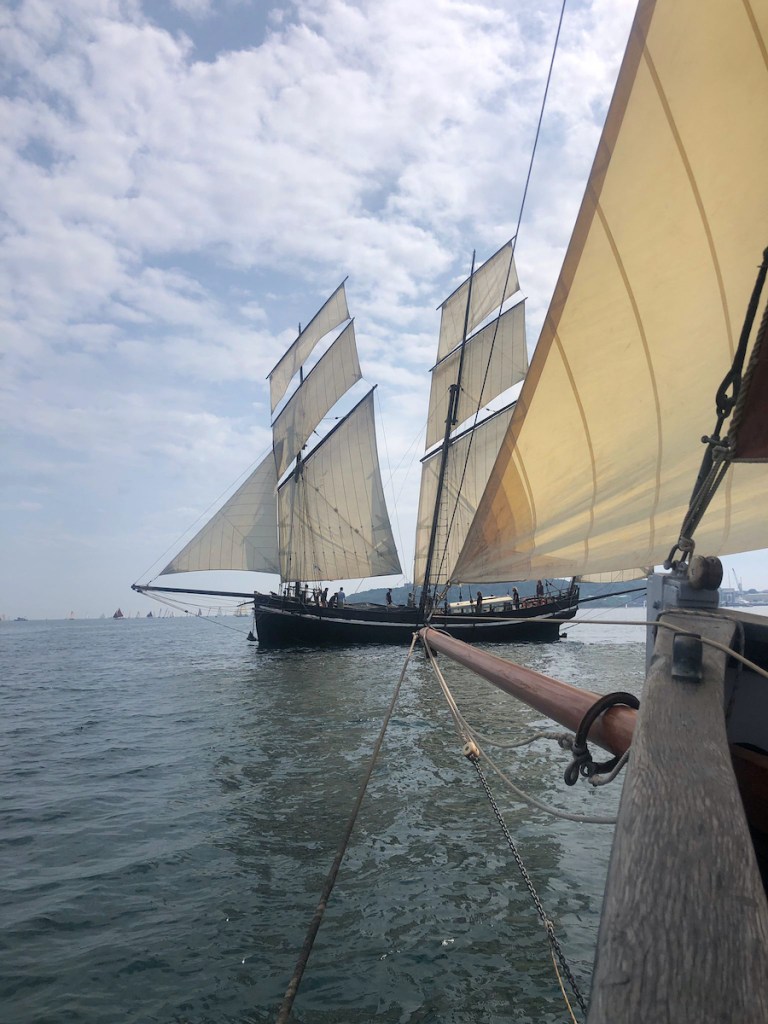
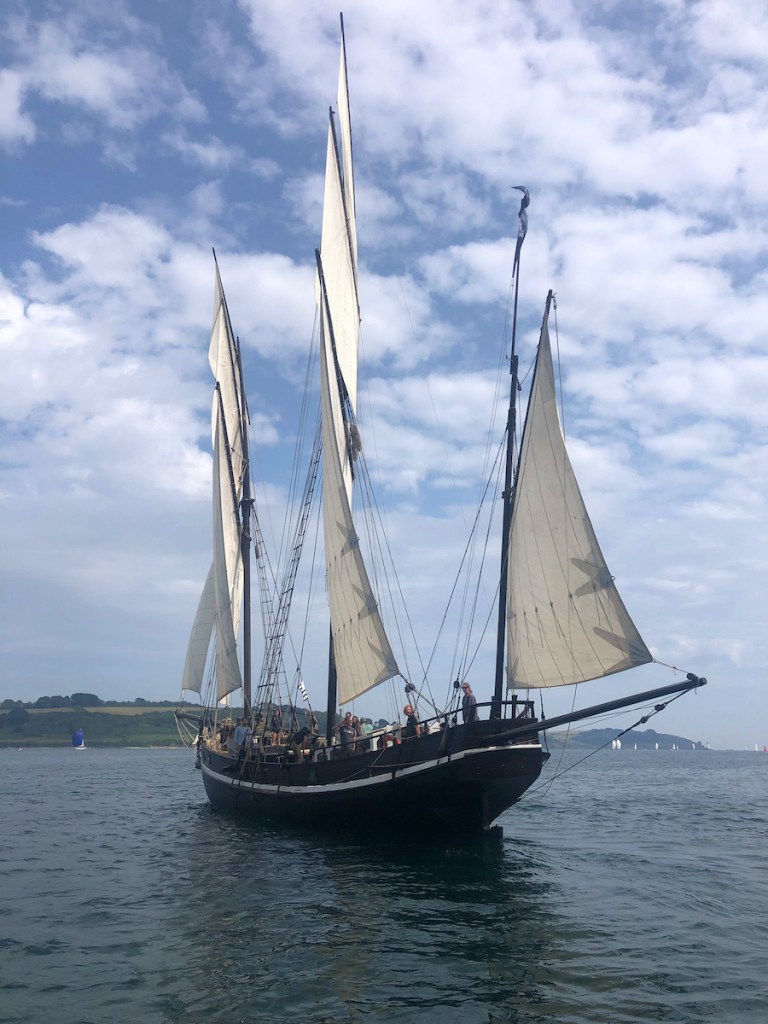
Our finest moment came shortly after the start of the first race, when Grayhound tacked and tried to overtake us from windward. She’s 63’6″ without her spars and 60 tonnes, so nearly twice as long and four times as heavy as Guiding Star. The last time she tried to bulldoze us at Falmouth a few years ago, we decided it was safer not to insist on our rights under the rules (the windward boat gives way) and meekly turned away.

This time we held our course, sailing as close as we could to what little wind there was, forcing Grayhound to sail even closer to the wind so that she lost speed. After a tense few minutes when the finely-costumed pirates on Grayhound’s deck seemed almost on top of us, they gave up and tacked away.
Pirates tack away

In fairness, there was so little wind that a vessel of Grayhound’s weight was doing well to move at all. We left them and Barnabas far behind but still took two hours to reach the windward mark under St Anthony Head, where the race was declared over.

We came first in all three races, each of myself, Peter and Chris helming one and Bart doing sterling work on the sheets.

‘Here’s a rum and shrub for the shantyman’

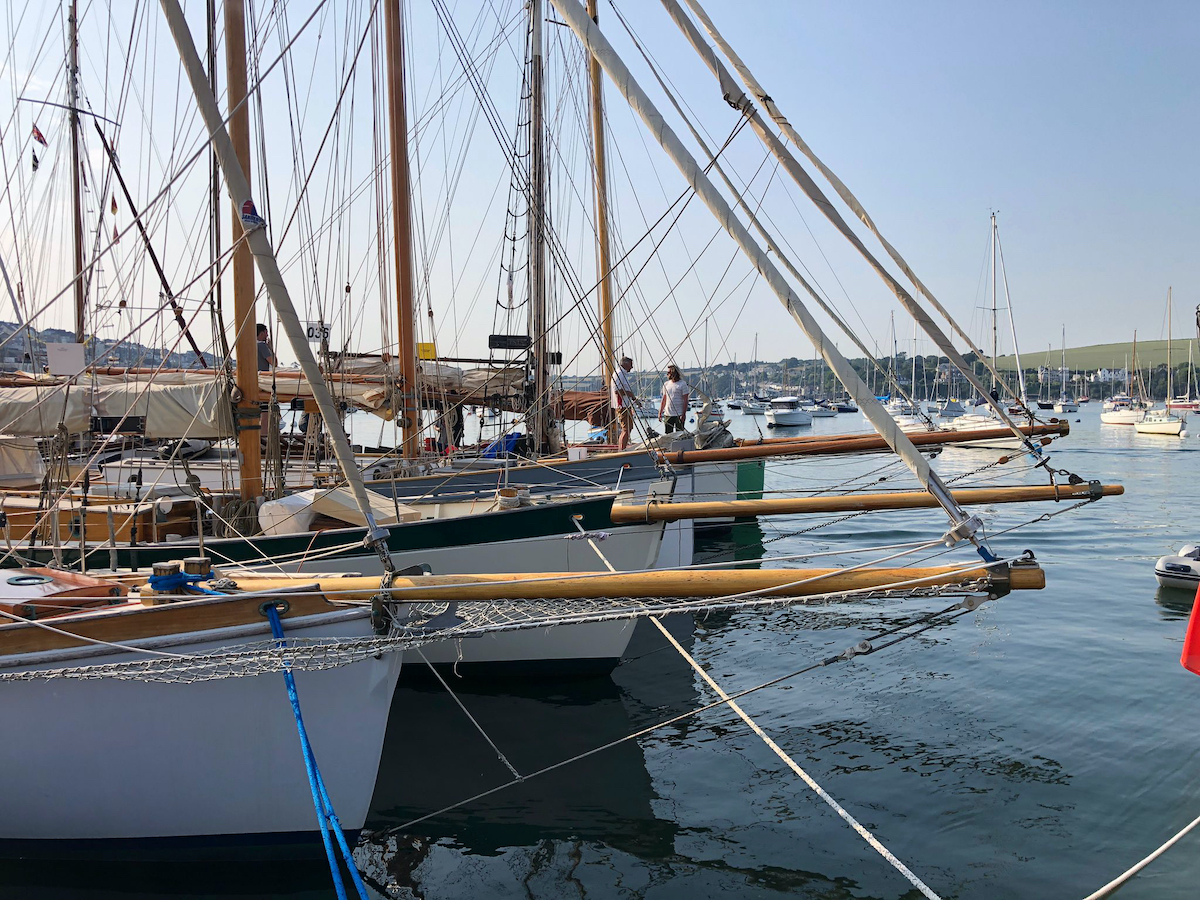
Guiding Star had a fine berth at the corner of the two outside pontoons in Falmouth Haven and it was fun to be chosen as the stage for the Rum and Shrub Shantymen. Shrub is a strong-tasting mixture of alcohol, sugar, citrus juice and spices which Cornwall’s eighteenth-century smugglers brewed to disguise the taste of rum which had gone salty from being stashed in leaky barrels under the sea. You can still buy a commercially-made shrub from Sevenstones or you can cook your own.

We just had time before the shantymen struck up to hang Guiding Star’s For Sale banner above their heads hoping to catch the eye of the crowds milling around with their beer and pasties on the pontoon.
A painting of our boats on the pontoon is now hanging on someone’s wall! Artist Clare Bowen painted two pictures and submitted them for the Royal Society of Marine Artists’ annual exhibition at the Mall Galleries in September. One was accepted and has already sold.
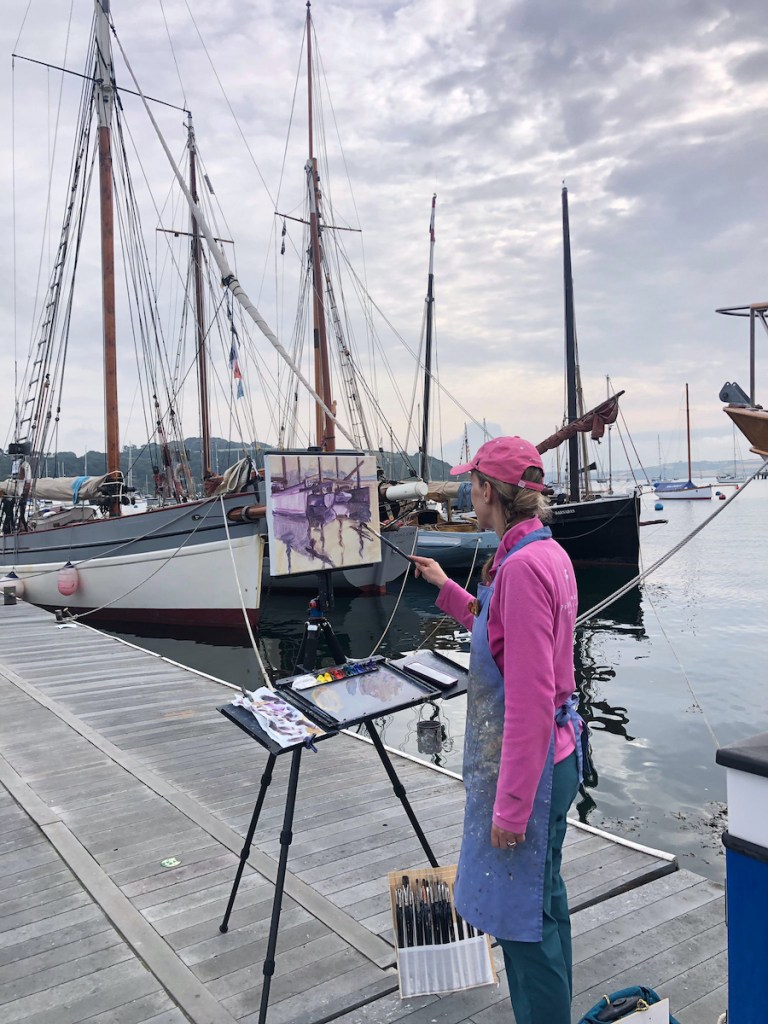
Clare Bowen painting our boats.

I spent Saturday and Sunday afternoons up the mast fitting a new VHF antenna, seizing the chance that Peter started his career as a radio operator and knew exactly what to solder onto what. But on Monday afternoon on the way to Fowey when we hoisted the topsail with the wind behind us, the yard risked banging against the antenna bracket so once back in Plymouth I went up again to move it to the other side of the mast.

We arrived in Fowey as we often seem to do right in the middle of evening racing by the Fowey River class dinghies (15′) and the bigger Troy class boats (18′). The coloured sails make a magnificent sight but there are a lot of boats to avoid when you’re picking up a buoy. It’s different if you’re Border Force on a mission: a RIB full of tough-looking types in black helmets and flak jackets roared straight through the race to board a dodgy-looking big yacht on the buoy next to us.
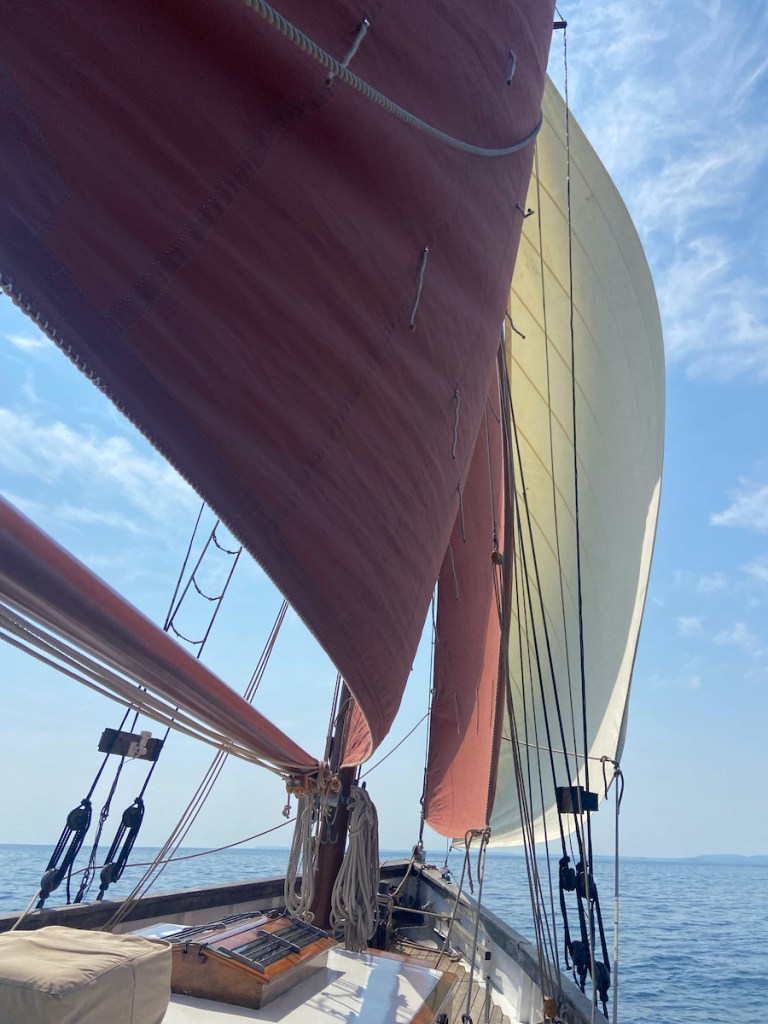
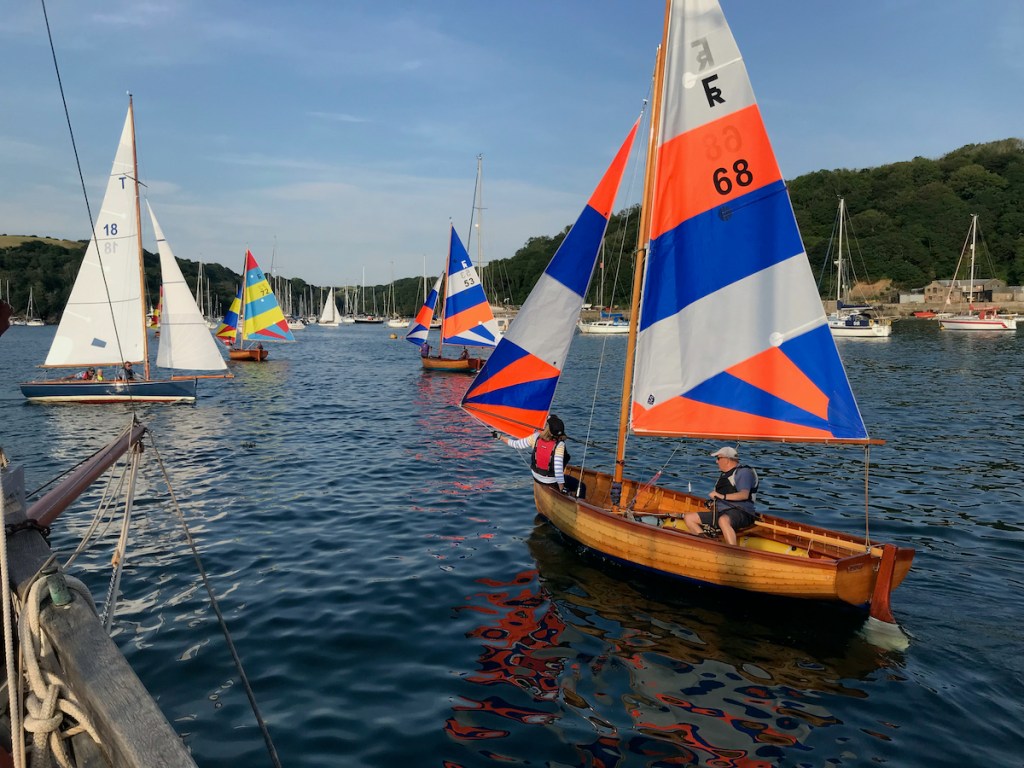
Many thanks indeed to Chris, Peter and Bart for a wonderful week’s sailing, and for several of these photographs.
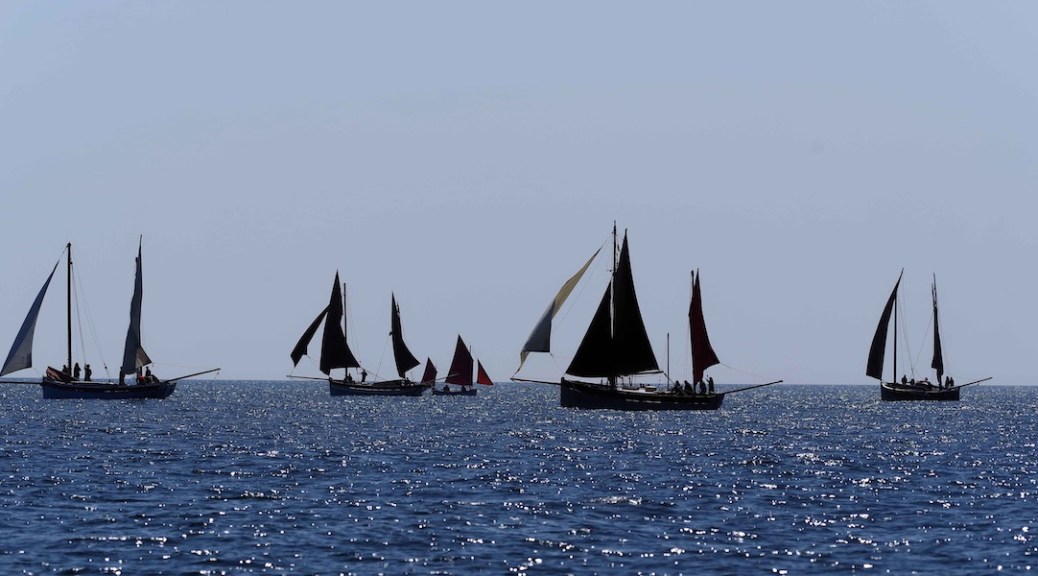
Best Endeavours in Looe

We were never going to beat the lifelong lugger sailors who lead the Looe Lugger Regatta fleet but we worked hard and came away with fourth place in all three races. The Committee awarded us a trophy for ‘Best Endeavours’ which means trying hard.

Messy start after a wind shift. Photo by Philippe Saudreau

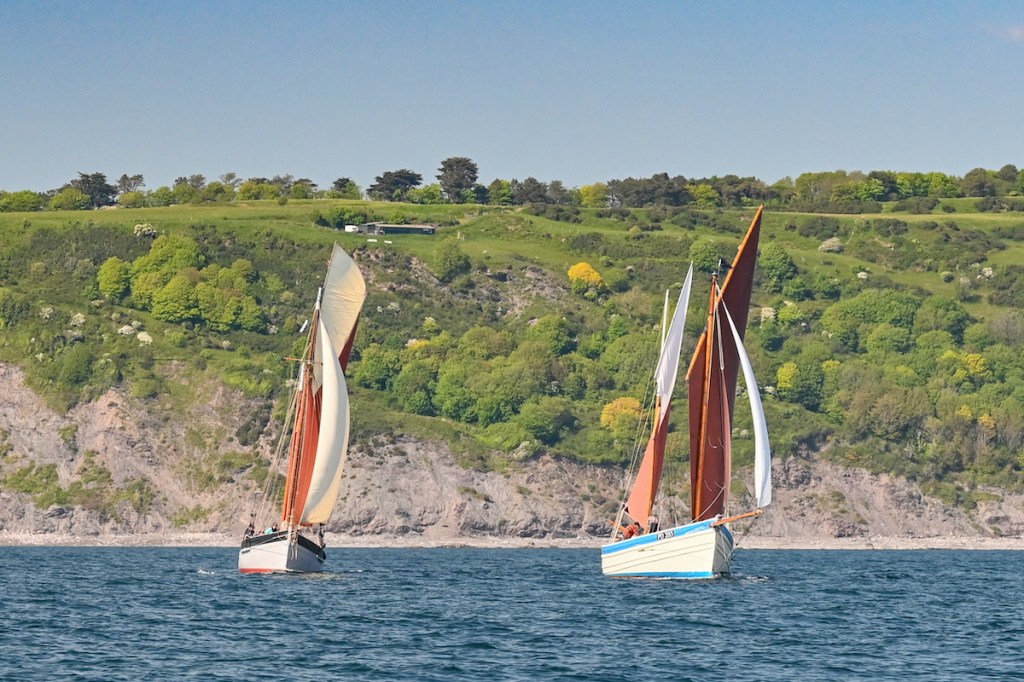
Guide Me won every race in May’s Regatta, of course, because she always does. She has no engine, so she’s a little lighter for the amount of sail she carries than other boats, and Jude and Jono Brickhill and their family and friends sail her superbly. Her hull shape is very similar to Guiding Star’s but she just seems to hiss through the water as if she’s blown by a wind of her own.

Nick Gates’s Ocean Pearl and Graham Butler’ s Reliance battled it out for second and third places. We managed to keep in touch with them except in one race when we mis-read the strength of the flood tide sweeping round Looe Bay. Ocean Pearl went far out to sea, Reliance went right inshore, and we went down the middle and lost ground to both of them. The two community association boats, Barnabas and Happy Return, brought up the rear.

Right to Left: Guiding Star, Guide Me and Ocean Pearl

The day before the Regatta when the boats had dried out against the West Looe wall, Nick and I spent some time splashing around in the mud comparing hulls. Nick quoted an old fishing skipper as saying that if the first ten feet of the boat were hollow, she’d be fast; if they were straight, she’d be all right; and if they were bluff, she’d be slow. Guide Me and Guiding Star are both slightly hollow. Ocean Pearl doesn’t look like she should sail fast at all and in fact she was built as a motor fishing boat but Nick converted her and she sails like a dream.

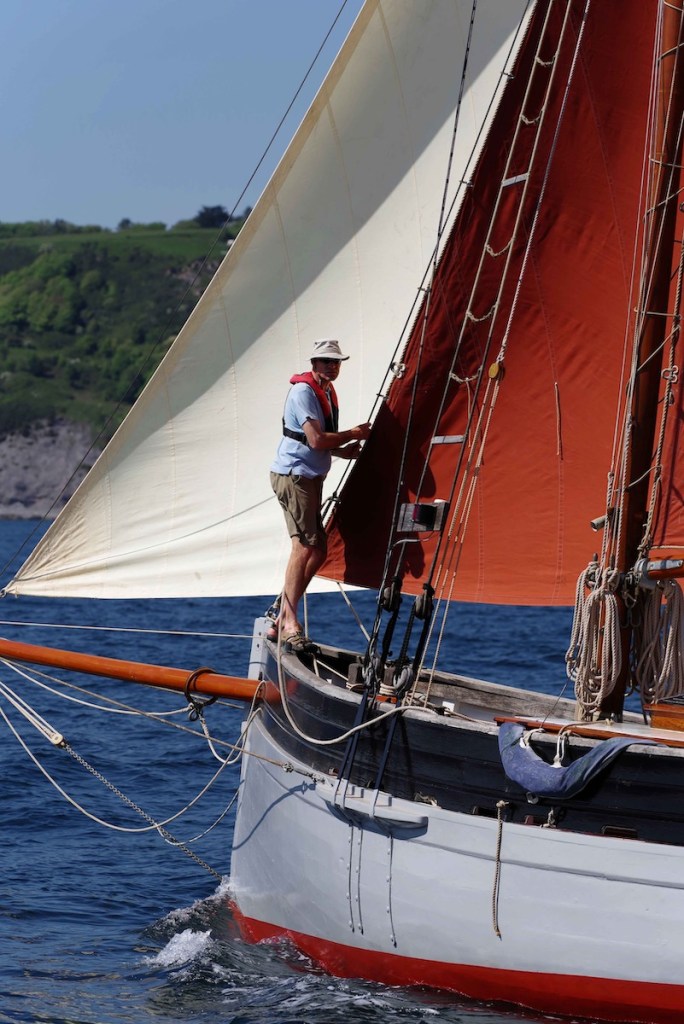
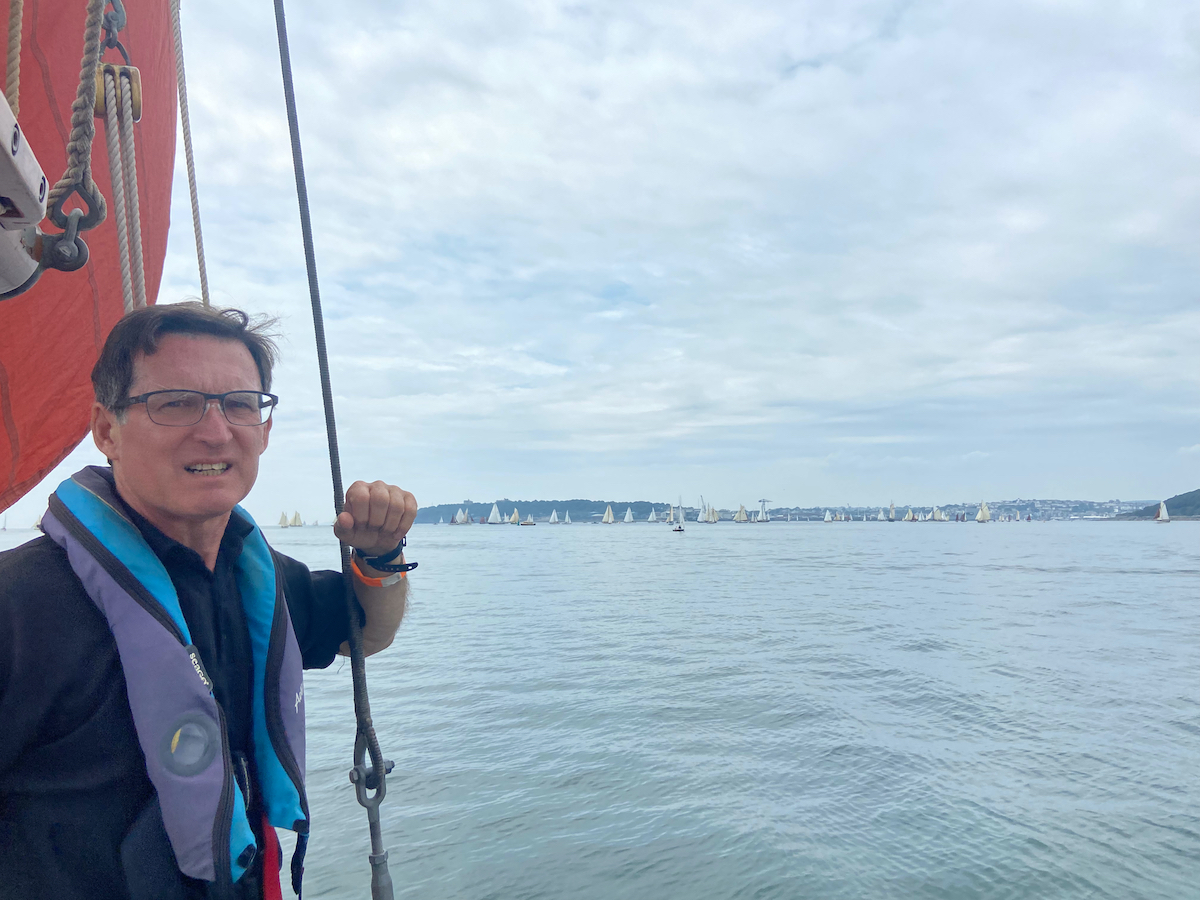
The cloudless, almost windless weather was perfect for sunbathing and ideal for the larger sail plan which Chris Rees designed four years ago to make Guiding Star faster in light airs. We had an experienced crew who knew the boat well so the new, bigger topsail set beautifully (or at least as well as it ever will with a bendy windsurfer mast as the yard) and the genoa pulled strongly into the wind as well as off. If the skipper had been brave enough to hoist the genoa before the beginning of each race rather than after, we would have gone even better.

Many many thanks to Chris and Paul, Adrian, and Francoise and Peter for a wonderful two days on the water.

Happy winners of the Best Endeavours cup
Happy winners. Chris, Francoise, Paul, Peter and Paul. Sadly Adrian had to leave before the prize giving

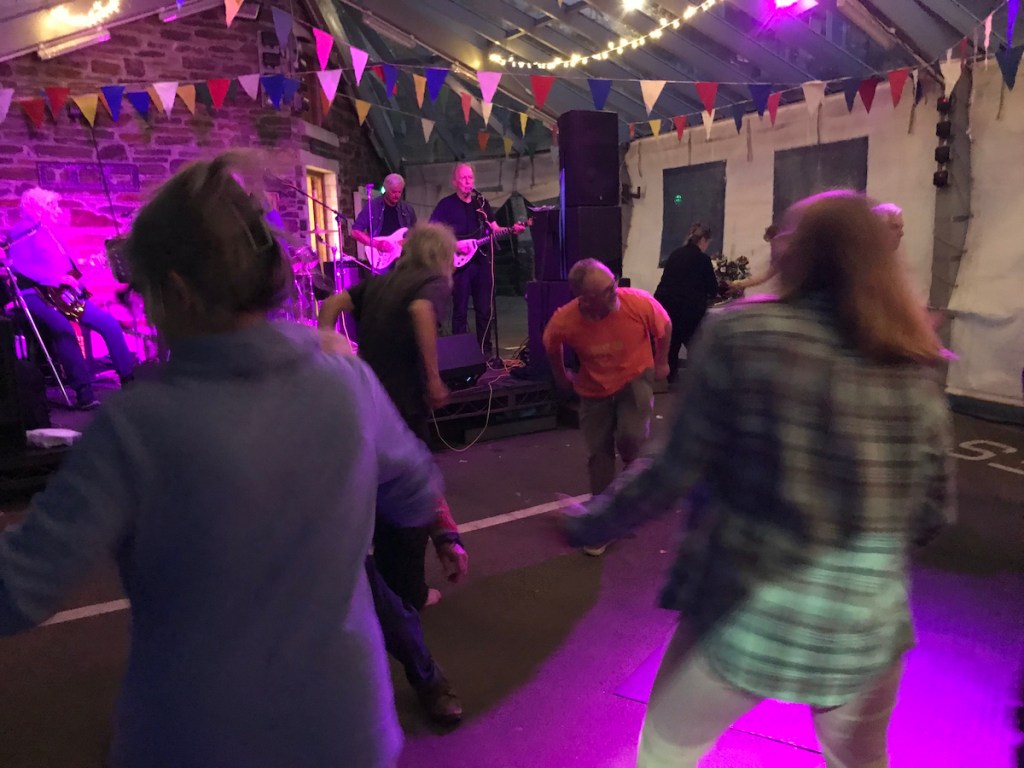
We had nearly as much fun on land. The Polperro Fishermen’s Choir were superb. They’ve been going since 1923 and are in a different league to many shanty groups. I was glad that the Regatta organisers decided they should stand on Ocean Pearl rather than Guiding Star, though, because there were quite a lot of them. Then we had rock till late in the West Looe Quayside Centre.

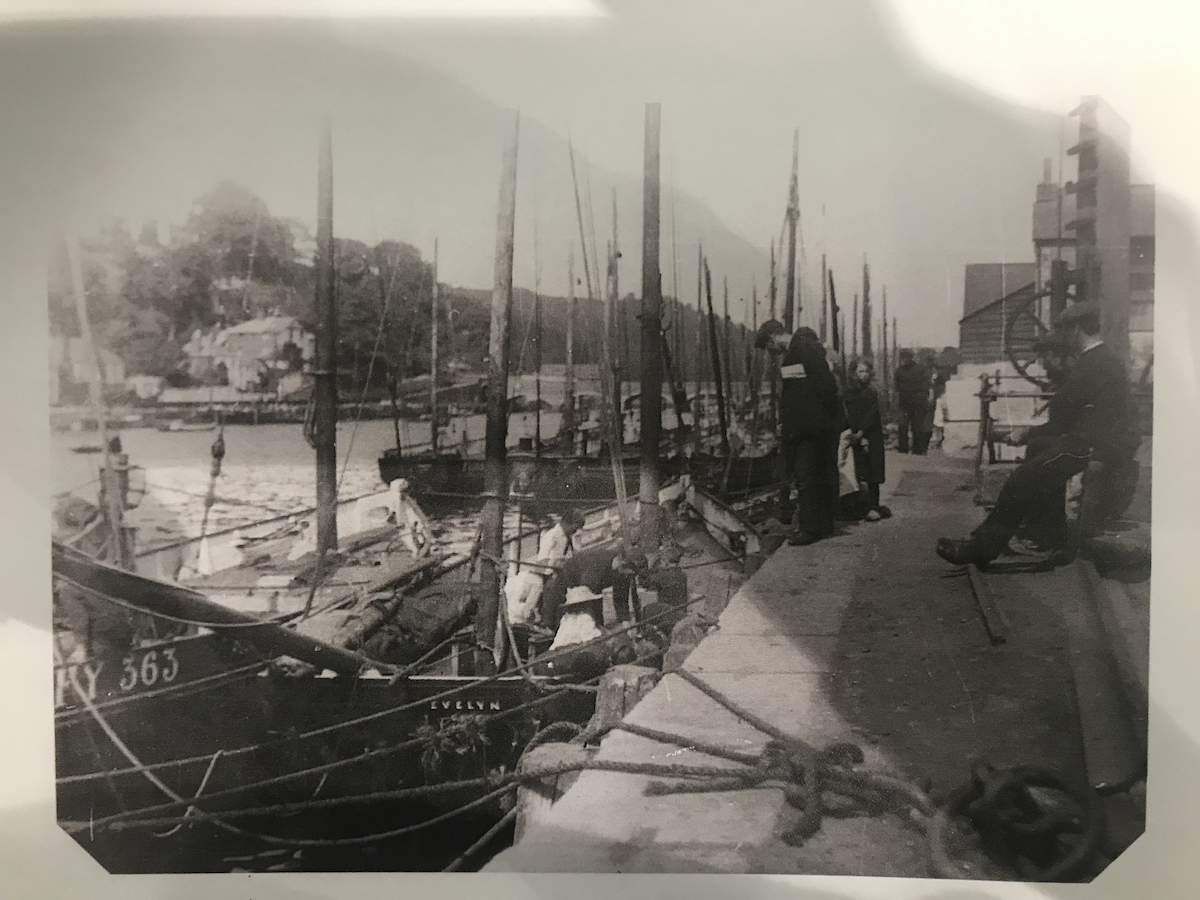
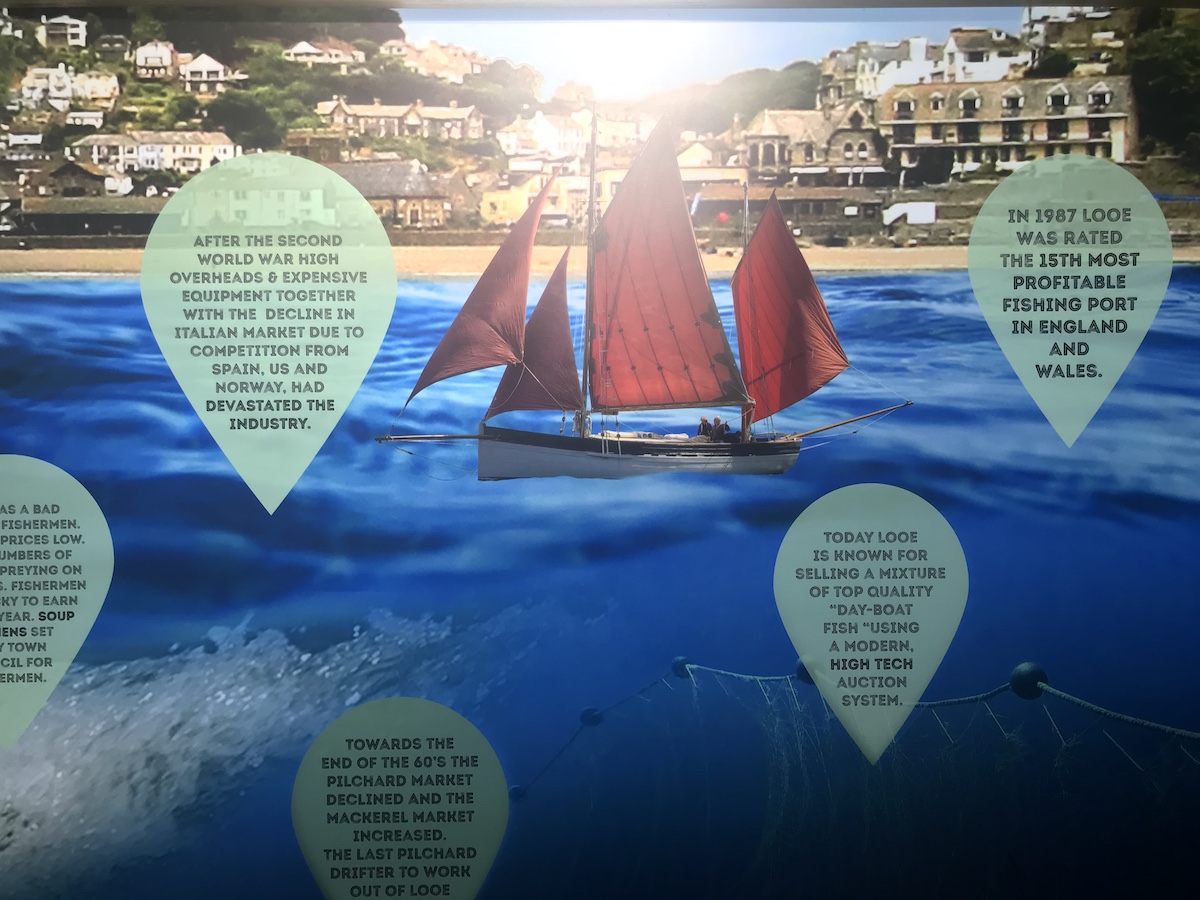
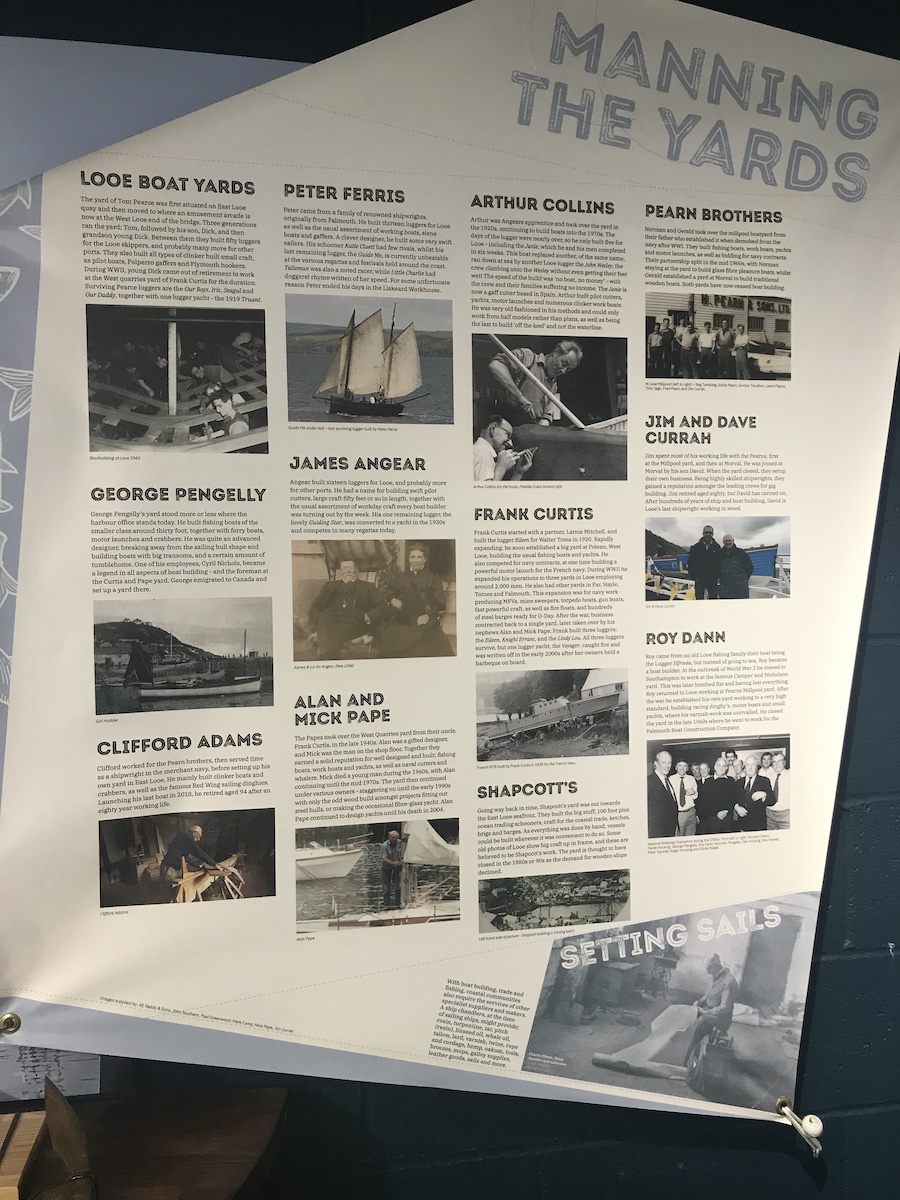
We had Friday free before the racing on Saturday and Sunday so I had the chance to see the Looe Harbour Heritage Centre in the old Sardine Factory a little further down West Looe Quay for the first time. I was excited to find two photos of Guiding Star and a paragraph on her designer and builder, Jim Angear. I learned much about Looe: that her fishermen fished off the Newfoundland Grand Banks in the 17th and 18th centuries; and that the port did big business exporting granite and copper and importing coal for mining engines. The Heritage Centre cafe also does extremely good tea and cake.

Fishing has always had booms and busts. Paul Greenwood, the co-founder of the Regatta and author of two very funny and informative memoirs of working on the old luggers, told me that one of the worst years was 1935 after Italy invaded Abysinnia and the League of Nations imposed trade sanctions, cutting off Looe’s exports of dried pilchards which used to be sent to Italy as pilgrim food.

“It caused a lot of poverty,” Paul said. “Five boats were sold in one day.” So it’s no surprise that Jim Soady sold Guiding Star out of fishing in 1936.