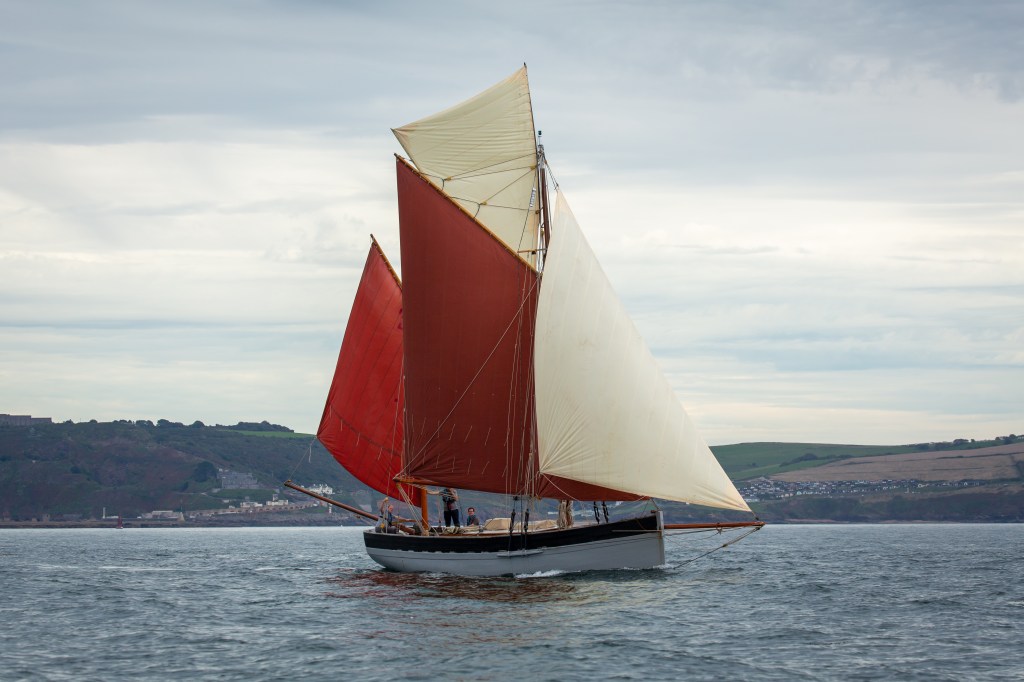
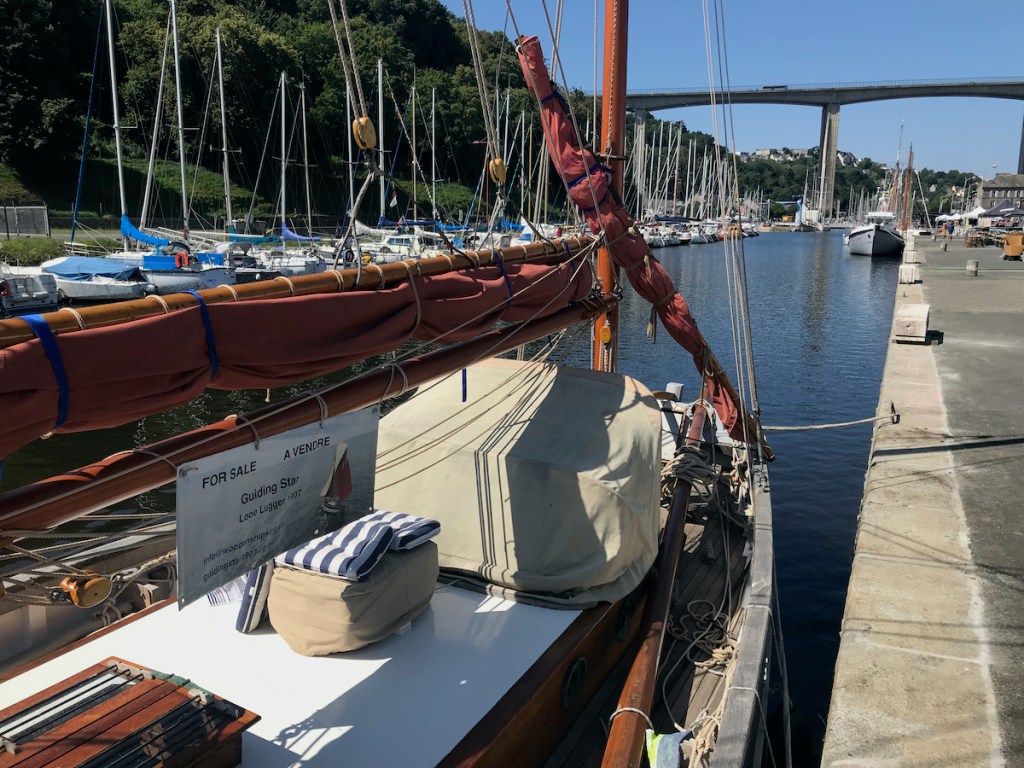
I’m sad to have put Guiding Star up for sale, but it’s the right time for me to pass her on so I can move to a smaller boat as I grow older. If you’re interested, the full broker’s listing is on Wooden Ships.
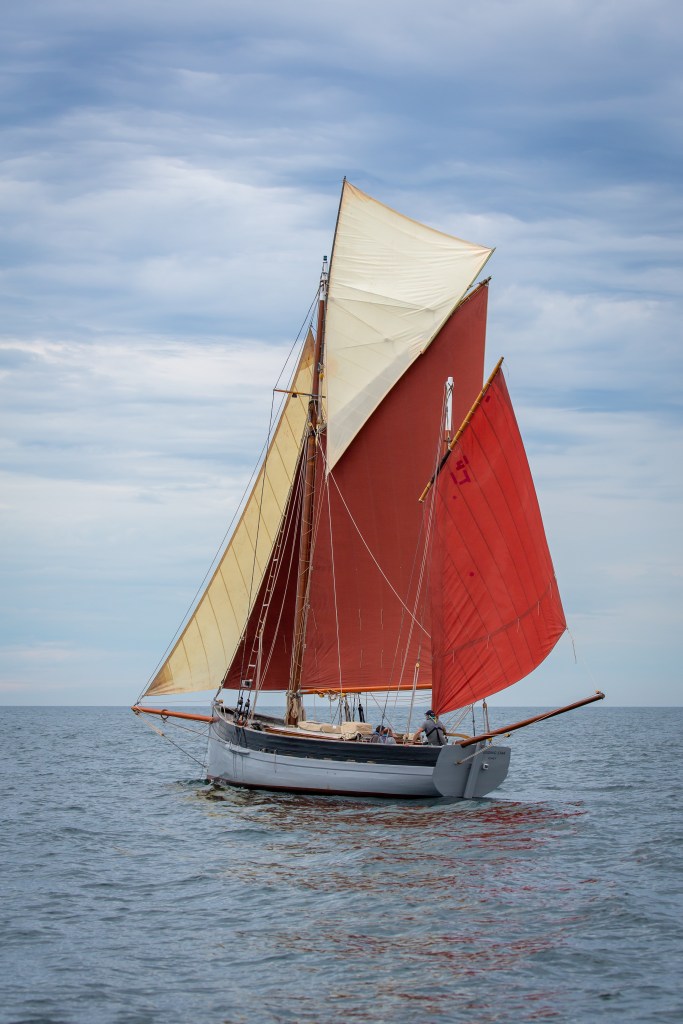
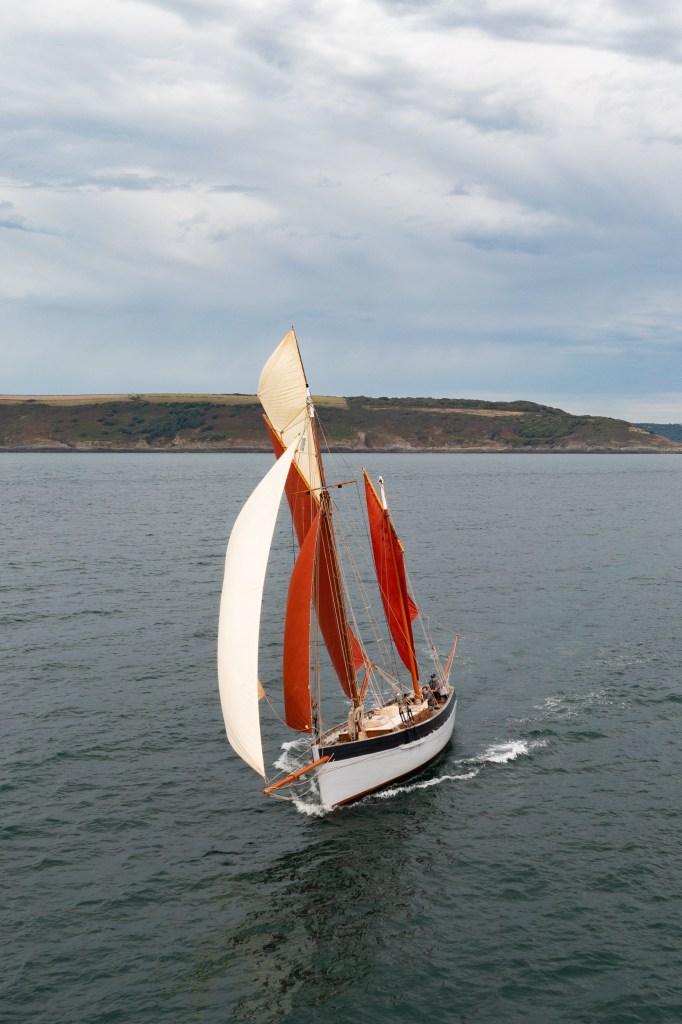
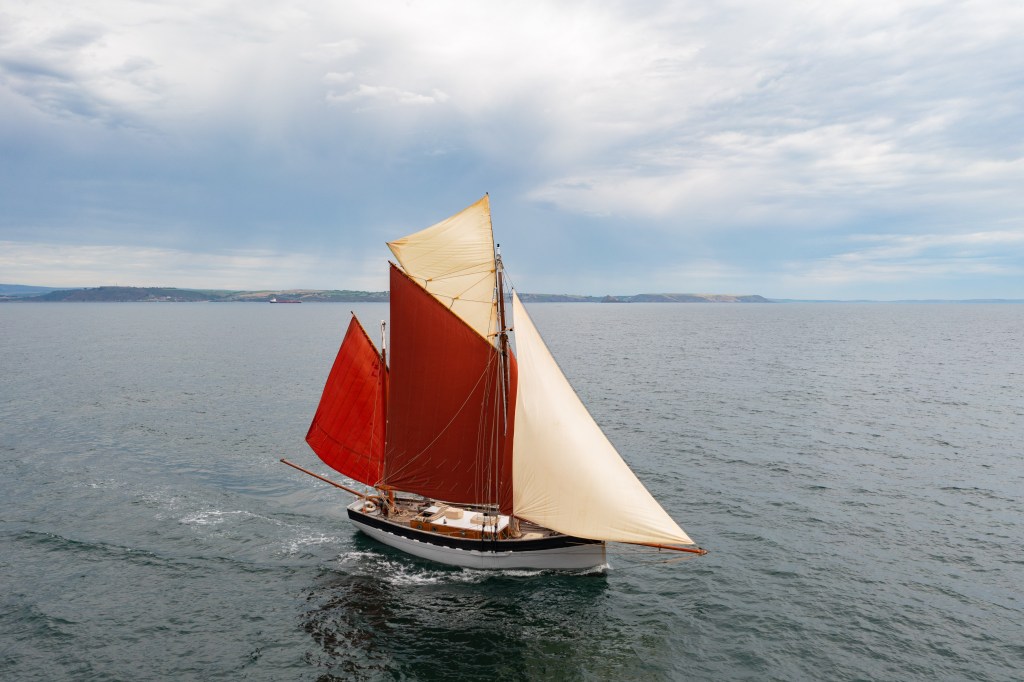
The one bright part of putting the boat on sale was a wonderful photo shoot on Plymouth Sound with Paul Gibbins and Mark Smith. We chose a September day with light wind so we could put all the sails up including the big genoa, and reached up and down while Paul buzzed round us in his RIB and Mark manoeuvred his drone overhead. The photos and video they produced were spectacular. Here’s Mark’s video:
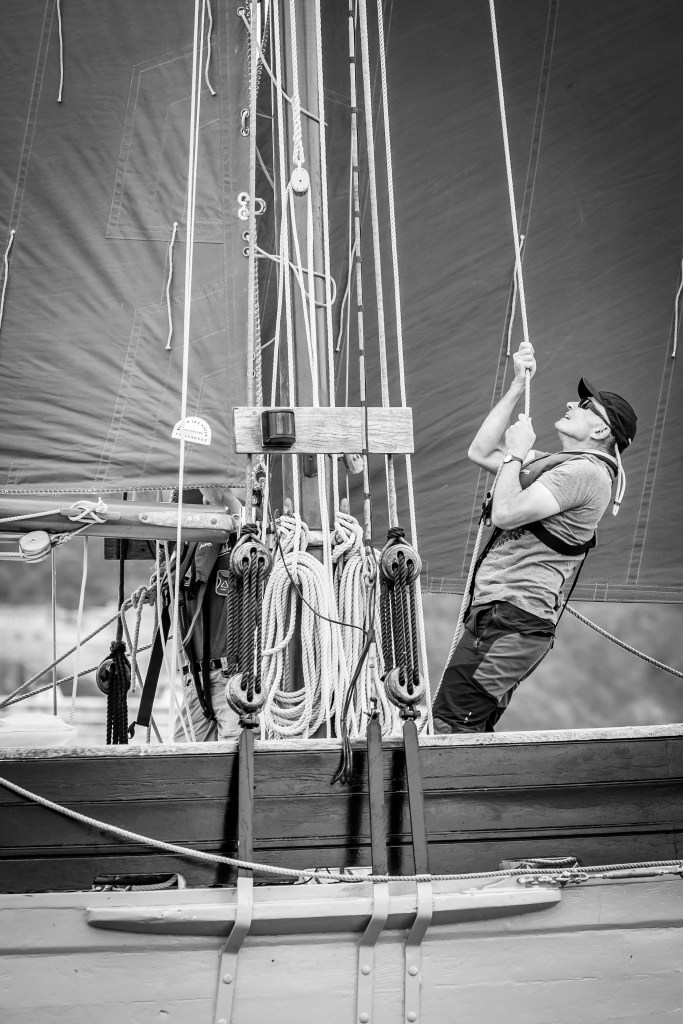
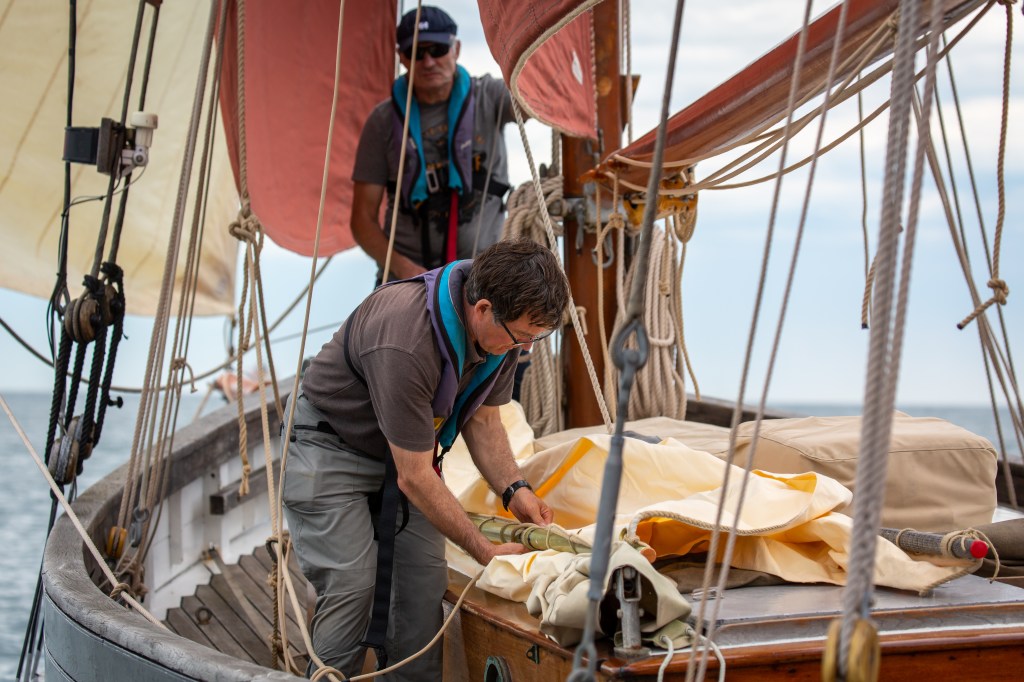
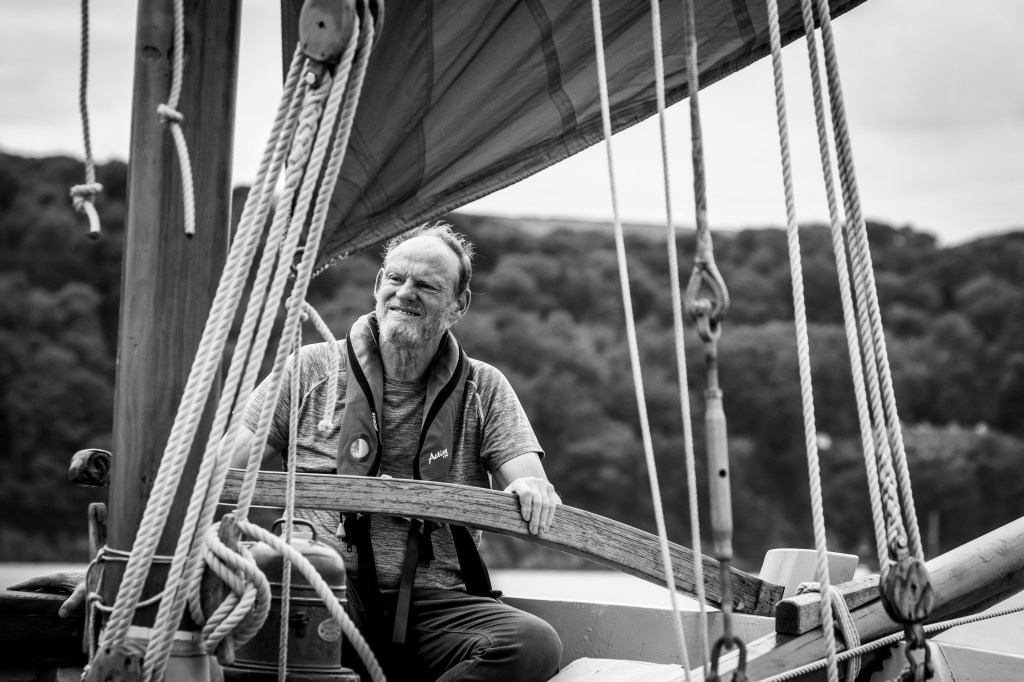
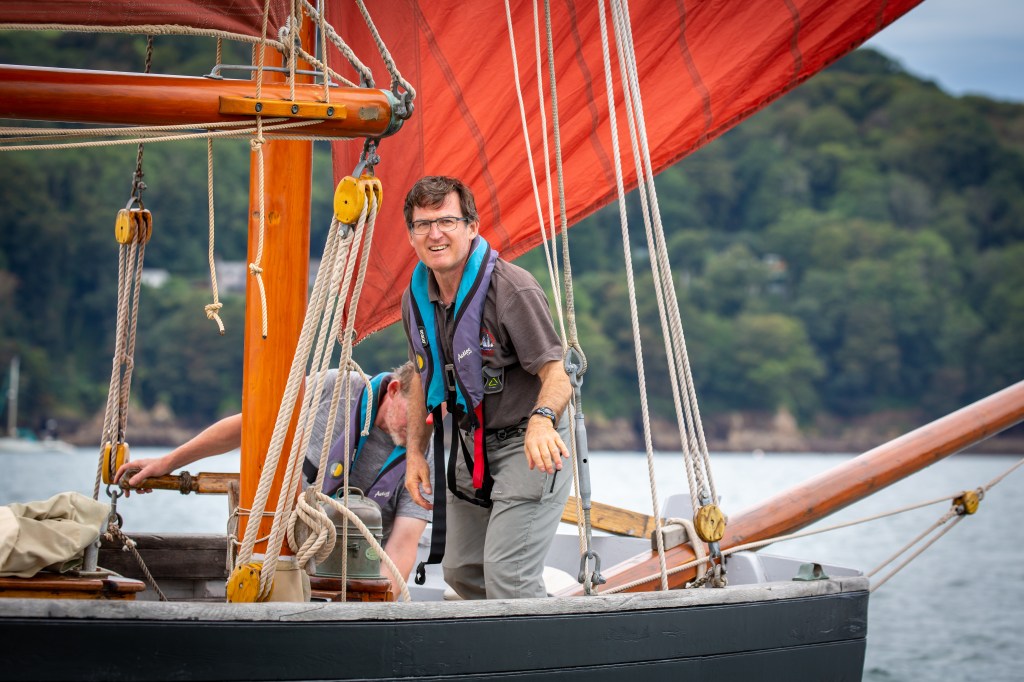
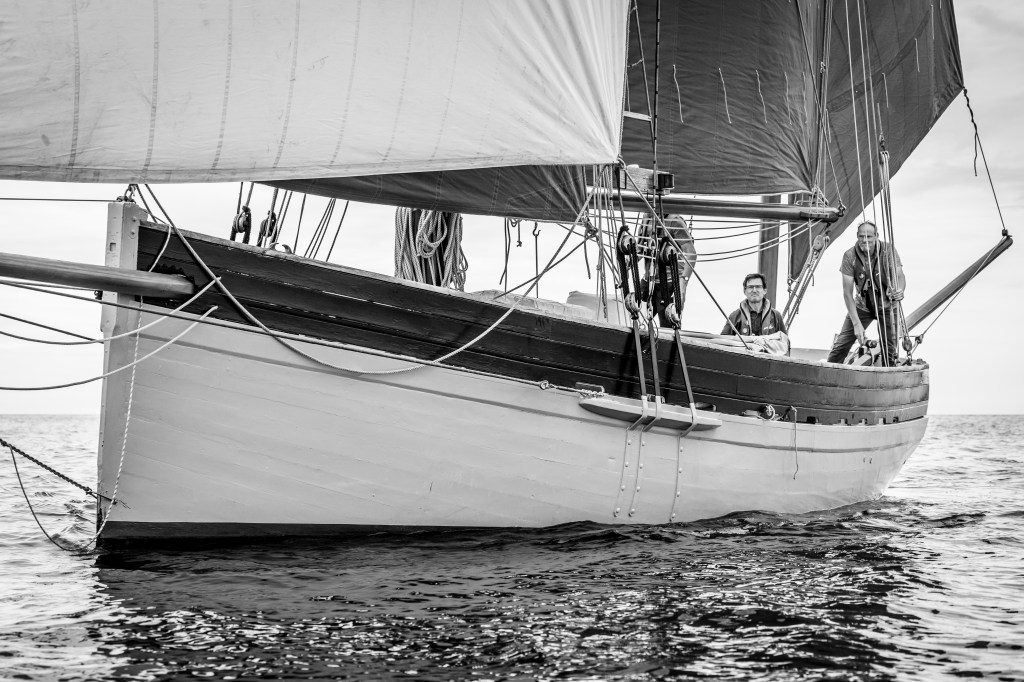
Paul caught some action on board as well as magnificent sailing shots.
The drone gave me an uncanny feeling. Here we were, sailing gently on the open sea, when suddenly we’d realise there was an observing presence over our shoulders, whining just out of reach. It was all worth it for the photos!
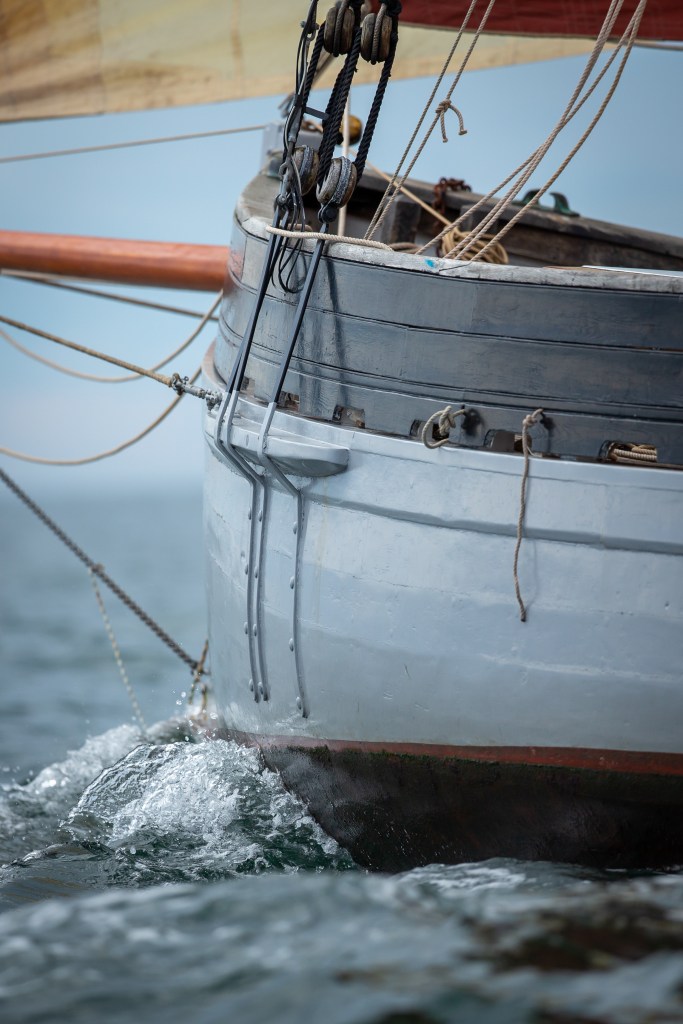
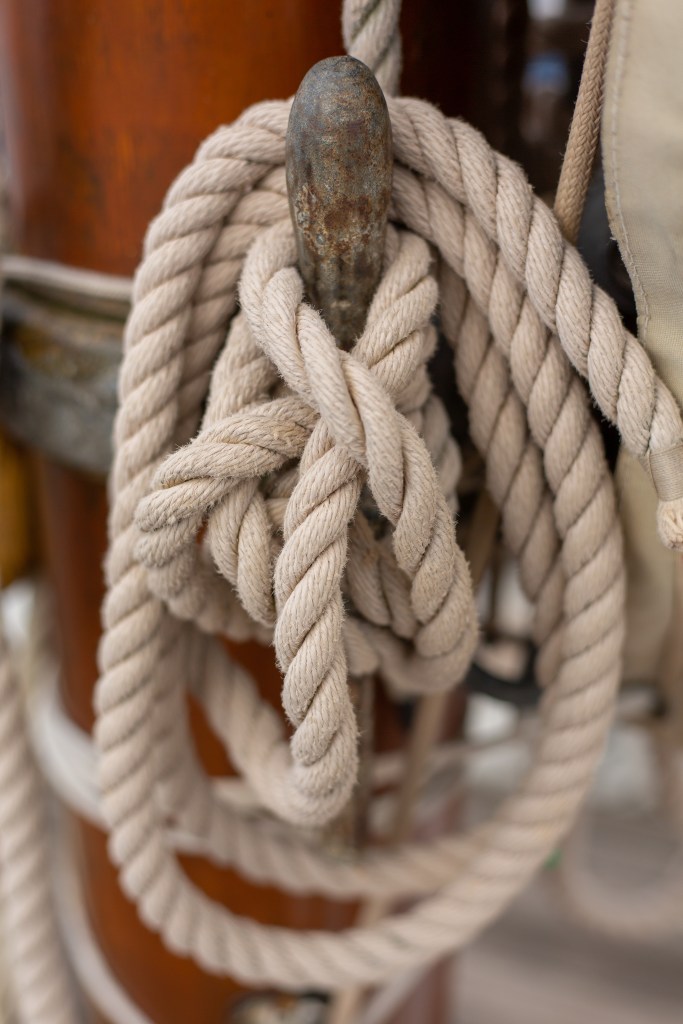
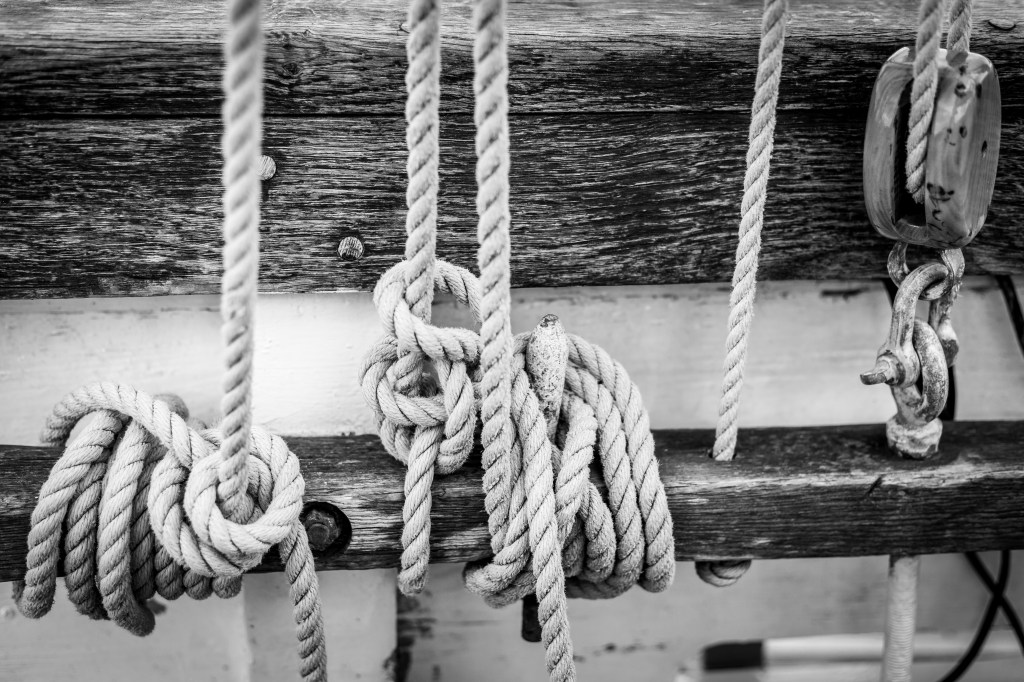
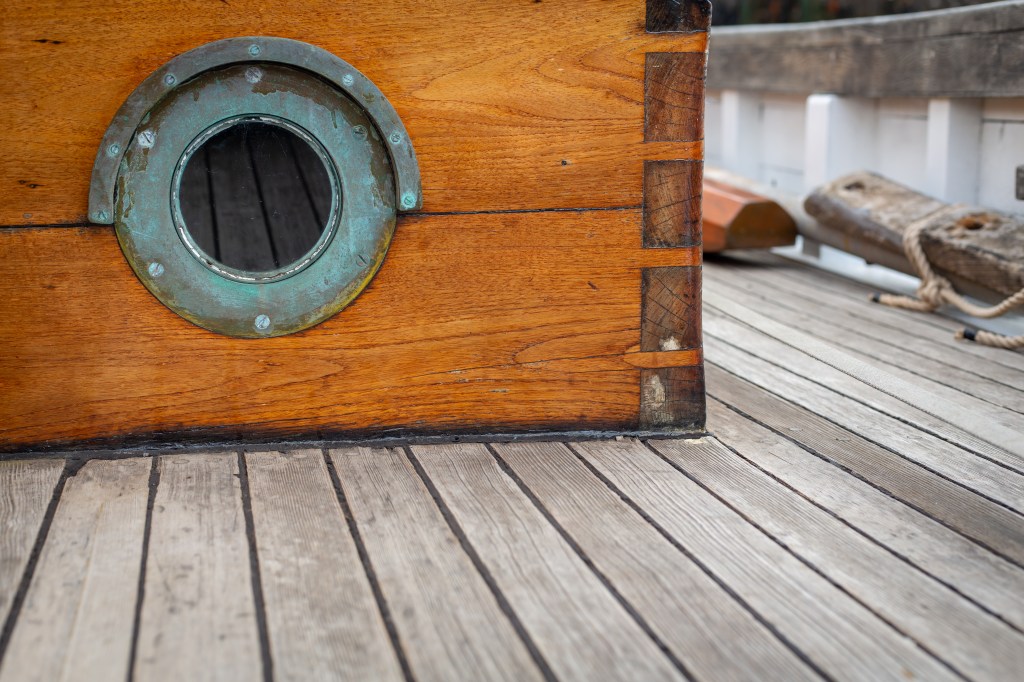
Paul took time to take some detailed shots, too, which give a vivid feel for the boat.
Here’s the video tour of the boat by Richard Gregson of Wooden Ships. The boat’s on her berth in Plymouth for the winter so just contact Richard if you’d like to see her.
This was the year when even people in rich western countries couldn’t avoid the climate crisis: the hottest summer in human history caused havoc across the northern hemisphere, from heatwaves and wildfires to floods. Cruising from southern England to southern Brittany in August, we were on the edge of the action but climate breakdown still shaped almost every day we sailed.
Just reaching France at the beginning of August was the first challenge. On the Wednesday we were due to set out from Plymouth, the Met Office forecast for the Channel read, “Severe Gale Force 9 veering westerly and decreasing Force 8 imminent”.
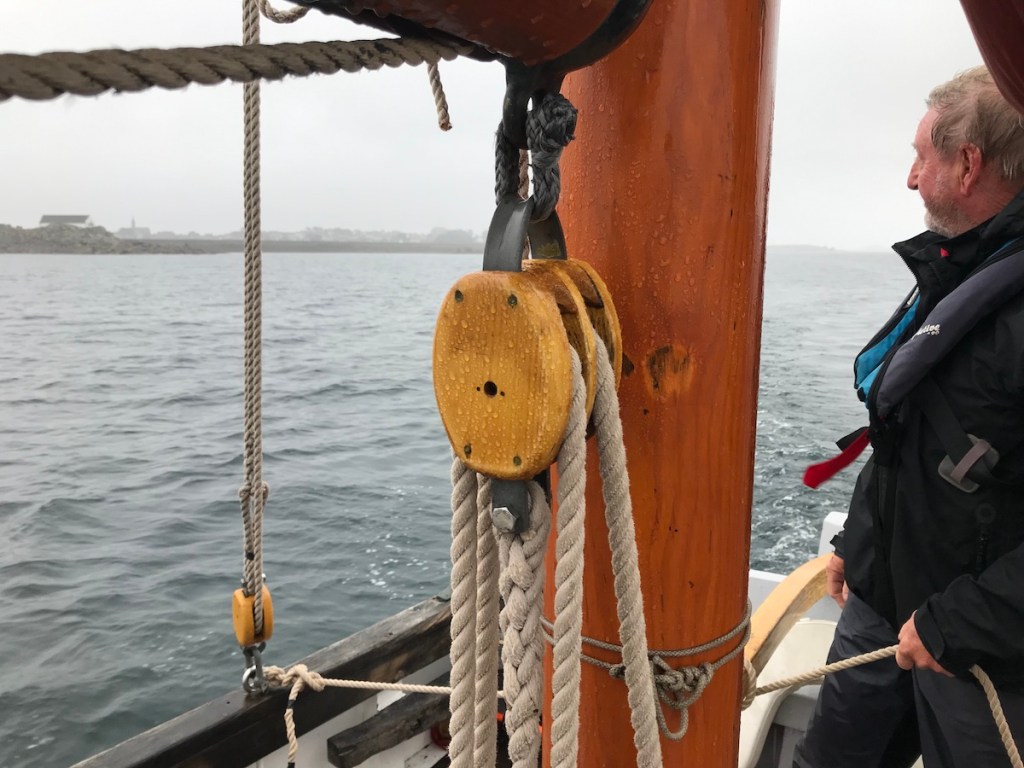
Chris helming in mist and rain
We couldn’t delay too long, not just because we didn’t want to miss the Paimpol festival but because an even bigger storm was forecast for Friday and Saturday: storm Antoni, the first storm of the year fierce enough to be given a name by the UK Met Office. Atlantic storms are supposed to come in autumn, but this was the first week of August. We set off in the early hours of Thursday and had a difficult crossing through the big swell left by the first storm and the strengthening winds of Antoni.
The gale passed north of Brittany but unsettled the weather for more than a week. Heading west along the Brittany coast after a joyous three days at the Paimpol festival, we spent three days bedevilled by fog as warm moist air brought from the Tropics by the storms settled over the cooler sea.
Frederic on a wet deck
Fortunately, the cloud lifted in the evening on the second day as we groped our way through the rocks off Roscoff so we could see to enter the marina. At least there had been enough wind for us to sail most of the way through the murk.
Next morning, the fog thinned enough to let us navigate the narrow channel between Roscoff and the Île de Batz which was an enjoyable challenge.
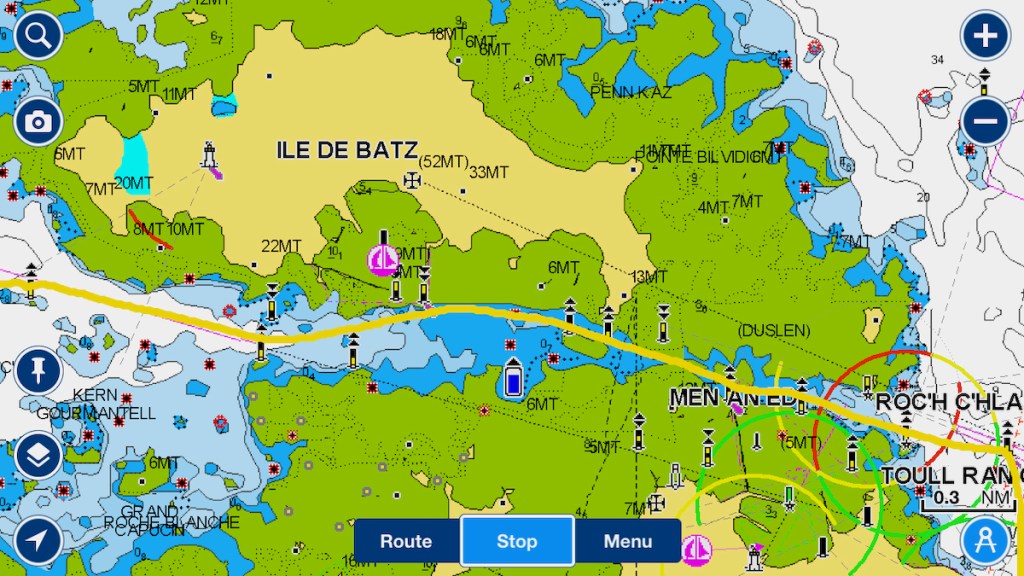
We spent the rest of that day motoring through fog with the wind too light and too directly ahead of us to sail. However, clear sky did open up in the evening after we berthed in L’ AberWrac’h and we watched the sail cargo vessel De Gallant sail into the river against a magnificent golden sunset.
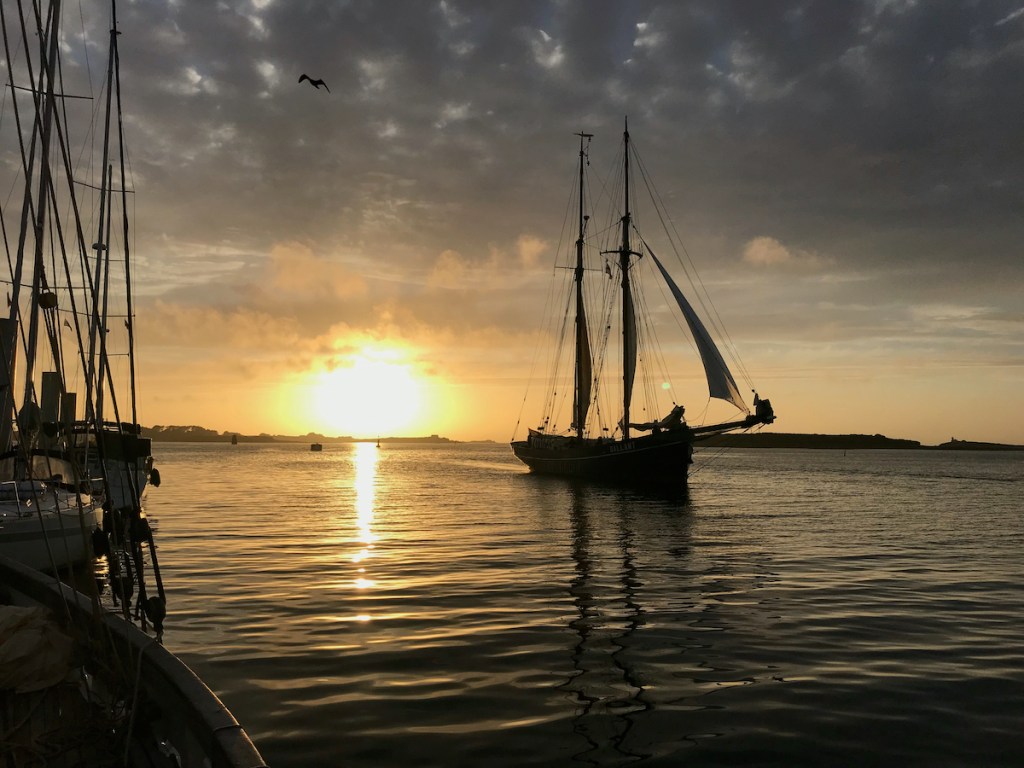
First sight of the sun for three days
The weather is supposed to change when you pass the Pointe du Raz. It’s the dividing line between northern Brittany, which catches the edge of the Atlantic depressions heading for Iceland and Norway that bring the UK’s summer cloud and rain, and southern Brittany, which usually enjoys summer highs over the Bay of Biscay.
And so it did, for an afternoon. Facing a gentle southerly breeze, we motored across the Bay of Douarnenez to be sure of reaching the treacherous Raz de Sein, the narrow passage between the point and the Île de Sein, during its half-hour of slack water in the afternoon. Even then, the water was churning enough to show how dangerous this passage would be with a tide running and stronger winds.
Once through the turbulence, the sun shone from a blue sky and a gentle southwesterly took us to an anchorage at Sainte Evette off Audierne.
And that was that. The next day, rain beat down and mist closed in. We tacked down the coast of the bay of Audierne for five hours, sailing more than 20 miles to cover little more than 10 over the ground, and had to put the motor on to round the Pointe de Penmarc’h safely.
Once we turned east, the rain eased and we had the wind over our shoulders so we were able to sail most of the 25 miles to Concarneau, straining to see buoys through the mist. Visibility was so poor on the final stretch, though, that we took the sails down three miles from Concarneau and motored.
We had promised ourselves a shower and a fine restaurant meal to recover. But when we arrived, so many other boats were sheltering from the weather in the marina that we were put on a mooring buoy a mile away.
We blew up the dinghy, still determined to go ashore, but then the dinghy engine wouldn’t start: I had failed to drain the fuel when I put it away at the end of last season and the carburettor was clogged with residues left by the evaporating petrol. I can’t blame that on climate change.
We moved to the marina the next morning, a high pressure system pushed across the Bay of Biscay and I baked on Guiding Star for the next week in 35-degree heat while waiting for new crew to arrive. I even managed yoga on the pontoon with a view of the mediaeval Ville Close, the original walled town of Concarneau which fills an island in the river.
So all ended well. But global heating is wrecking our climate, and wet and windy summer holidays will be the least of our problems.
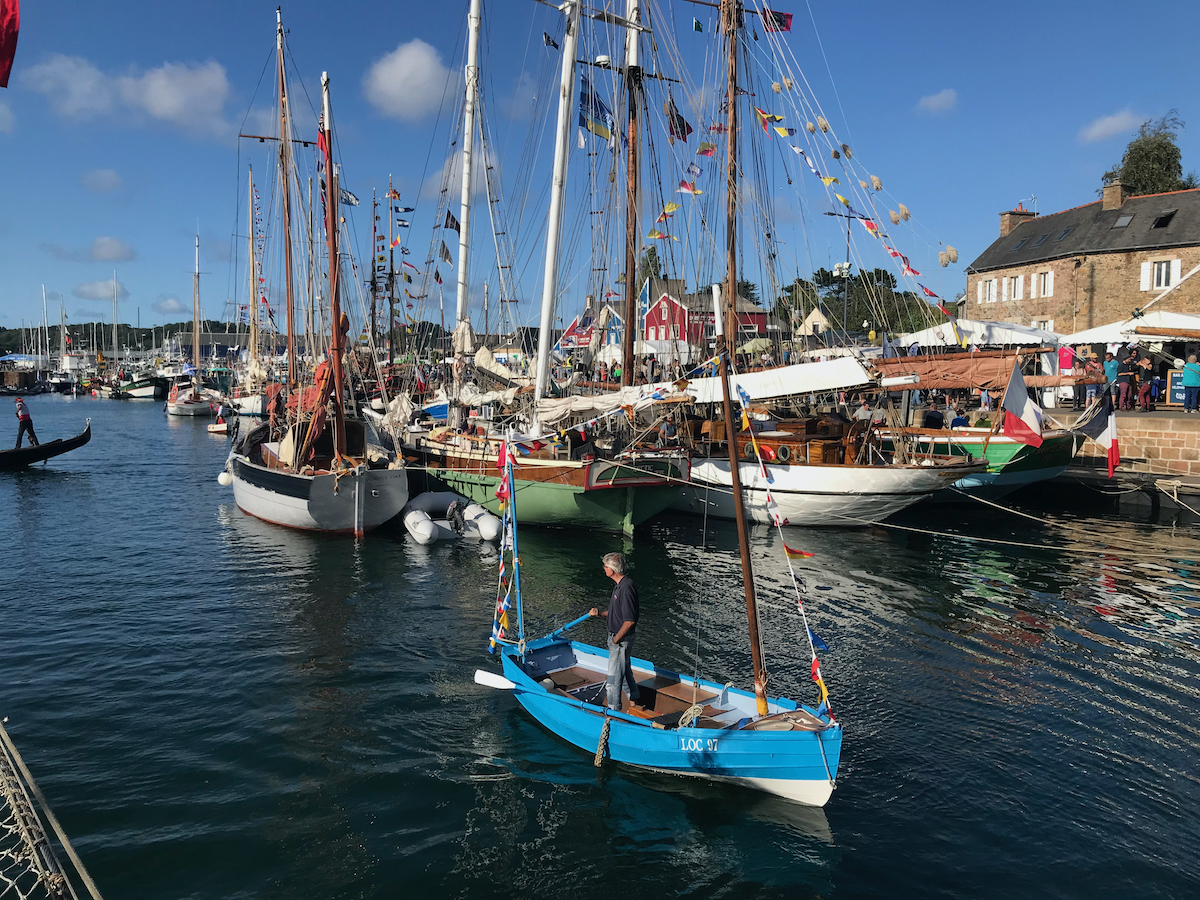
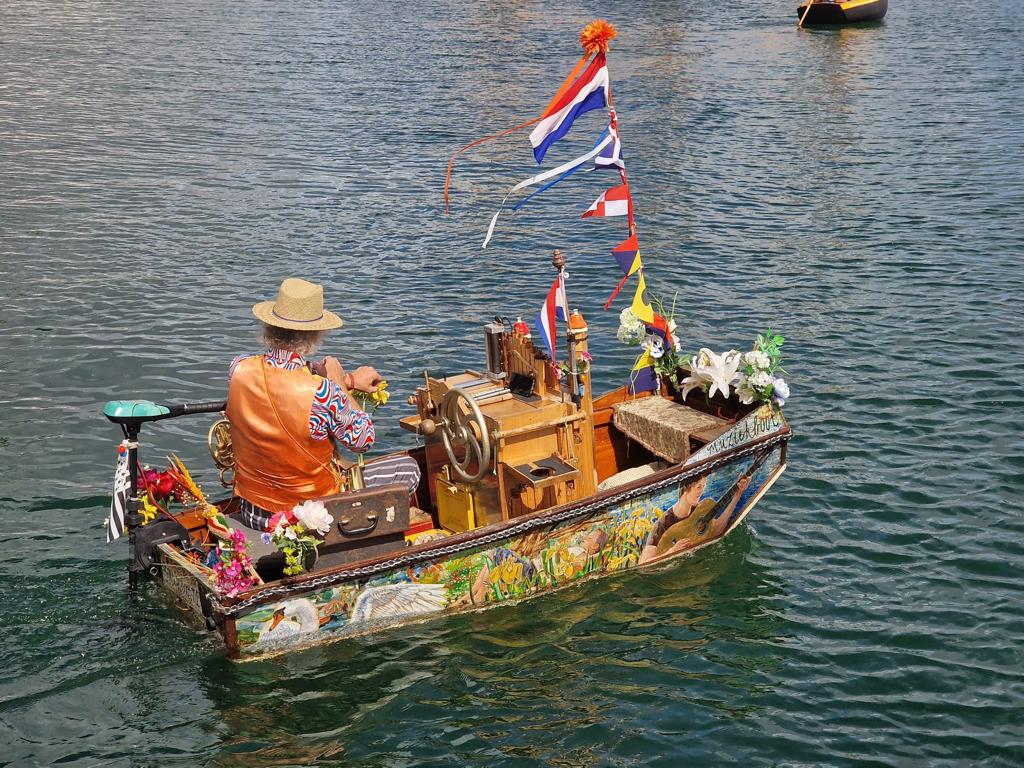
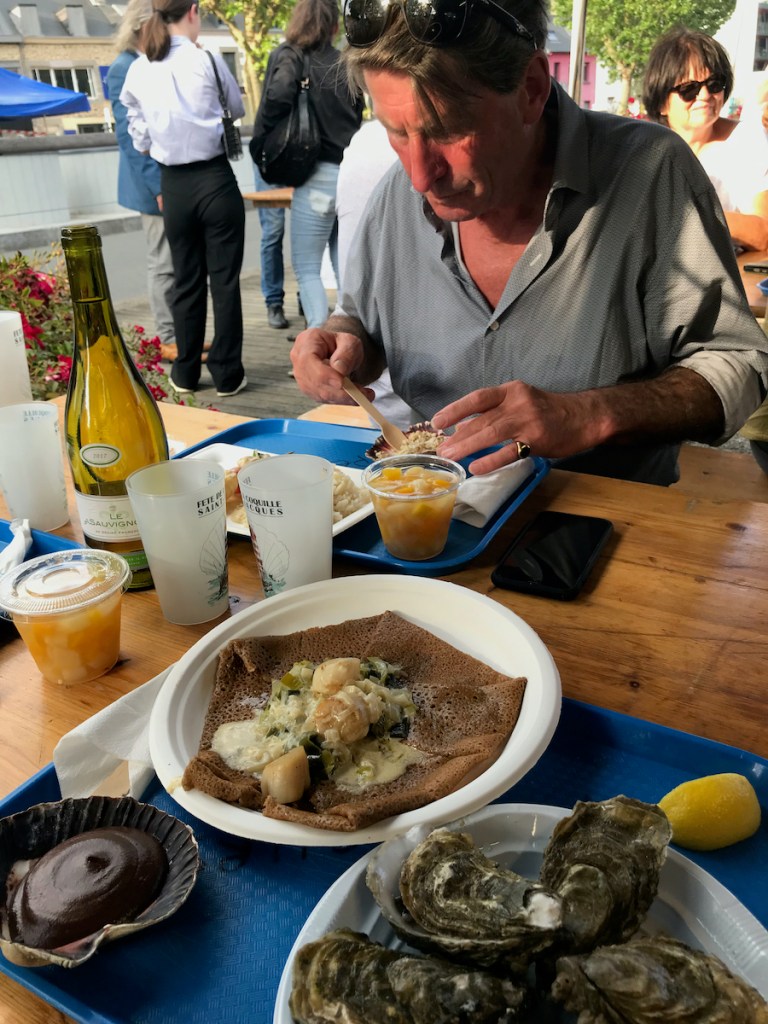
The Festival du Chant de Marin in Paimpol on the north coast of Brittany is unbeatable for the range of music and the creativity of the performances on the quayside. As you can see from the videos, you never know what you’re going to bump into next. And what’s not to love about a town where the fishmonger sells six oysters and a plastic cup of Muscadet for €8?
Guiding Star at Paimpol Festival du Chant de Marin 2023
Film by me, Paul. Thank you to Chris, Frederic and John for sailing the boat with me to Paimpol, to Sue and Frederic for video and photos, and to all the wonderful musicians and performers for creating such a joyous festival.
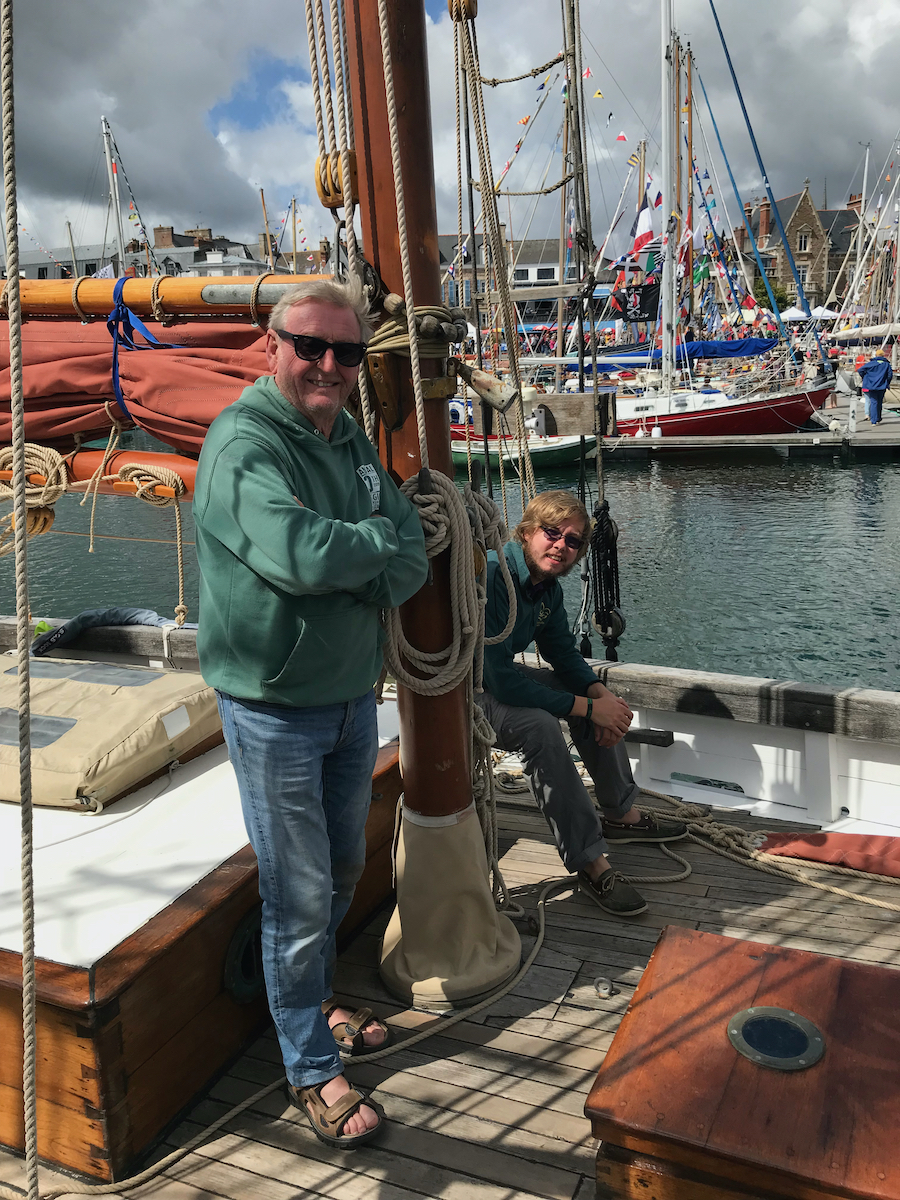
Here are Chris and Fred on board. We were rafted four out from the quay, outside the Sainte Jeanne which was again advertising Brittany’s finest fresh vegetables.
The Festival has now brought out its own three-minute video which includes terrific drone shots of Shtandart, the replica Russian frigate which John and I visited in Le Légué, and more extraordinary costumes.
This year’s first trip across the Channel in July did not start well. One unlucky crew member arrived in Plymouth without her passport so we were down to three for the crossing; and when we set out next morning into a disturbed sea, I was seasick.
However, the festival we went for turned out splendidly and ended with an unexpected happy twist.
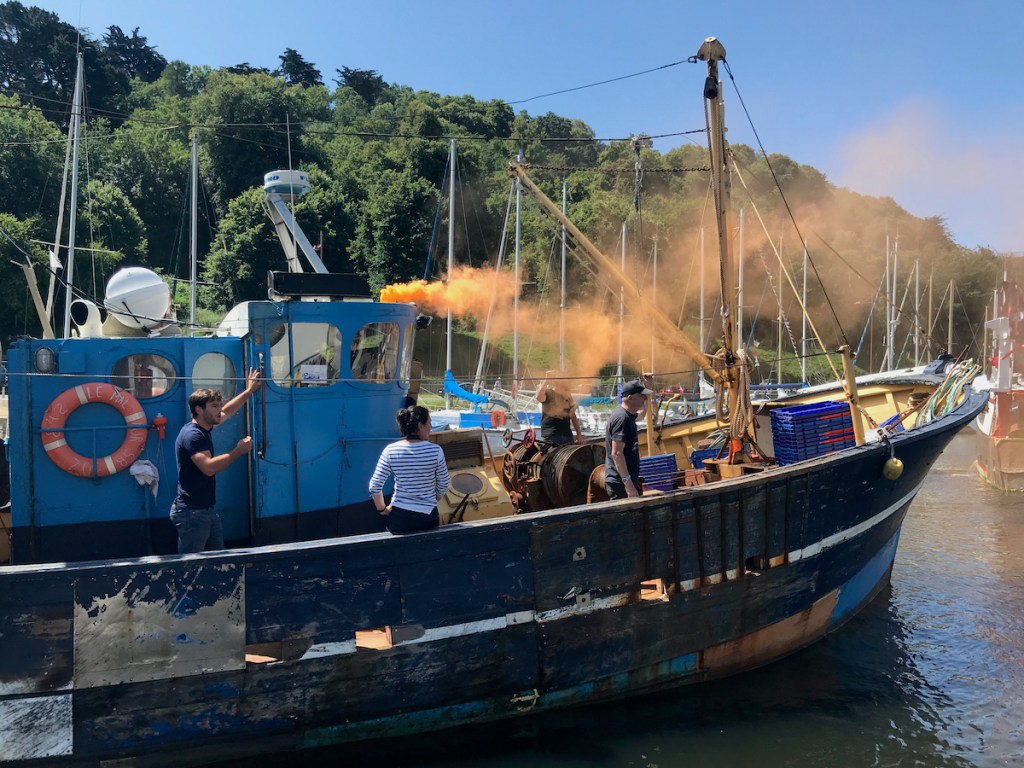
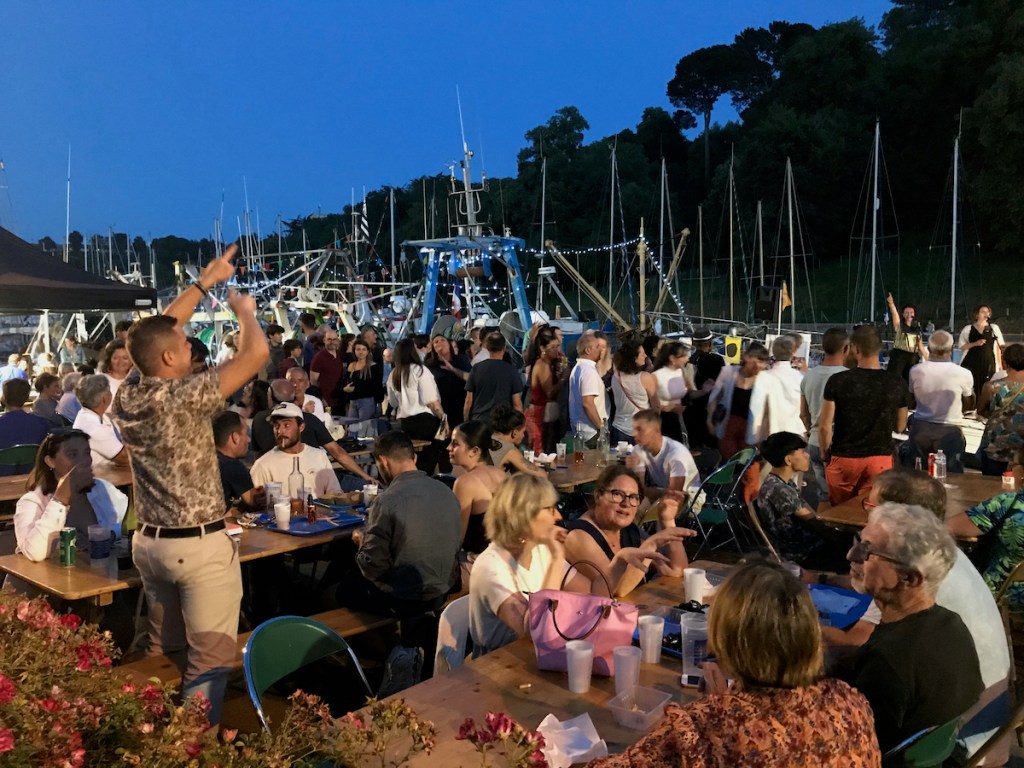
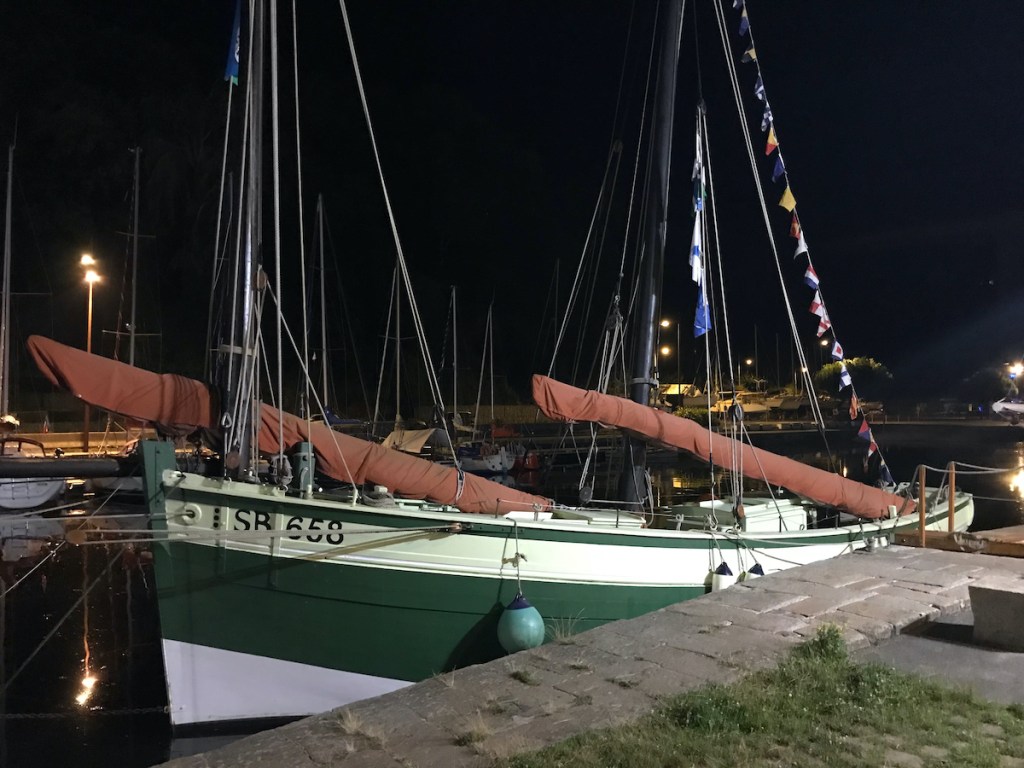
Le Grand Léjon, the replica sand lugger whose crew have always welcomed us warmly to Brittany, was celebrating its 31st anniversary at the same time as the fishers of Le Légué were holding their yearly Festival of the Sea. The local Rugby Club and Fishers’ Association set up tents on the quayside serving oysters, scallops in galettes and mussels and chips, and three music stages offered everything from Bréton pipes to hard rock. John fell in love with the trumpeter and lead singer of the Mama Shakers, “the hot jazz, country-blues band from Paris that will knock your socks off!” They certainly did.
Dredgers arrive in styleGuiding Star in the sunJohn tucking inDancing on the quayLe Grand Léjon
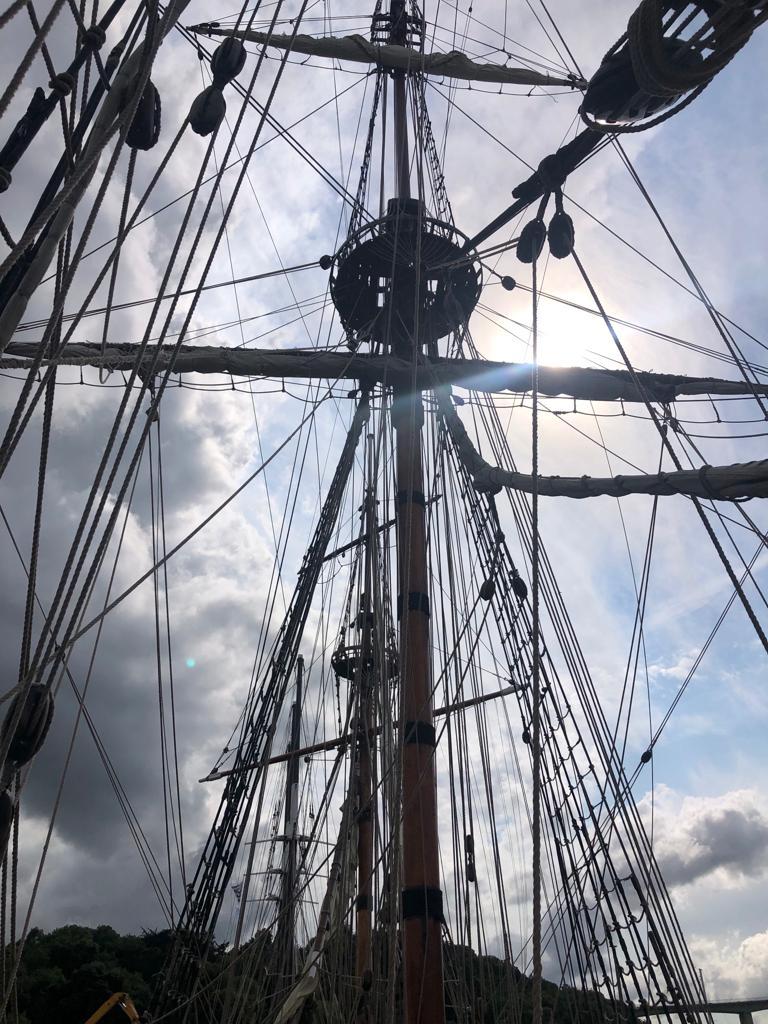
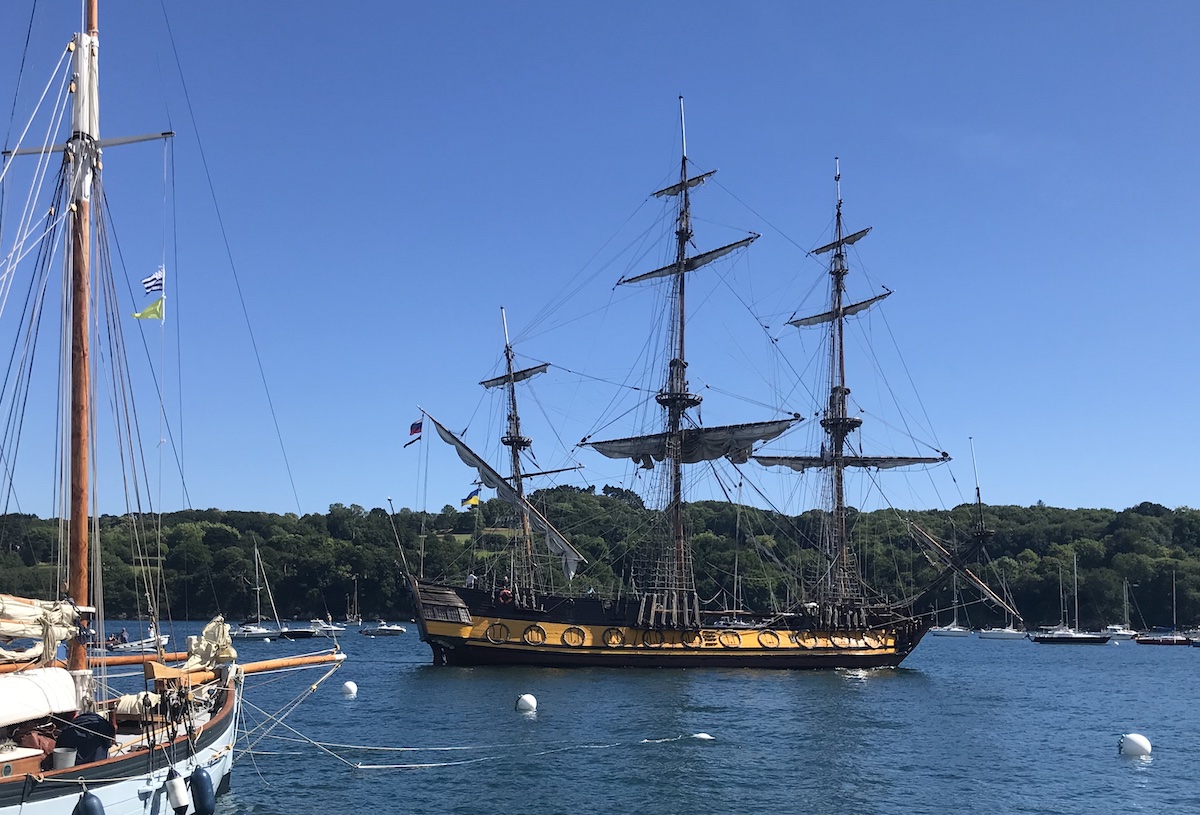
Sadly I took no photographs of John’s and my fascinating tour of one of the biggest boats attending the festival: Shtandart, a meticulous replica of the frigate which Peter the Great of Russia launched in 1703 as the first flagship of the Imperial Russian Navy. But John took one of the rigging and next to it is a photo I took of her arriving in Douarnenez last year. She’s the real deal: 82 feet on deck and 220 tons. I’ve also embedded a video of her at the bottom of this post.
The Tsar learned Dutch and English shipbuilding techniques on a tour of Europe and supervised construction himself, which might explain why the original ship was finished in five months. He captained her on her maiden voyage under the pseudonym “Peter Mihajlov”.
Chris knows the modern Shtandart’s owner and skipper, Vlad, and she has a history almost as amazing as the original. Chris says Vlad raised money and mobilised volunteers in St Petersburg for five years to build the replica as a sail training vessel. But when she was finished in 1999, the authorities demanded that she stay in St Petersburg as a static museum, so Vlad mustered a crew and sailed away at dead of night. They now wander the seas training people to sail an 18th century square rigger, and overwinter in La Rochelle.
On Sunday afternoon when the festival was winding down, Claire Michel from Le Grand Lejon stopped by Guiding Star and asked my mobile number. When I had given the first few digits, she interrupted and said, “You’ve won something!”
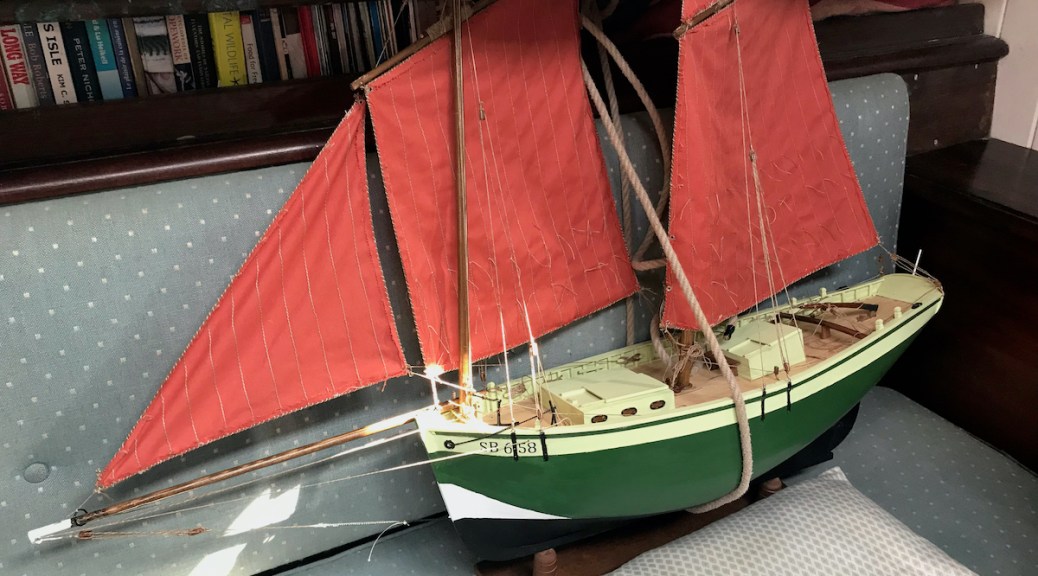
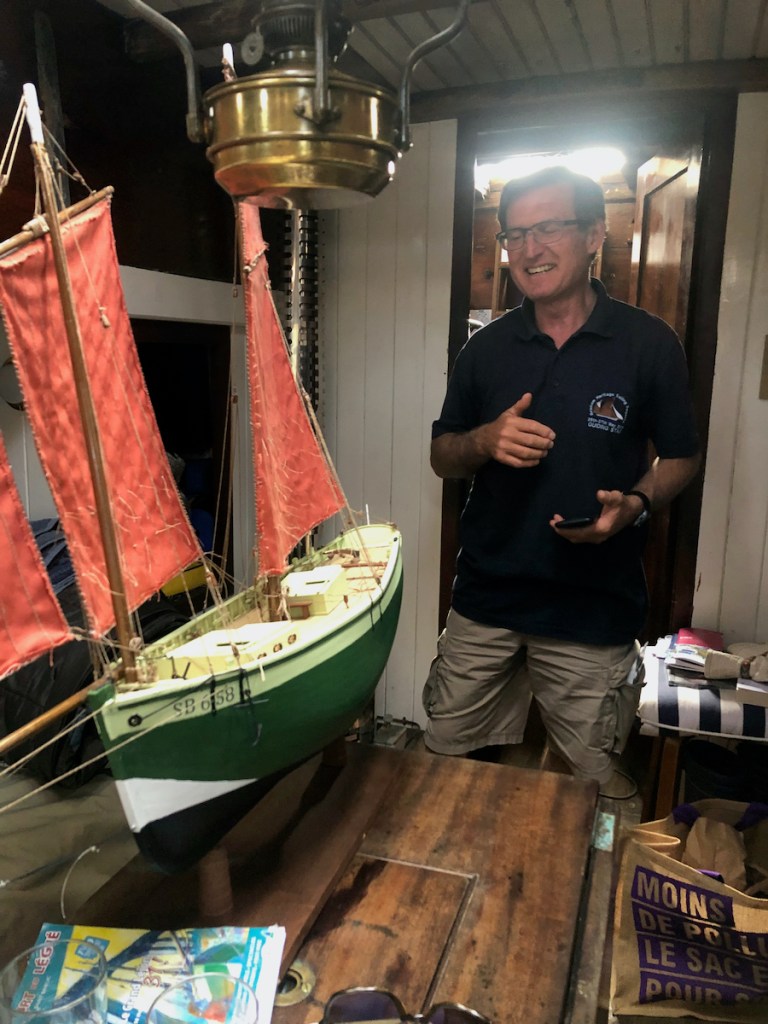
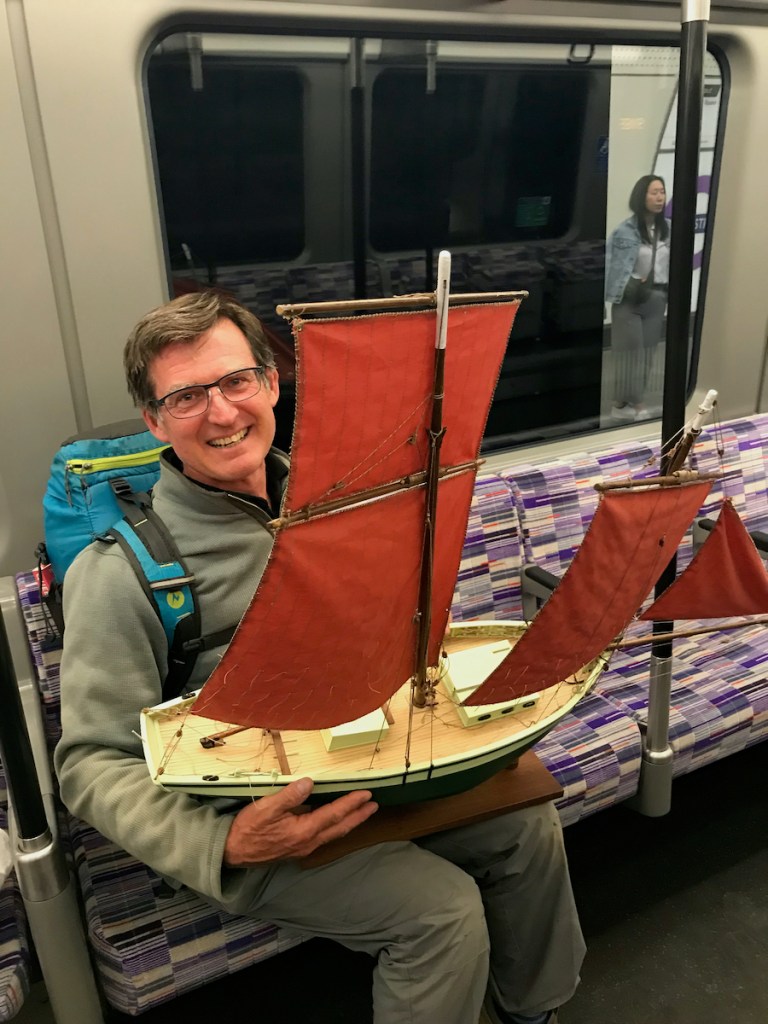
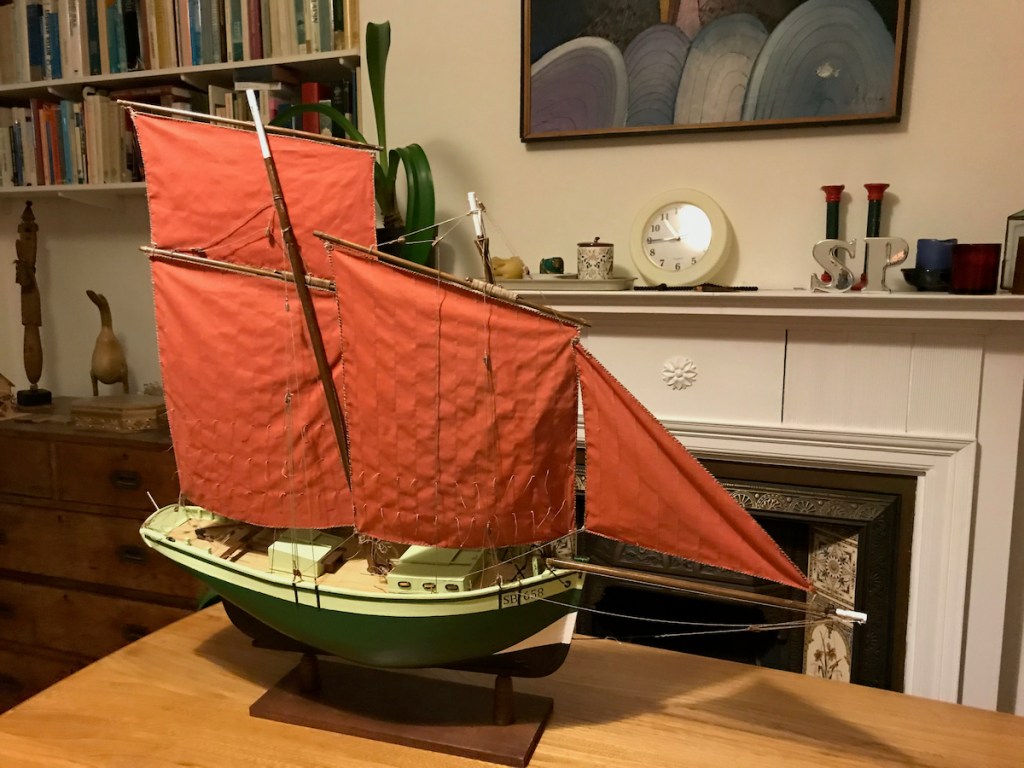
I was overwhelmed to discover that I’d won a raffle organised to raise funds for the non-profit association which runs Le Grand Léjon, and the first prize was a stunning metre-long replica of the boat itself made by the father of one of the crew. I had bought half a dozen tickets to show support but had never imagined I might win.
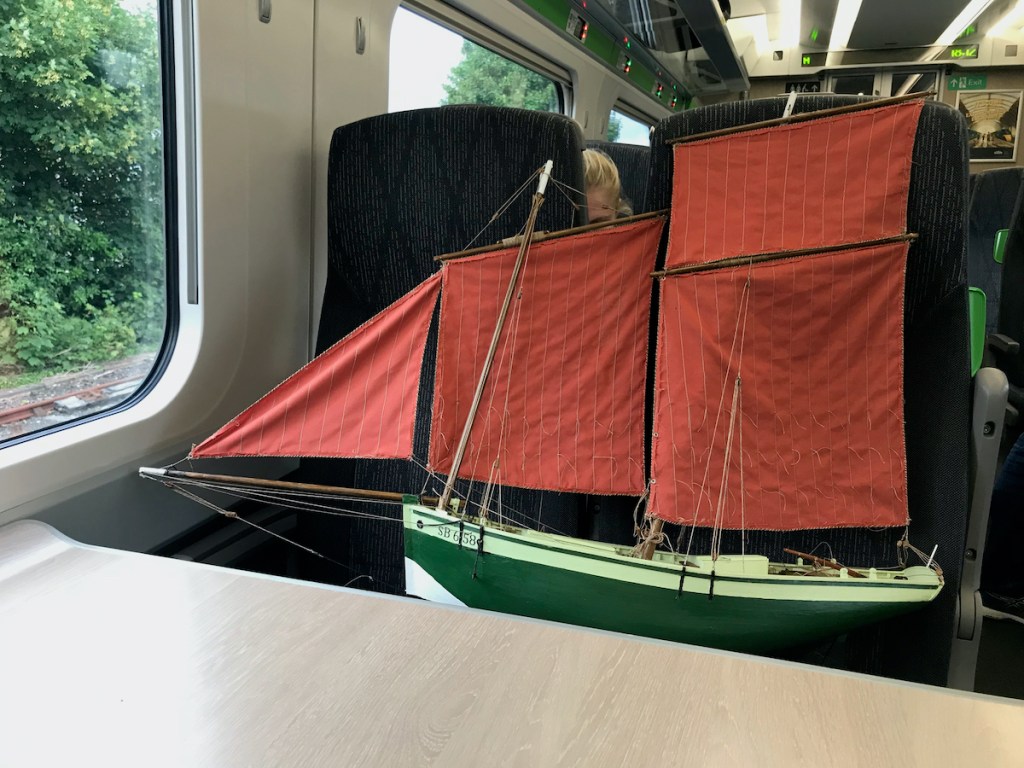
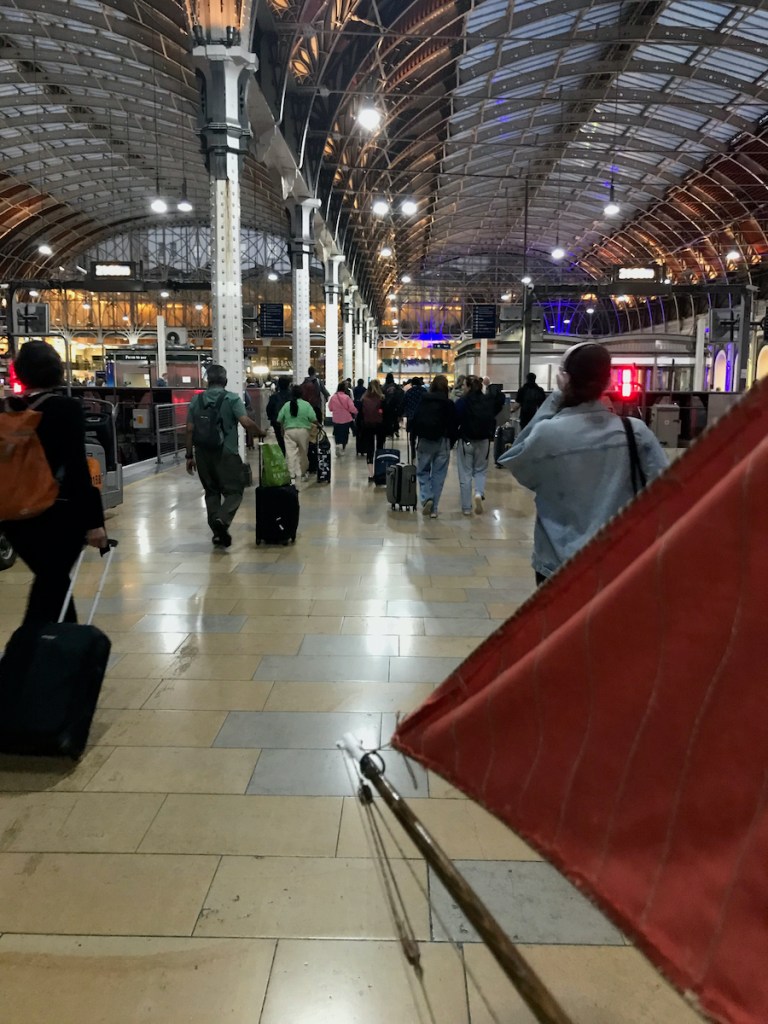
We manoeuvred the model through the main hatch into the cabin and I wondered how on earth to get it home to north London: first a channel crossing on Guiding Star, then a bus to Plymouth station, a mainline train to London, two London underground rides and finally another bus.
In the end, everything went well until I stood up to get off the last bus, when the bus lurched and the wooden stand fell off. I picked up the pieces and here she is in my front room. The deck took some seawater drips during the Channel crossing, as decks do, and some spots of black mould had formed. But I managed to clean them off with meths and tidy up the miniature lines. What a souvenir!