
This year’s first trip across the Channel in July did not start well. One unlucky crew member arrived in Plymouth without her passport so we were down to three for the crossing; and when we set out next morning into a disturbed sea, I was seasick.
However, the festival we went for turned out splendidly and ended with an unexpected happy twist.
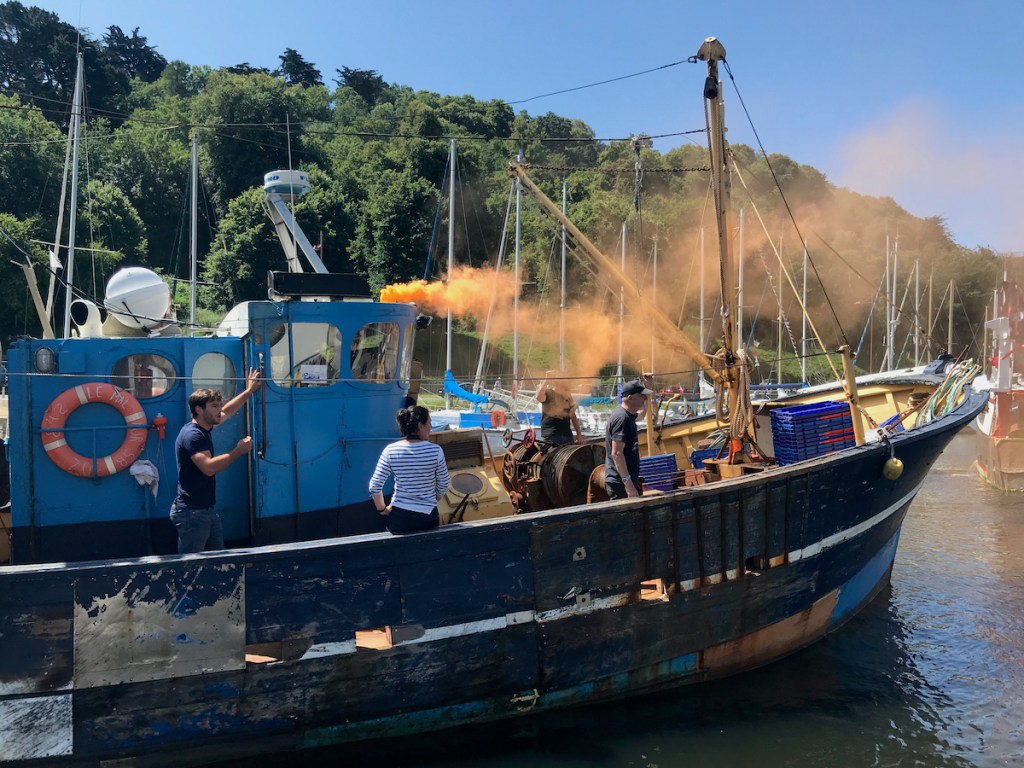
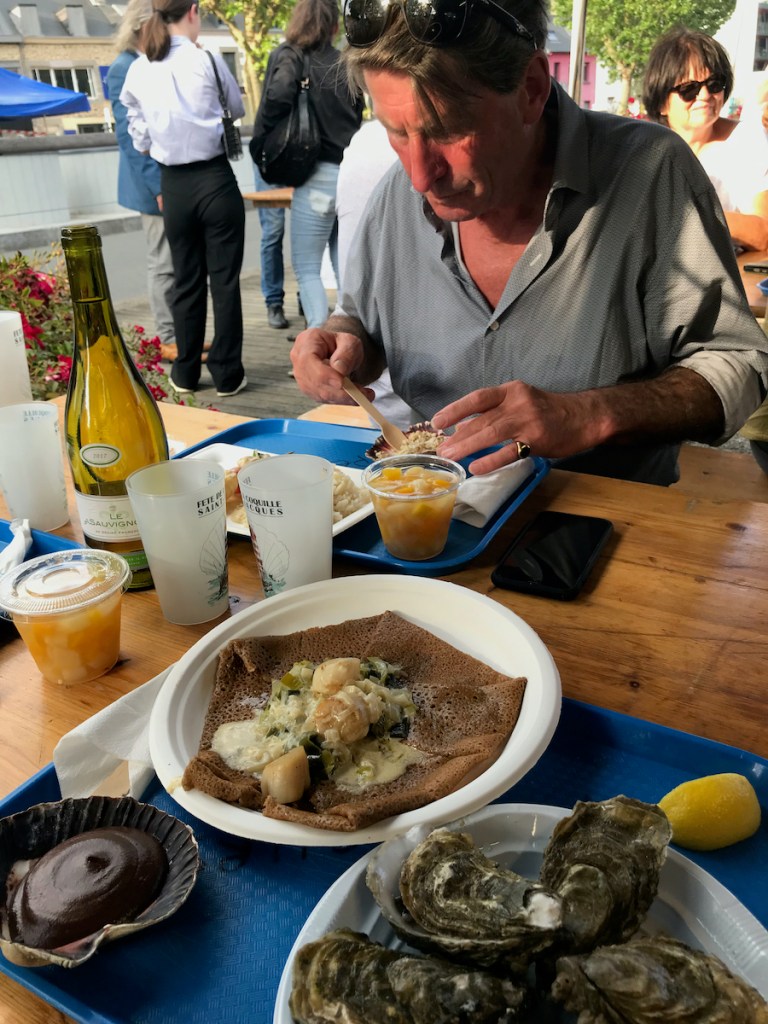
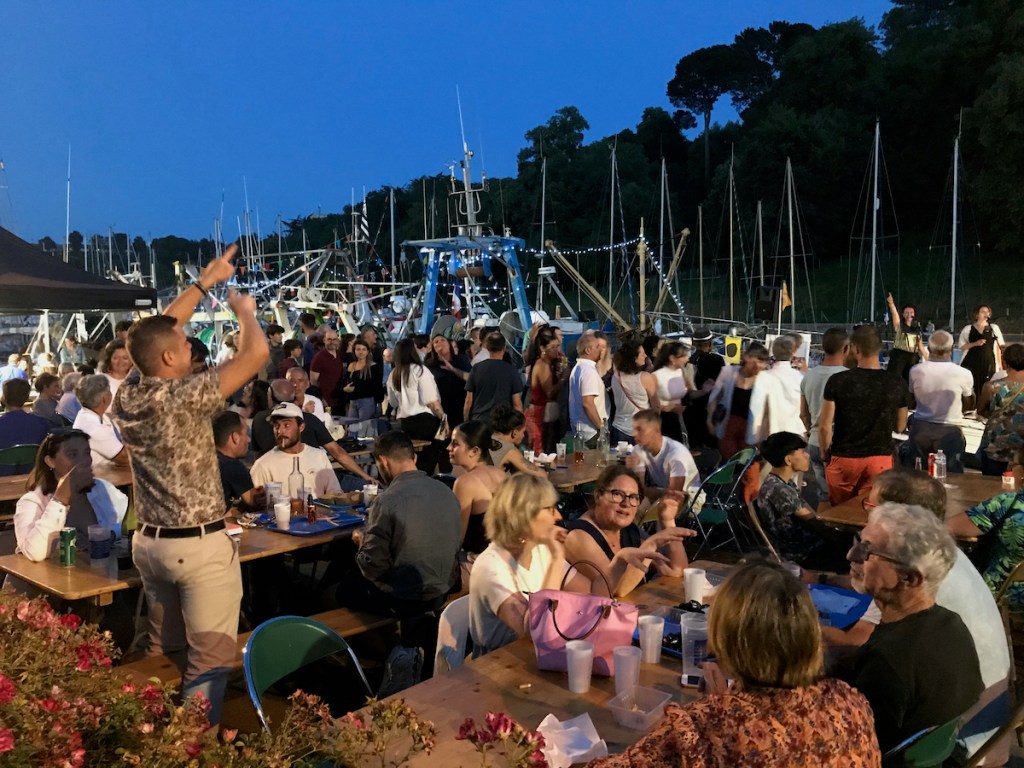
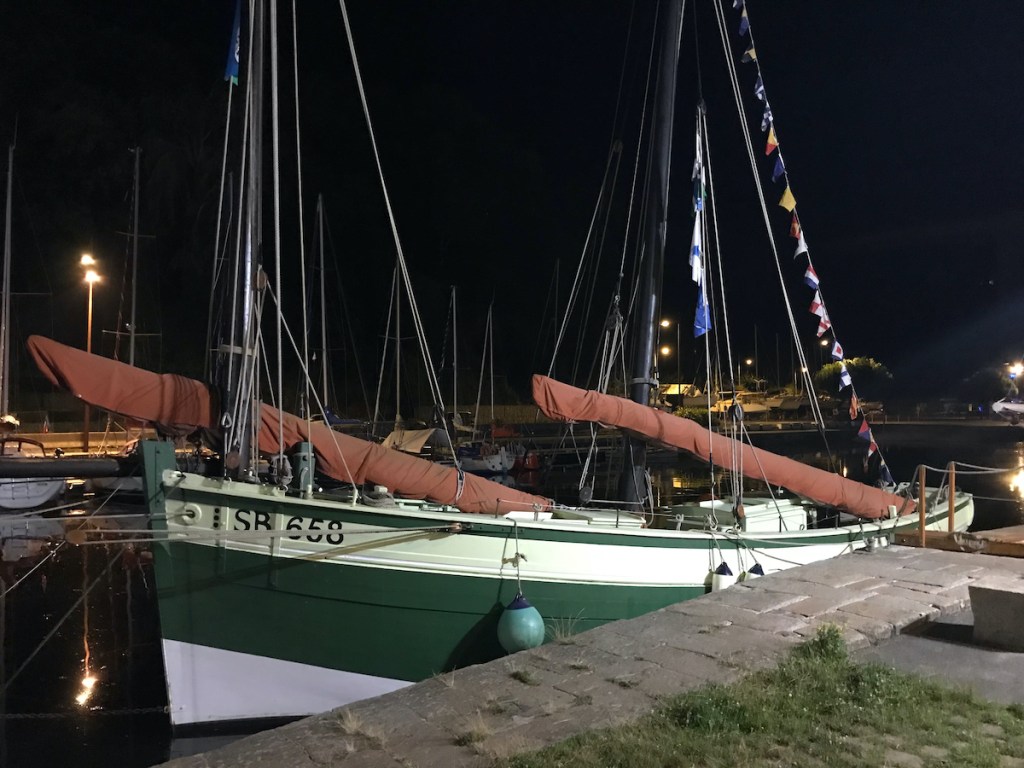
Le Grand Léjon, the replica sand lugger whose crew have always welcomed us warmly to Brittany, was celebrating its 31st anniversary at the same time as the fishers of Le Légué were holding their yearly Festival of the Sea. The local Rugby Club and Fishers’ Association set up tents on the quayside serving oysters, scallops in galettes and mussels and chips, and three music stages offered everything from Bréton pipes to hard rock. John fell in love with the trumpeter and lead singer of the Mama Shakers, “the hot jazz, country-blues band from Paris that will knock your socks off!” They certainly did.
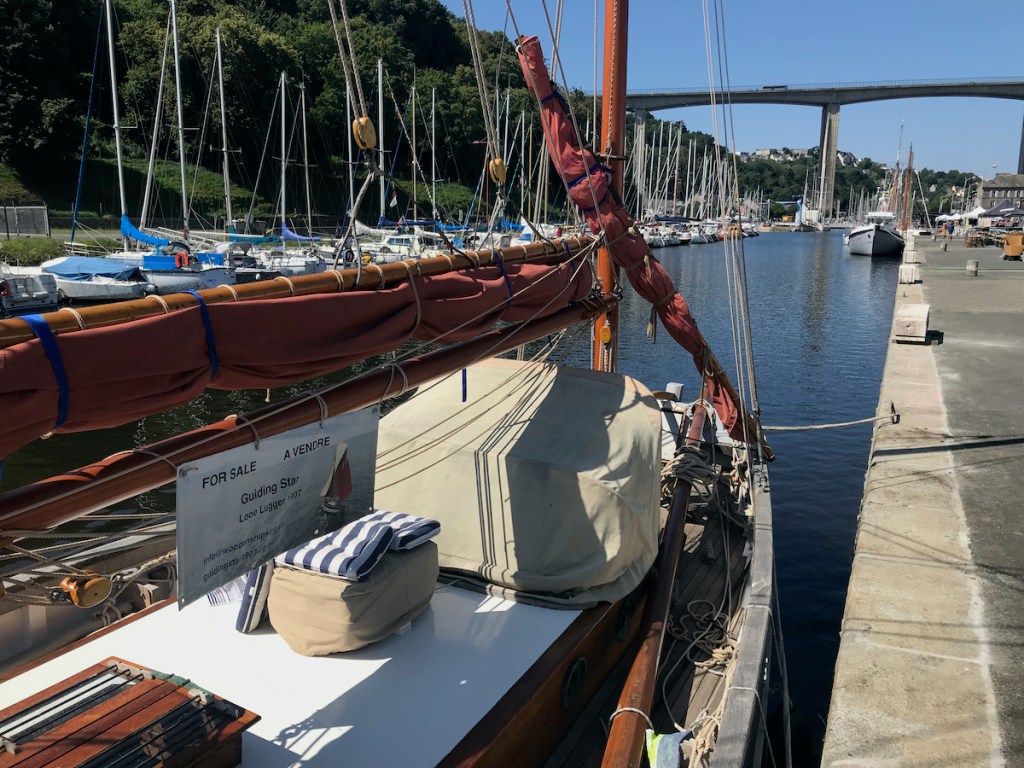
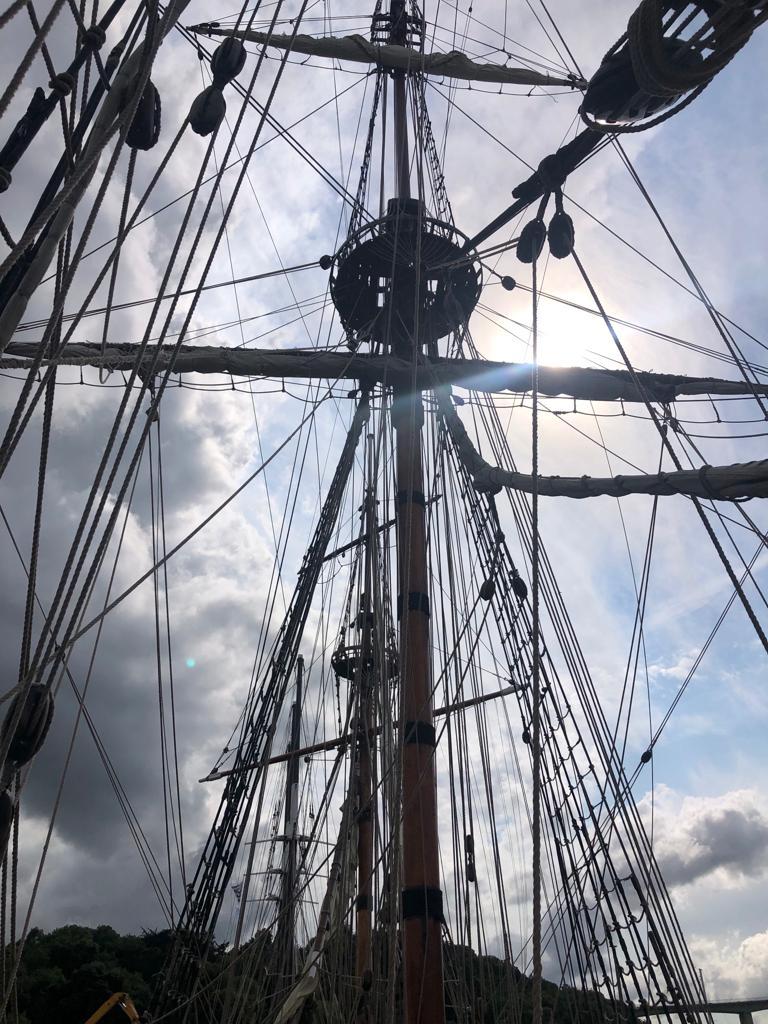
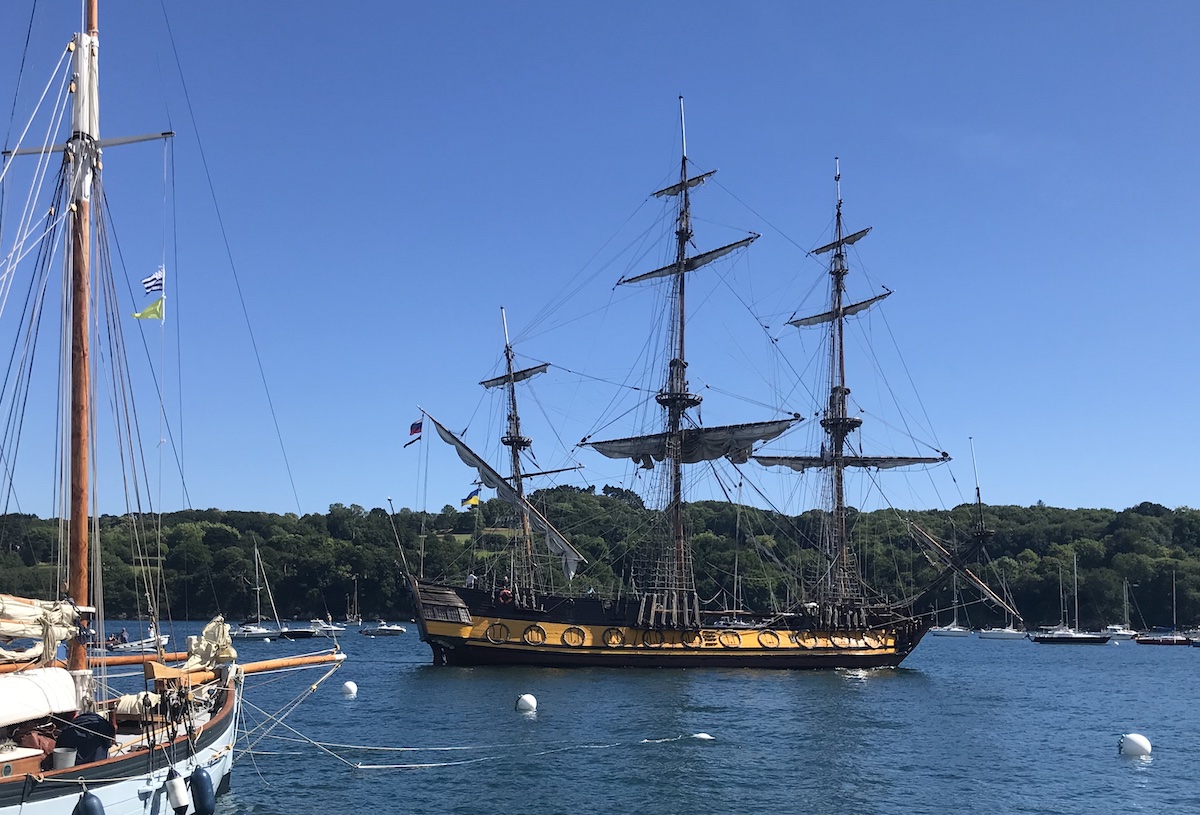
Sadly I took no photographs of John’s and my fascinating tour of one of the biggest boats attending the festival: Shtandart, a meticulous replica of the frigate which Peter the Great of Russia launched in 1703 as the first flagship of the Imperial Russian Navy. But John took one of the rigging and next to it is a photo I took of her arriving in Douarnenez last year. She’s the real deal: 82 feet on deck and 220 tons. I’ve also embedded a video of her at the bottom of this post.
The Tsar learned Dutch and English shipbuilding techniques on a tour of Europe and supervised construction himself, which might explain why the original ship was finished in five months. He captained her on her maiden voyage under the pseudonym “Peter Mihajlov”.
Chris knows the modern Shtandart’s owner and skipper, Vlad, and she has a history almost as amazing as the original. Chris says Vlad raised money and mobilised volunteers in St Petersburg for five years to build the replica as a sail training vessel. But when she was finished in 1999, the authorities demanded that she stay in St Petersburg as a static museum, so Vlad mustered a crew and sailed away at dead of night. They now wander the seas training people to sail an 18th century square rigger, and overwinter in La Rochelle.
On Sunday afternoon when the festival was winding down, Claire Michel from Le Grand Lejon stopped by Guiding Star and asked my mobile number. When I had given the first few digits, she interrupted and said, “You’ve won something!”
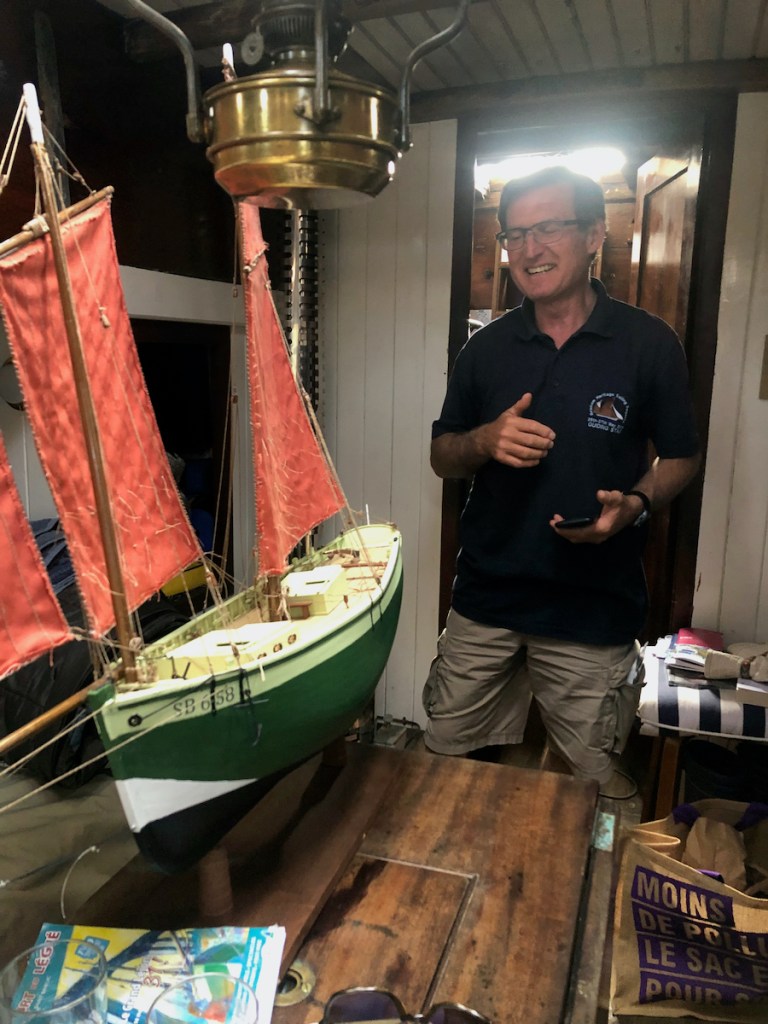
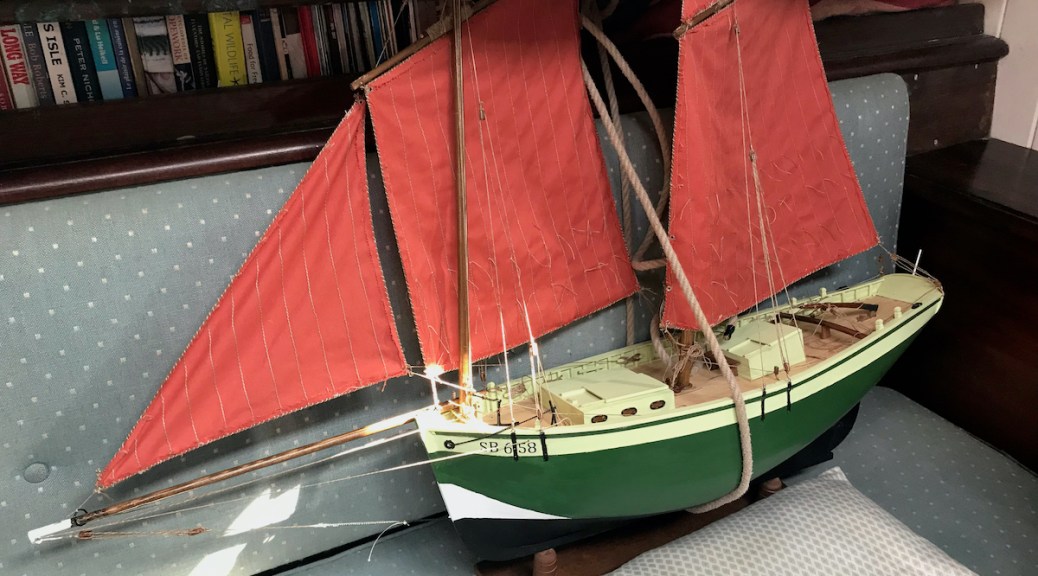
I was overwhelmed to discover that I’d won a raffle organised to raise funds for the non-profit association which runs Le Grand Léjon, and the first prize was a stunning metre-long replica of the boat itself made by the father of one of the crew. I had bought half a dozen tickets to show support but had never imagined I might win.
We manoeuvred the model through the main hatch into the cabin and I wondered how on earth to get it home to north London: first a channel crossing on Guiding Star, then a bus to Plymouth station, a mainline train to London, two London underground rides and finally another bus.
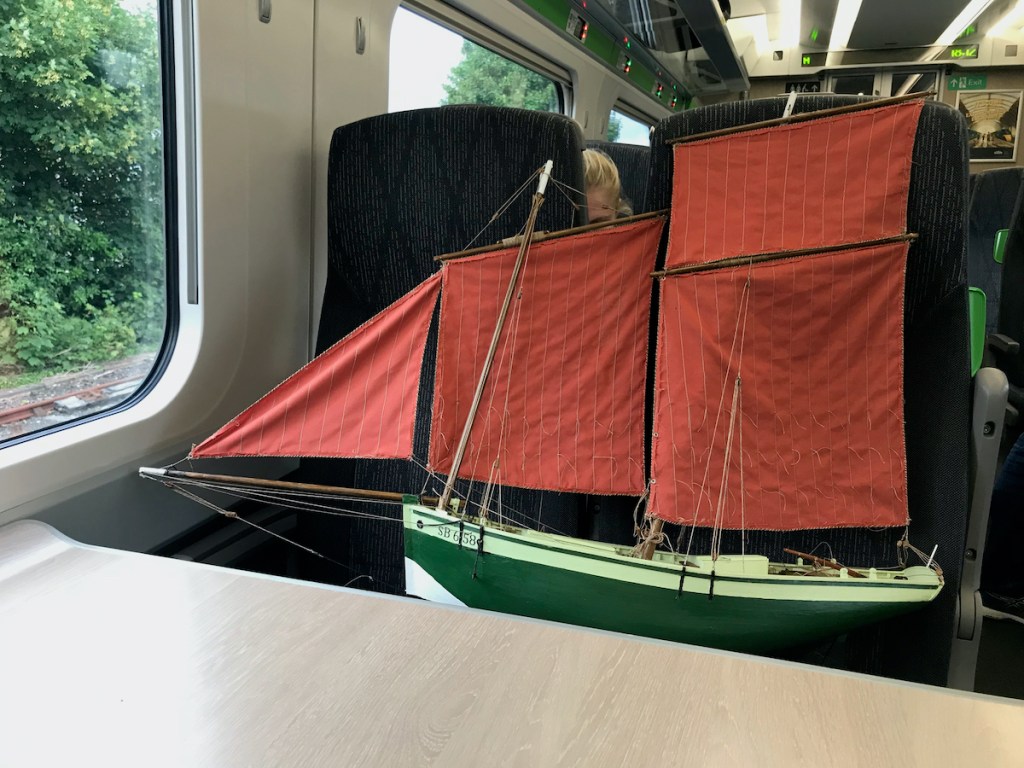
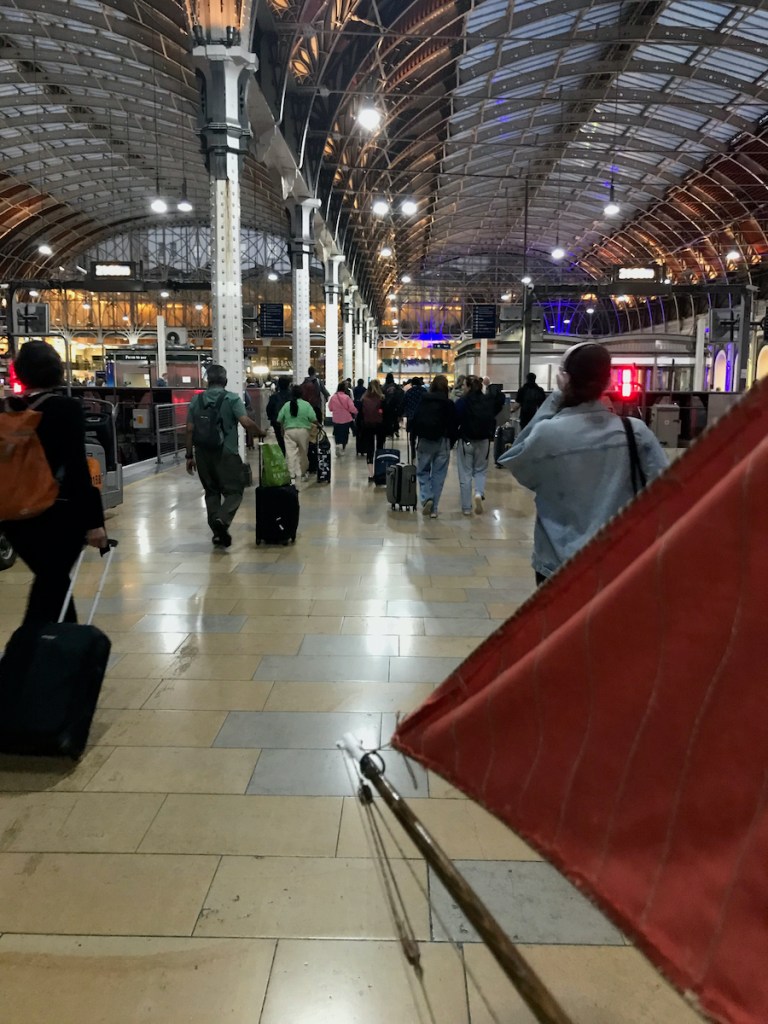
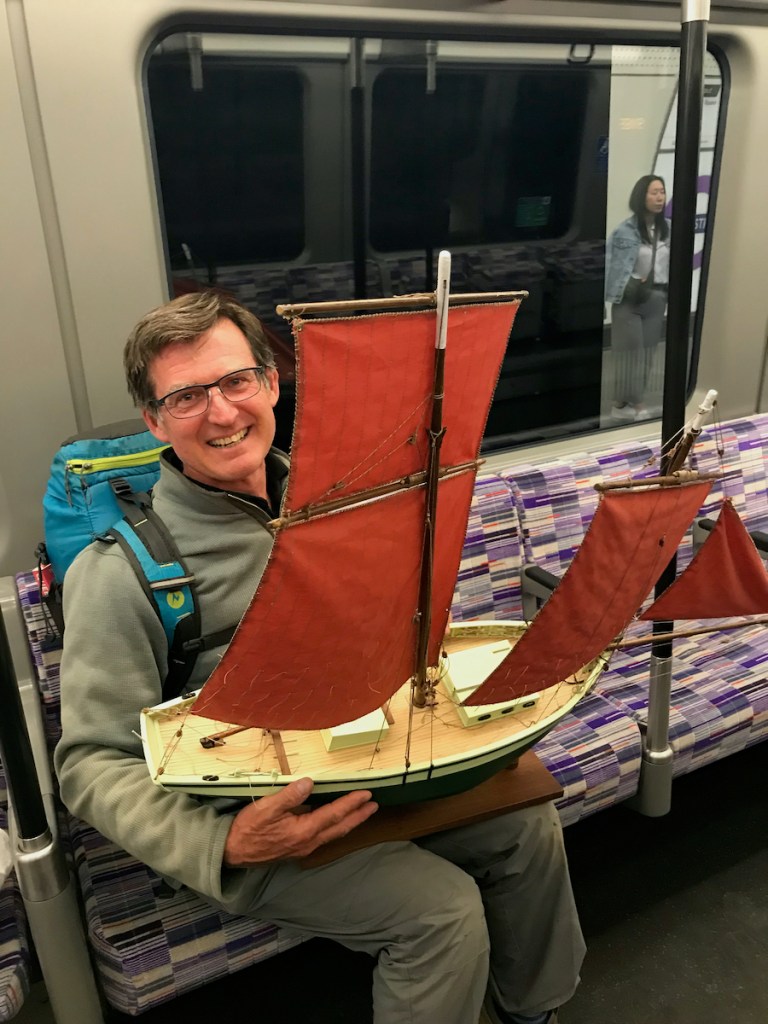
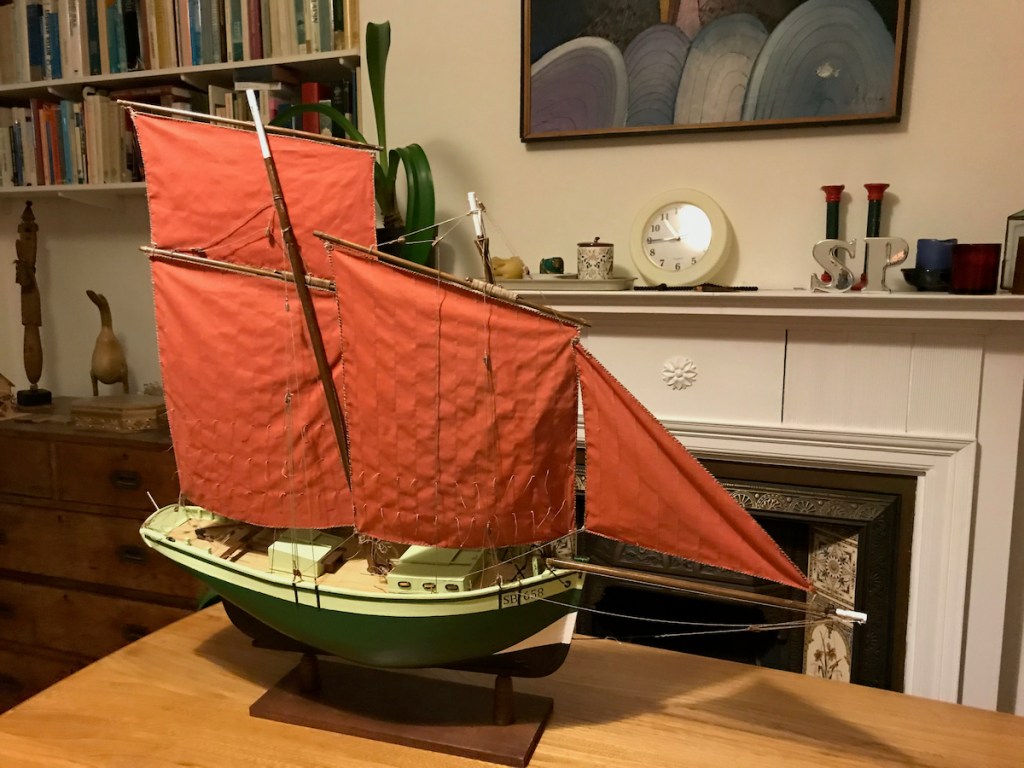
In the end, everything went well until I stood up to get off the last bus, when the bus lurched and the wooden stand fell off. I picked up the pieces and here she is in my front room. The deck took some seawater drips during the Channel crossing, as decks do, and some spots of black mould had formed. But I managed to clean them off with meths and tidy up the miniature lines. What a souvenir!
 Guiding Star 1907