
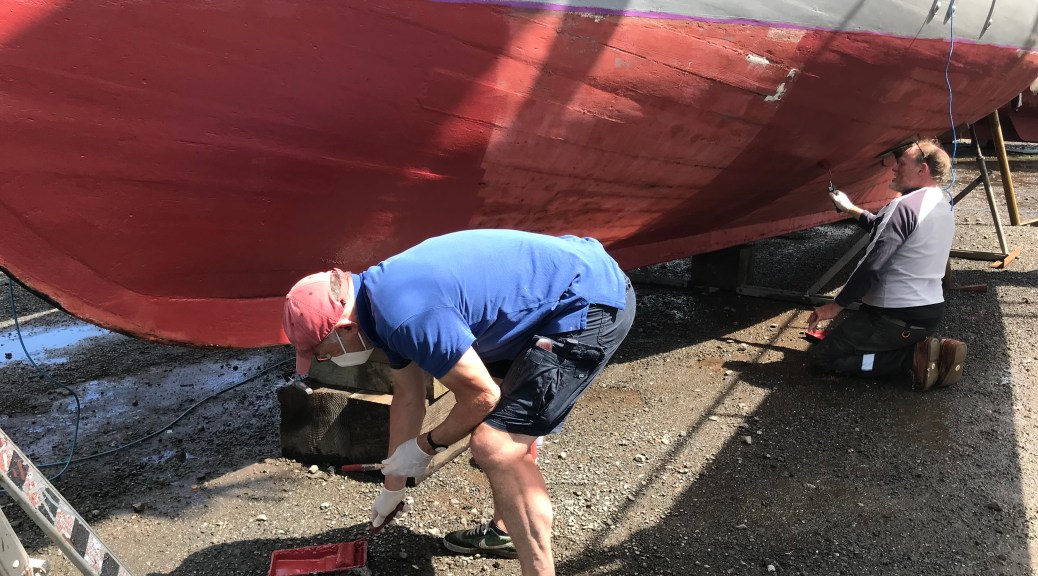
A lot of people walk by Guiding Star and say, “Beautiful boat!” Then they pause for a moment and add, “But I’ll bet she’s a lot of work!”
There’s definitely work involved in maintaining a wooden boat that’s 118 years old. But after nine years looking after Guiding Star, I’d say it’s both less than many people imagine and a whole lot more interesting and enjoyable.
The more you work on the boat, the better you get to know her. You spot the place where a rope has been chafing or water has not been draining properly and can fix it before it becomes a problem. Jay Redman-Stainer of Traditional Rigging, who replaced all the rigging on Guiding Star after I took her over in 2016, told me, “It’s a process of bonding with your boat.” I took that to heart and have found it wonderfully rewarding.
Guiding Star is for sale through Wooden Ships because I’m getting older and moving to a smaller boat. If you’re interested to know more, message me and I can show you maintenance records and costs for the last nine years. You might be pleasantly surprised how they compare with the annual work on a modern fibreglass boat.
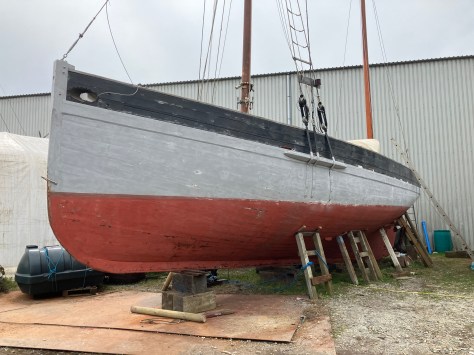
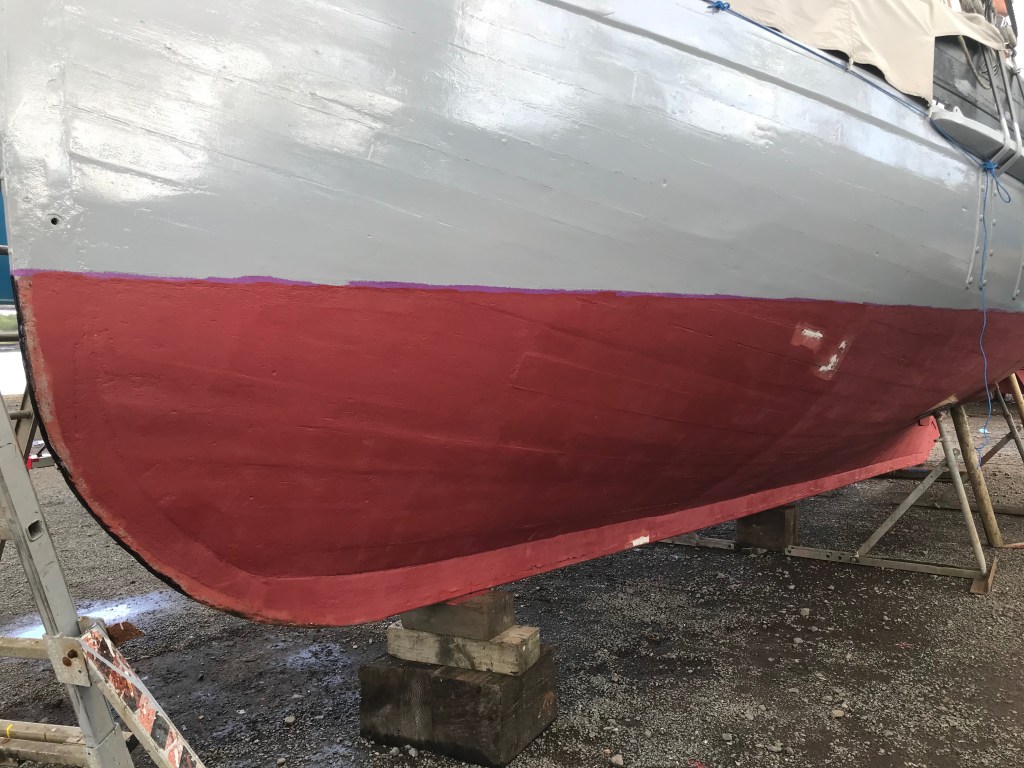
The most essential job each spring is to haul the boat out so you can sand and paint the topsides and scrape and antifoul the hull. That’s a chance to get close to every inch of the planking and spot any problems that might need fixing.
Friends who sail with me on Guiding Star enjoy helping and I’m very grateful for the extra hands. With three or four of us on the job, we can prepare and paint the hull and topsides in three or four days. We normally haul out for three weeks which gives perhaps 10 days of work and plenty of spare time for wet days.
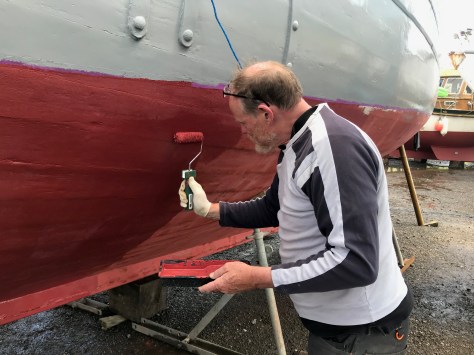
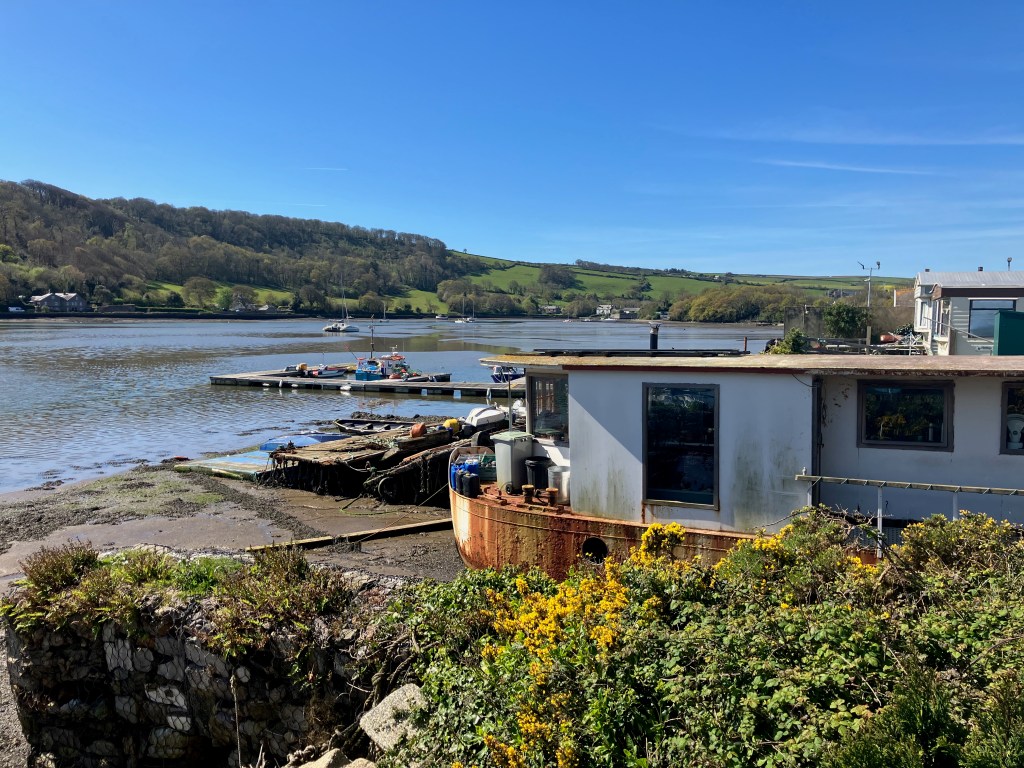
We haul out in what I think is the most beautiful boatyard in England. Why wouldn’t you want to spend a few days sanding and painting when this is the view?
One year, Peter brought his paddleboard to head off into the sunset after a day of painting.
Varnish on the coachroof and hatches needs sanding and topping up each year, and sometimes we take some of it back to bare wood as Chris is doing here with the skylight.

I enjoy varnishing. I do all the spars about every other year and it’s a straightforward job with a rewarding result: shiny wood! Renting a small amount of space in a shed makes all the difference so you can varnish even on wet days.
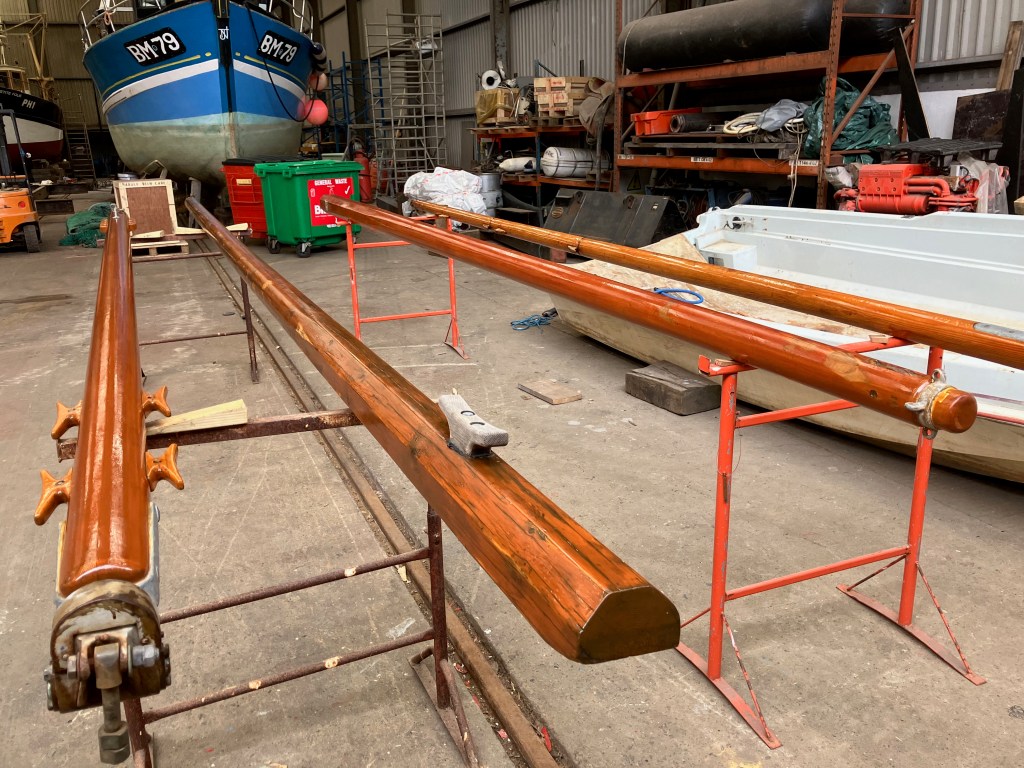
I take most of the running rigging off each autumn so it doesn’t sit in the weather over the winter.

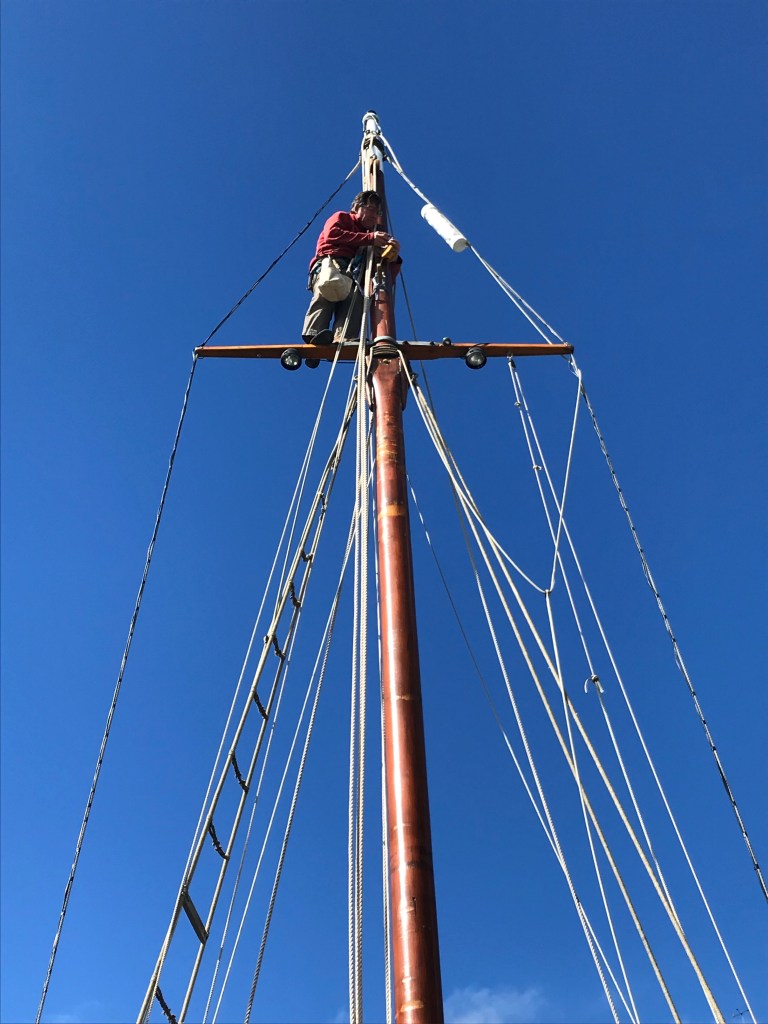
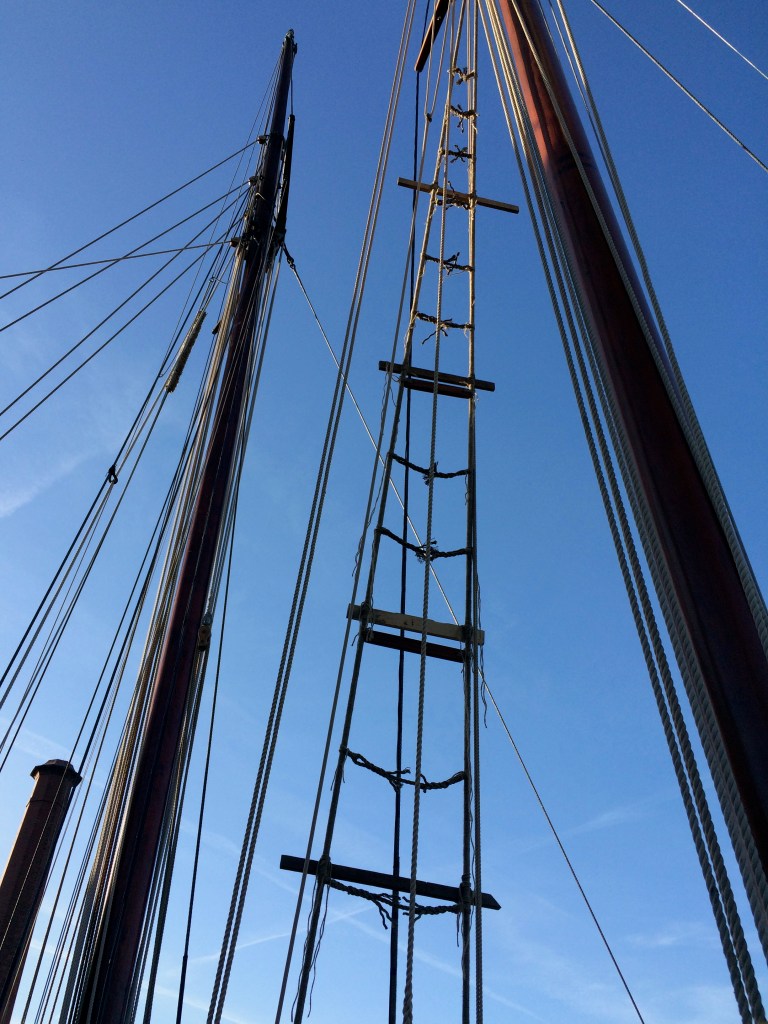
De-rigging in autumn and re-rigging in spring means climbing the mast, which is enjoyable exercise. I used to suffer from crippling vertigo but learned that if you climb securely clipped in on a harness so you know you can’t possibly fall, the anxiety reaction fades away.
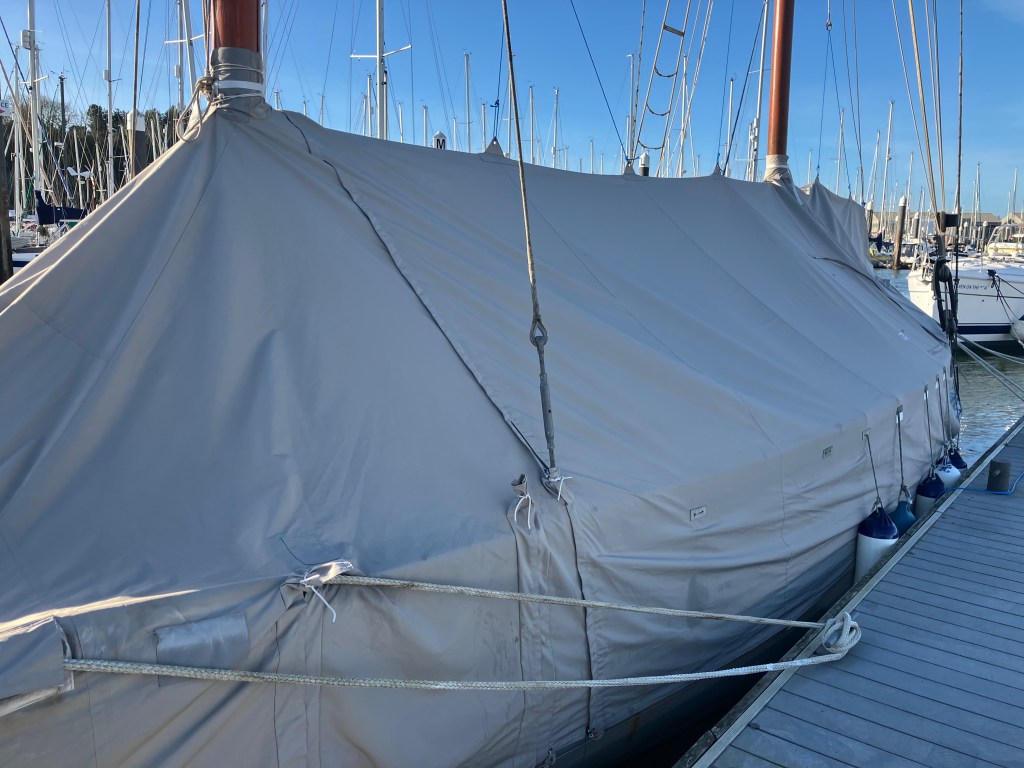
The boat has a winter cover to keep as much rain as possible off her in the stormy months.
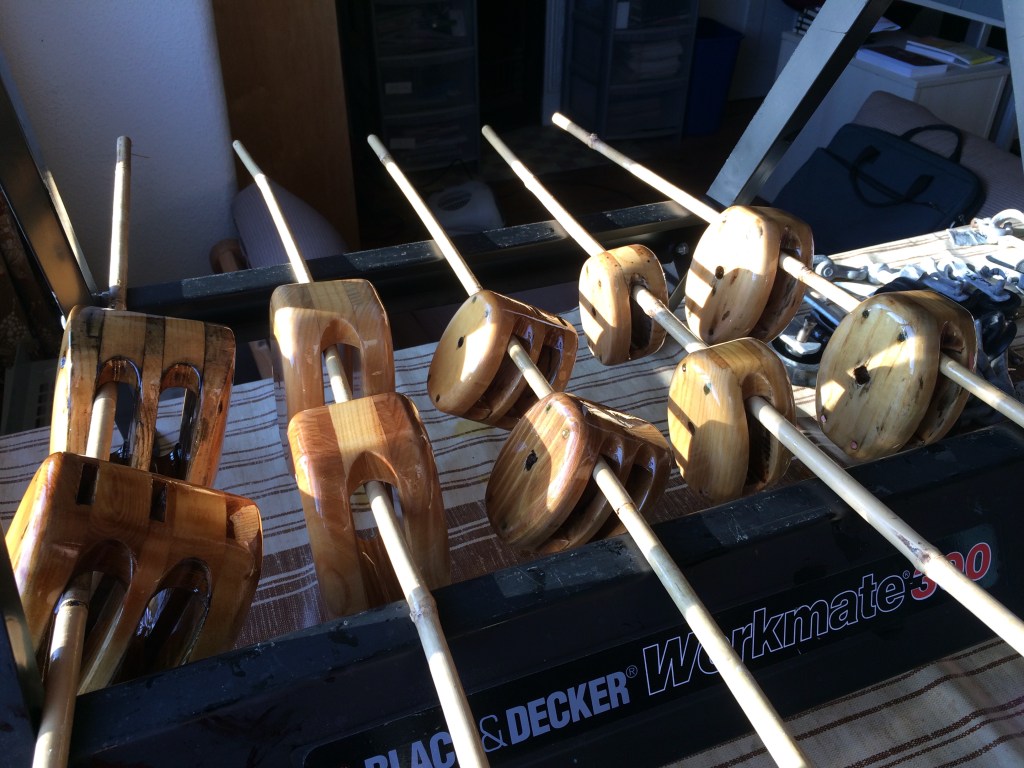
I take the blocks home, take them to pieces and put on a few coats of varnish. It’s a straightforward job and rewarding to see the shine on the wood on a grey February day.

For bigger jobs, I rely on experts. It’s a pleasure to work with shipwrights who know their business and have done this a hundred times before.
That applies particularly below the waterline. Every once in a while there’s a plank to replace: these replaced two of the original 1907 elm planks. They’d lasted pretty well. The beauty of wood is that, well, it grows on trees and is a whole lot less toxic to handle than GRP.

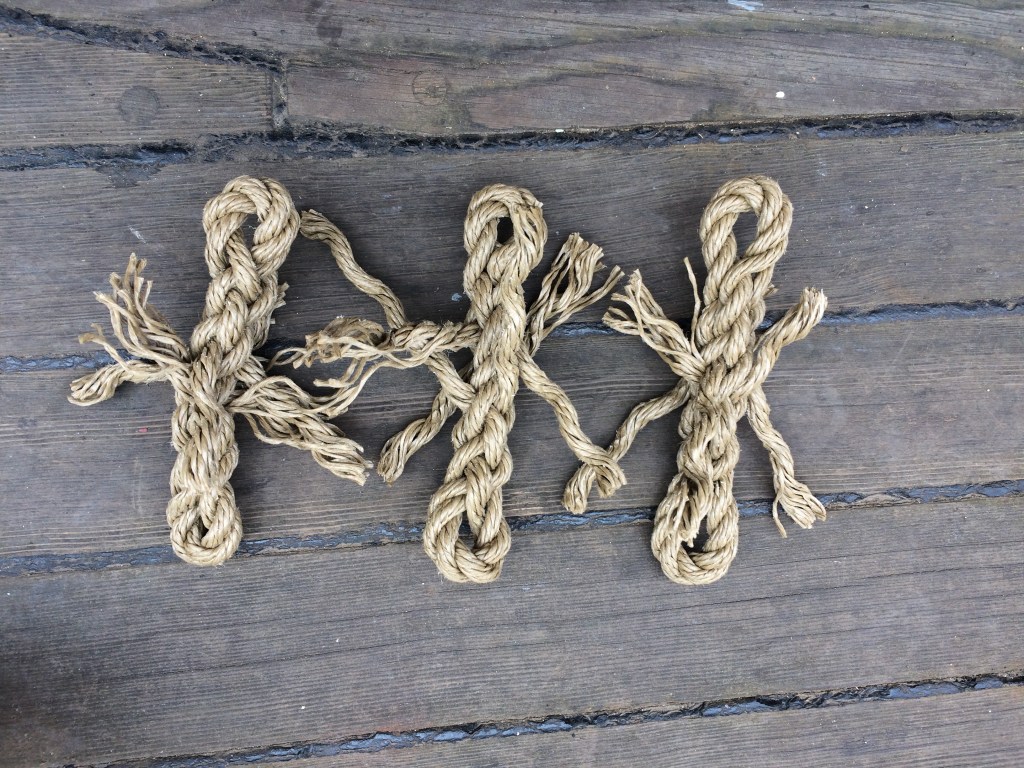
I don’t have carpentry skills so I can only watch and admire major woodwork. But I have learned how to do simple rigging jobs. Splicing three-strand rope is easy to learn, fun to do and a lot cheaper to do yourself than to pay a rigger.
With Jay’s encouragement and his original master Dennis’s instruction (use your thumb to push the splices through, don’t try to poke the strands through), I made the ratlines for Guiding Star the first year.
There’s nothing lovelier than a freshly-painted wooden boat. Just remember to remove the masking tape before relaunching…
 Guiding Star 1907