Category Archives: Log

What we’re up to on Guiding Star

Three days and a thunderstorm

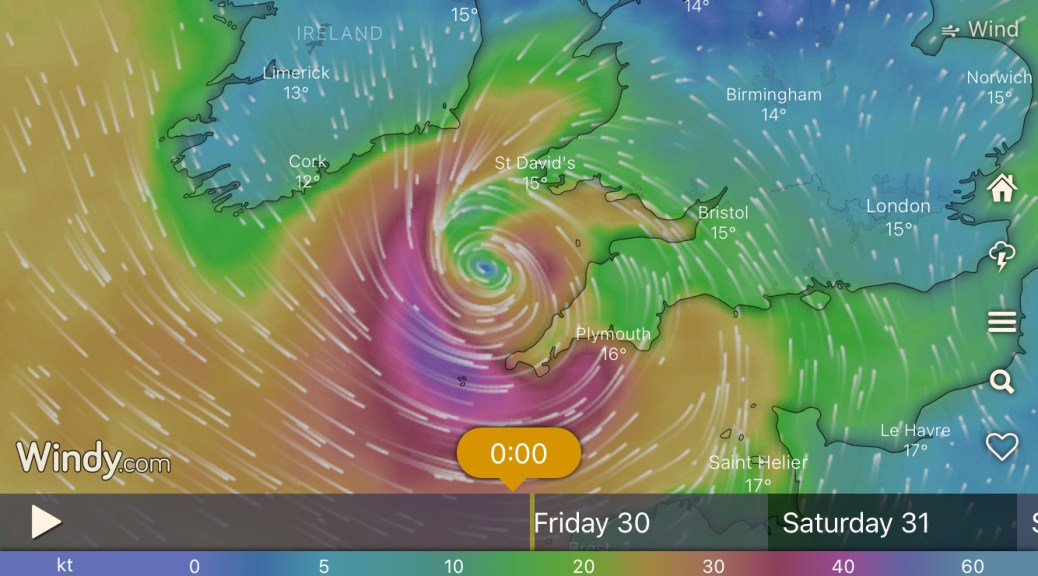
The summer weather looked too good to be true as we set sail for the Falmouth Classics in June: hot sun, clear skies and little wind. “Three days and a thunderstorm”, warned my Cornish friend Mark. “Saturday forecast looking ‘sub-optimal’. BBQ may be challenging.”

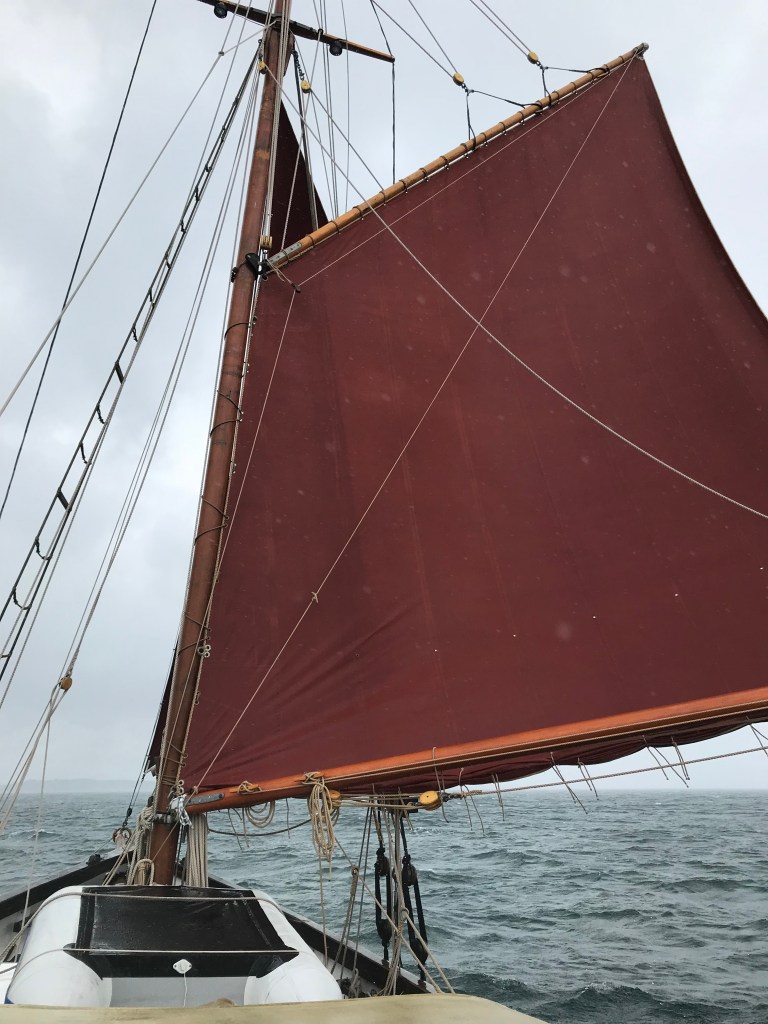
He was right. On Friday we drifted round Carrick Roads for two slow races in sunbathing weather. On Saturday we scudded to the start line in a fresh breeze with two reefs in the mainsail and the storm jib up. The wind started gusting a near gale and our race was called off. By evening, rain was beating down on the barbecue marquee at the Royal Cornwall Yacht Club. I’m afraid we beat a retreat and missed the Parade of Sail on Sunday.

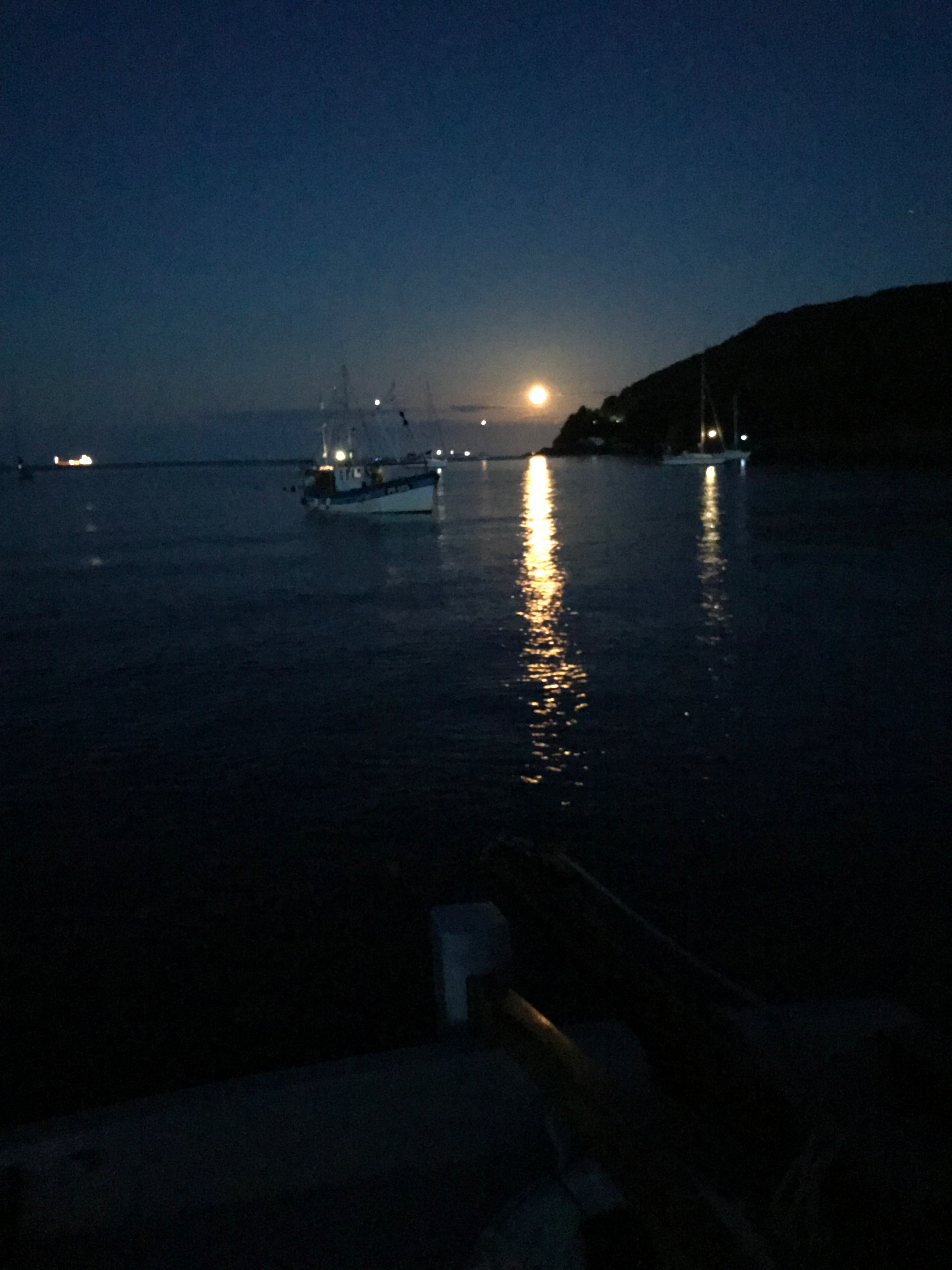
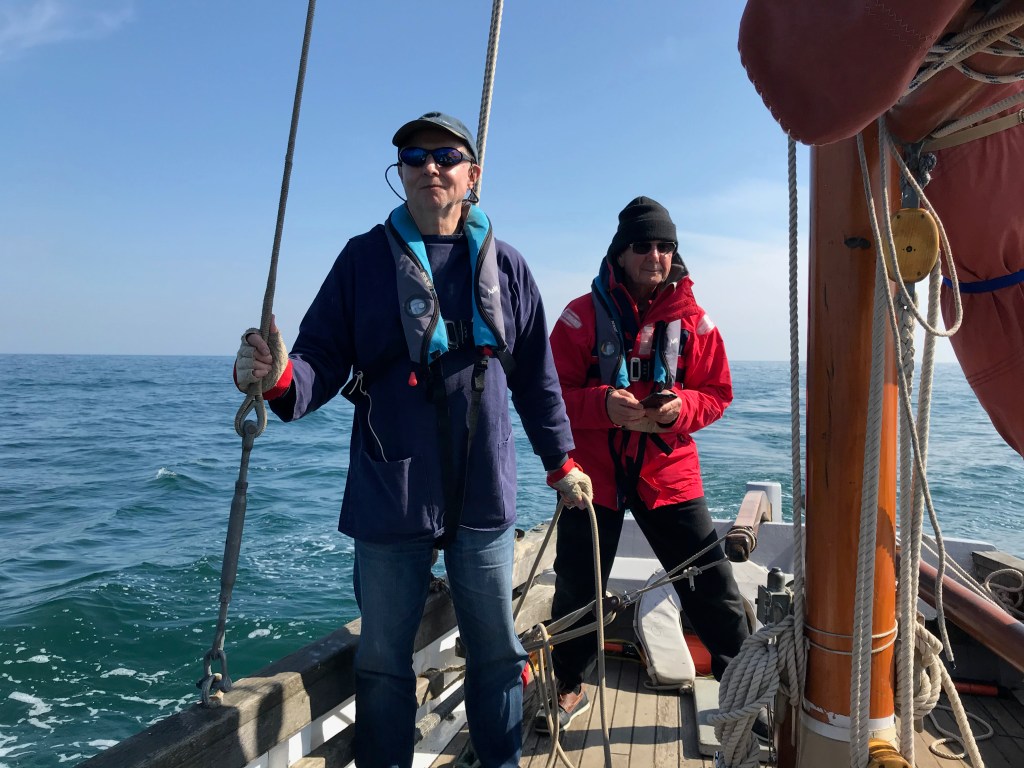
We had our three days of glorious weather, though, in fact four days: perfect for new crew Justin and Leslie to get used to the boat. On Tuesday, we enjoyed watching our marina’s hired harrier scaring away seagulls as we prepared the boat, and motored across Plymouth Sound to anchor in Cawsand for a moonlit night.

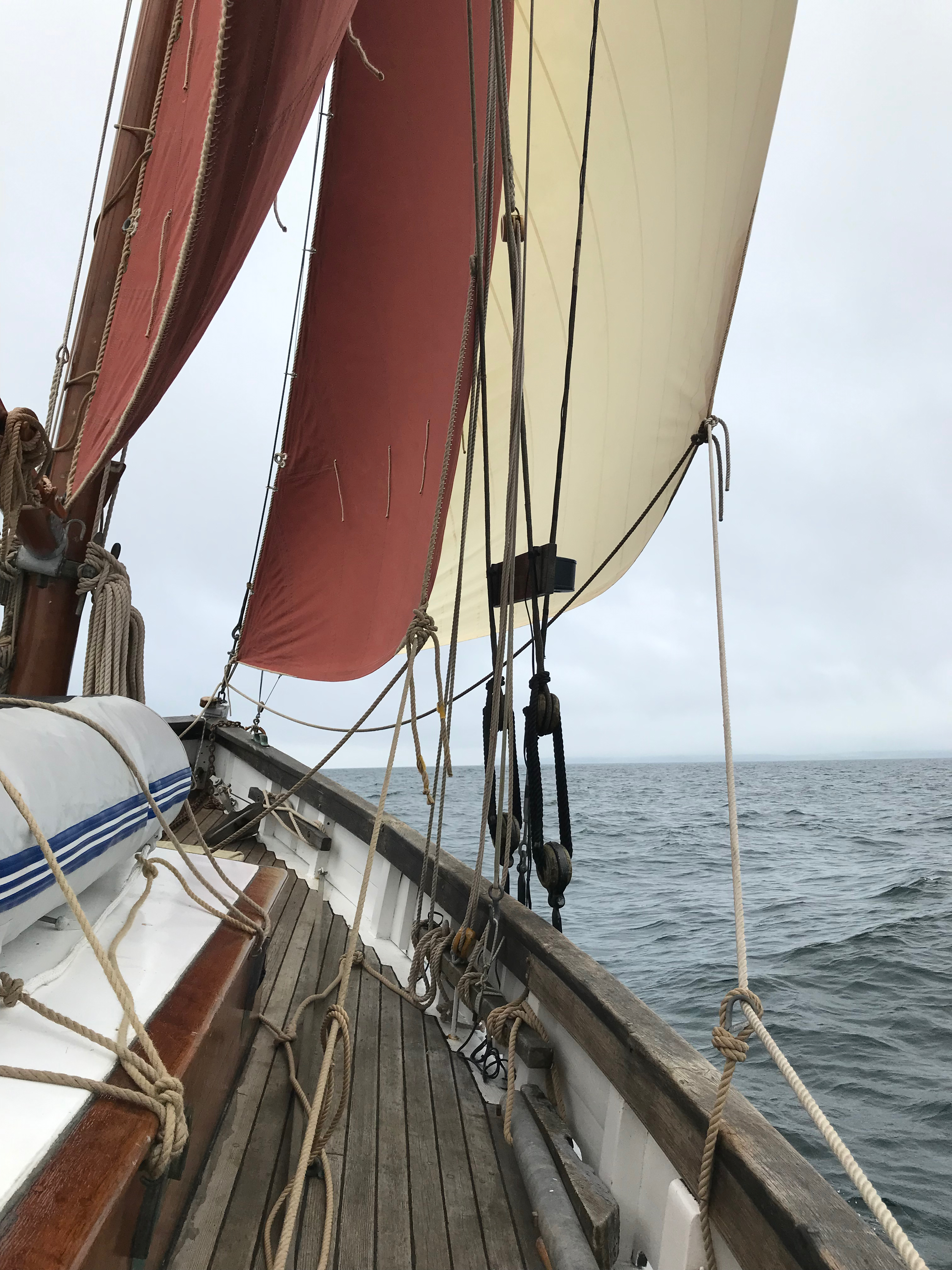
One Wednesday we sailed to Fowey and on Thursday, we challenged the light airs with our new genoa and topsail. There was a nervous moment when the bilge pump started working every five minutes and we thought we might be sinking. But it was only one of our two water tanks, soft bladders under the saloon settees, rupturing and emptying its 150 litres of fresh water into the bottom of the boat.

On Friday, I was thrilled to be joined by my friend Michel from Trégastel in Brittany, who had travelled by car, ferry and train to reach Falmouth in time for the first race. Michel is the President of the Modestine Society, a Franco-Scottish friendship group set up to celebrate the life and work of the nineteenth-century writer Robert Louis Stevenson, a Scot who hiked the mountains in southern France with a recalcitrant donkey called Modestine.

Unfortunately, Michel had injured his knee playing tennis and when he stepped on Guiding Star, he wrenched it further and sat through the race in increasing pain. We managed this shot of us with the Modestine Society banner before the water taxi took him ashore.
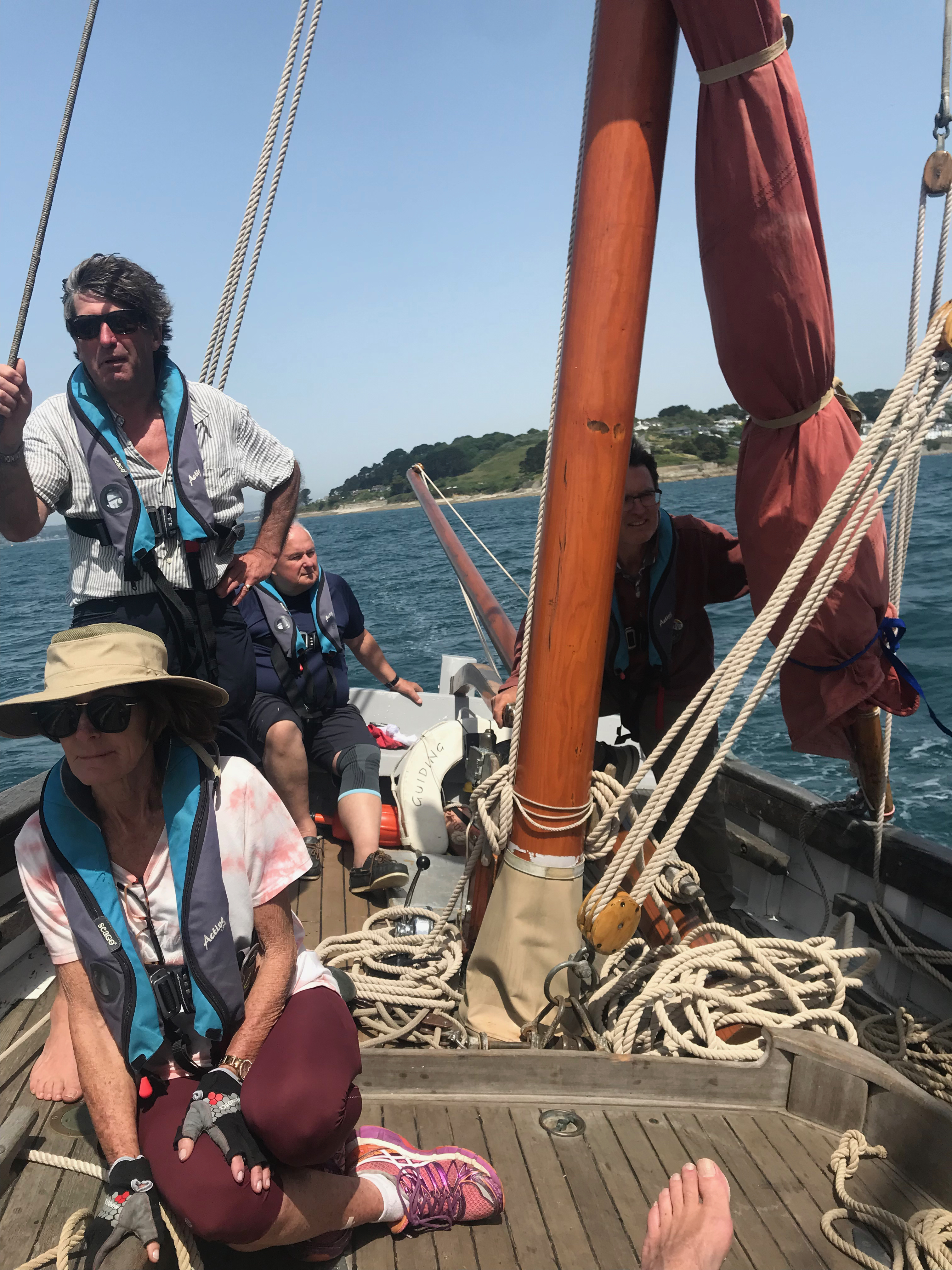
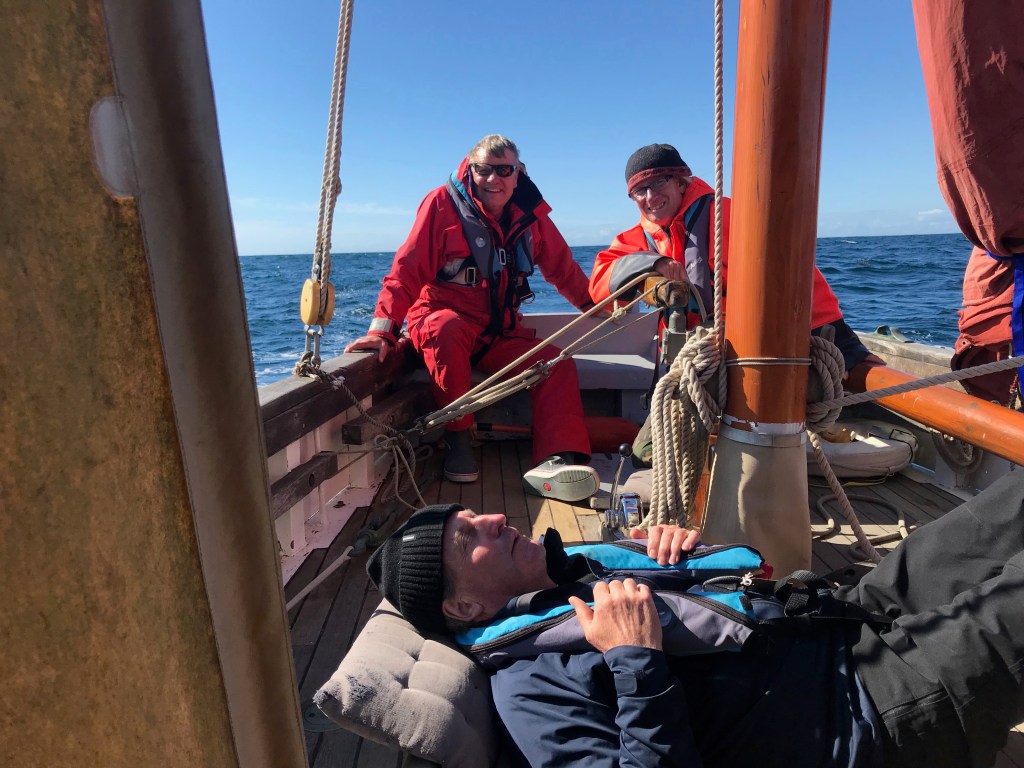
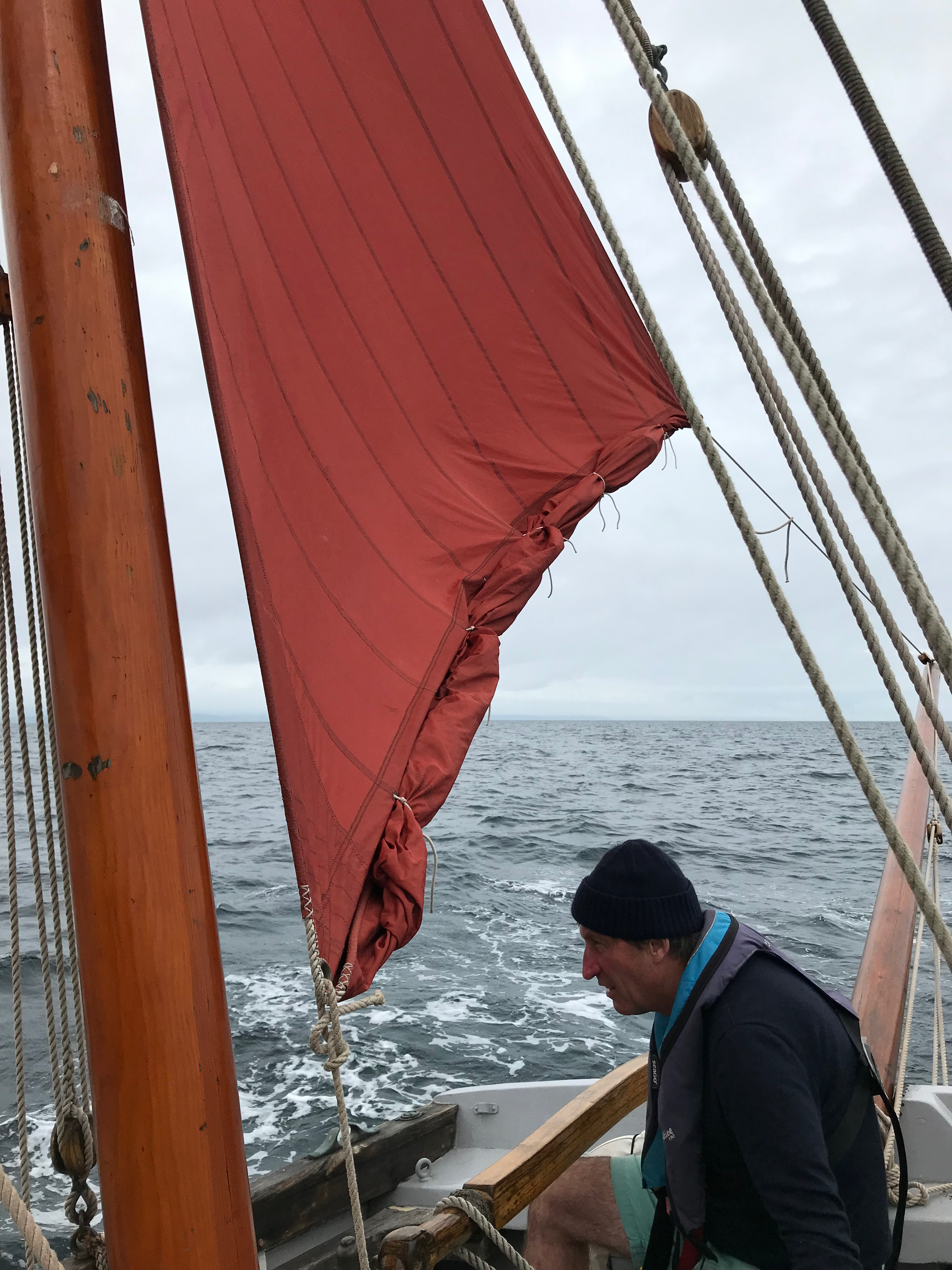
On Saturday, my old skipper Anthony joined us for our roaring broad reach down Carrick Roads and an exhilarating beat back after the race was cancelled. Sailing with Anthony on his 1904 Californian yacht Aeolus captured me for traditional boats: all the ropes the same colour and no winches. Needless to say, with the boat heeled to 30 degrees and water rushing over the side deck, none of us took any photographs so you’ll just have to take my word that we had a terrific time.

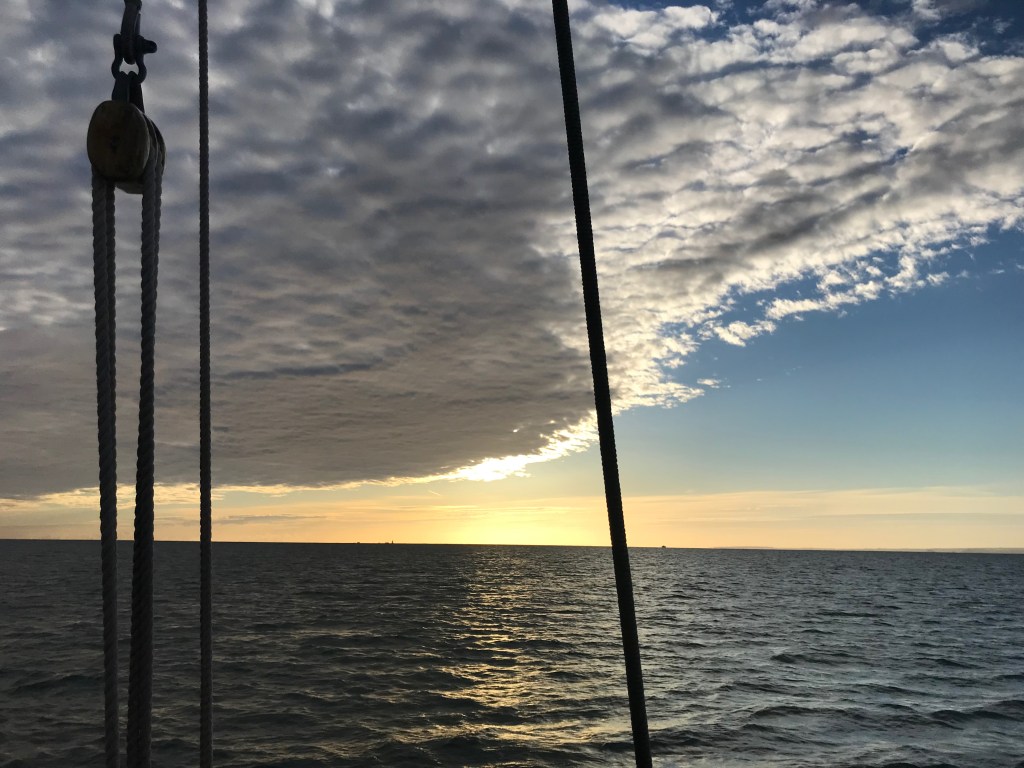
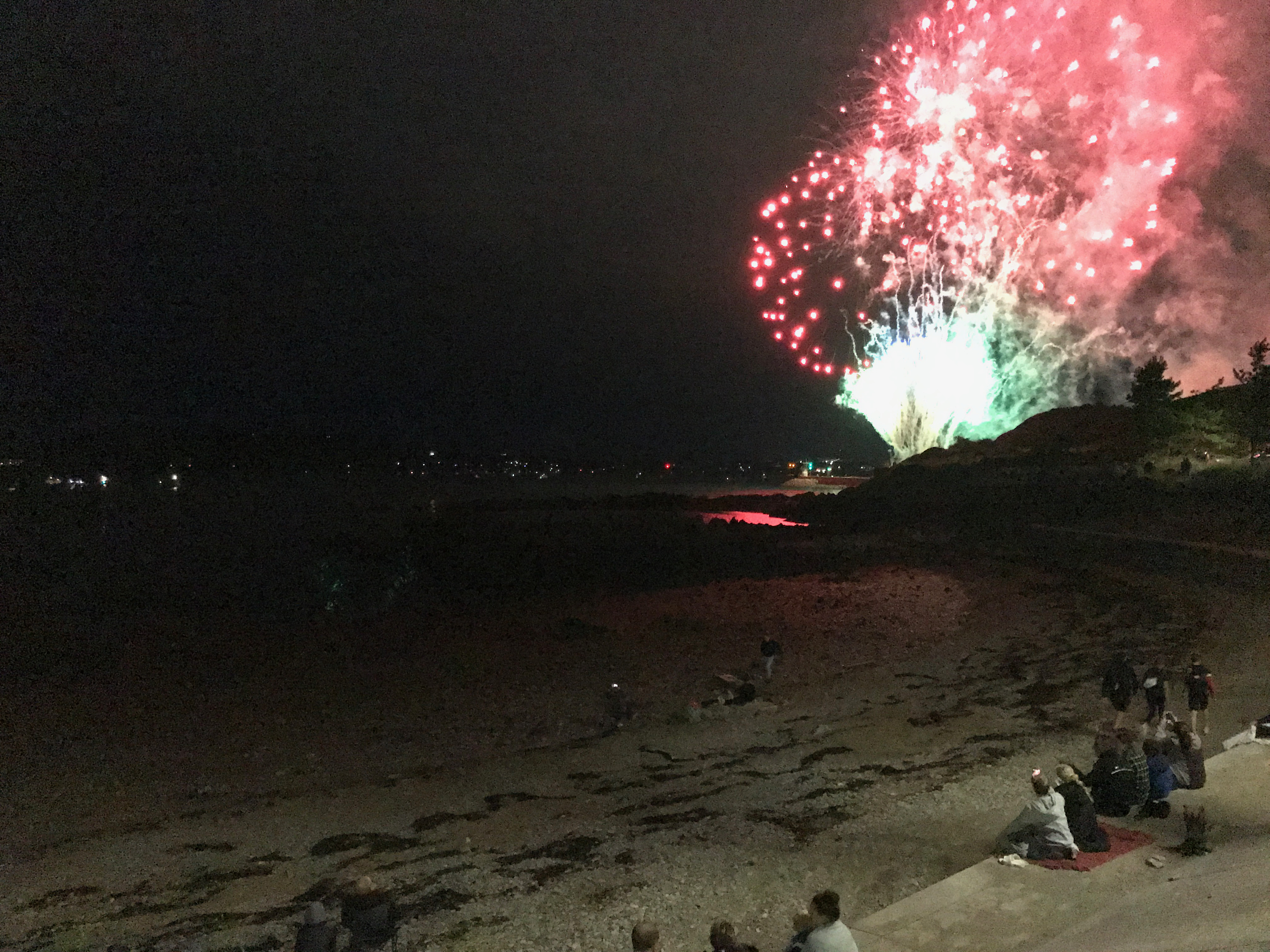
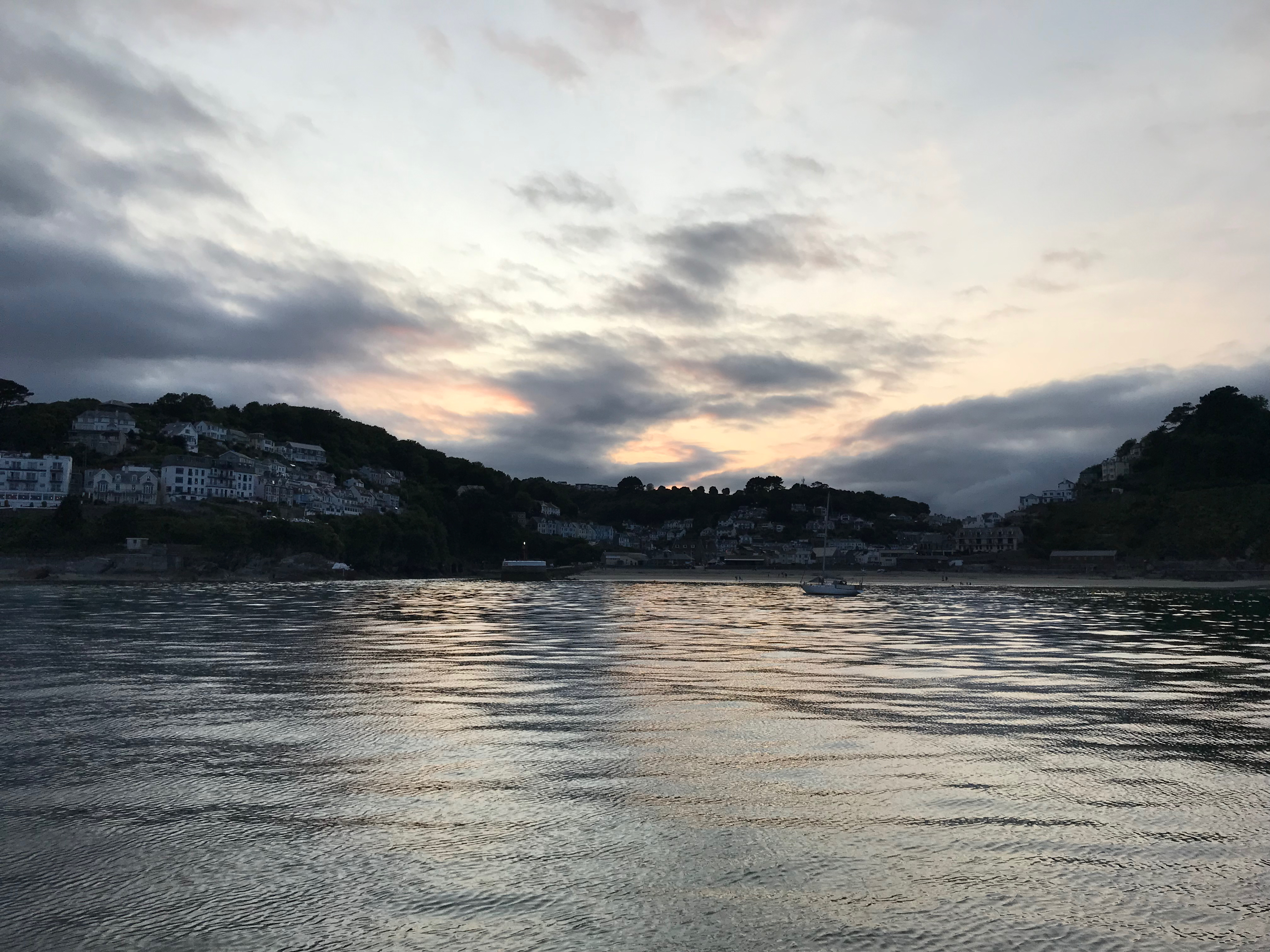
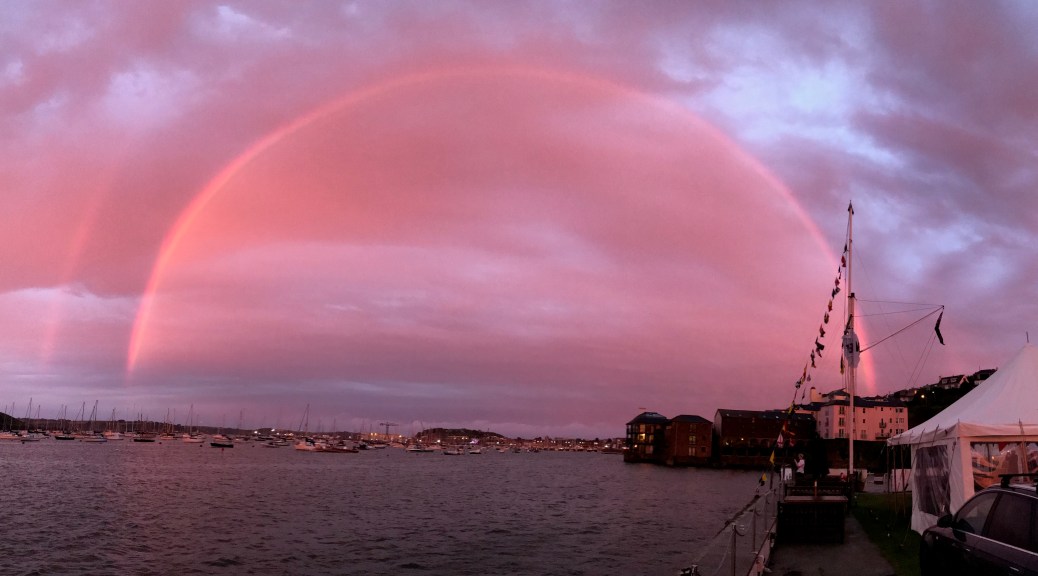
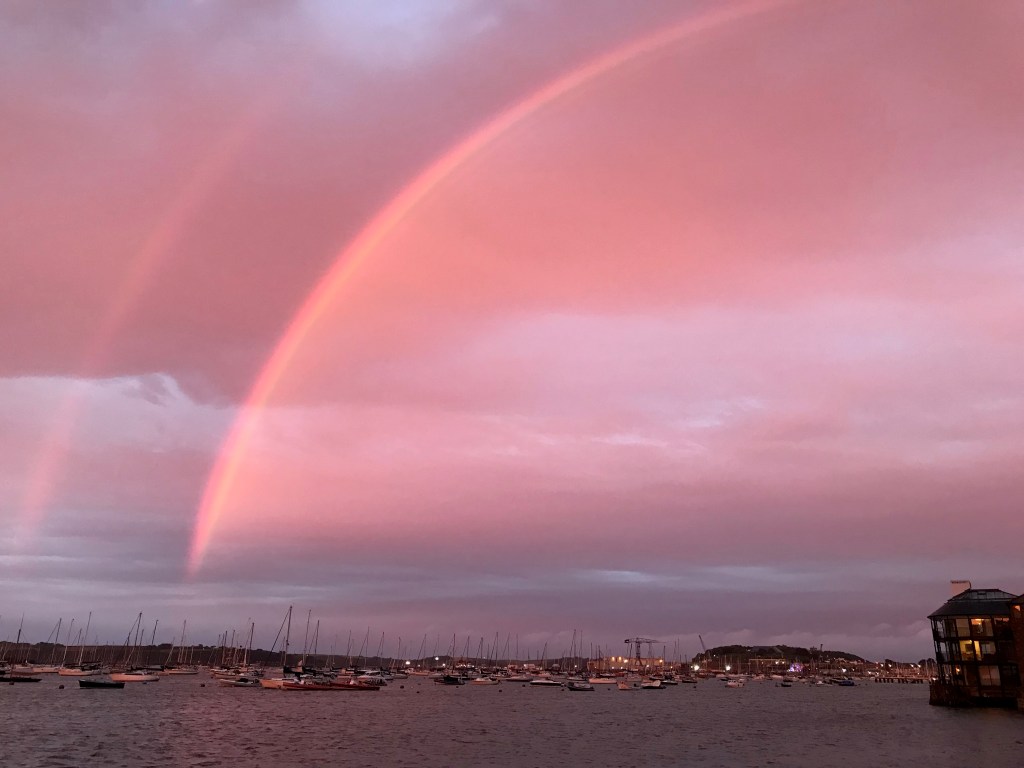
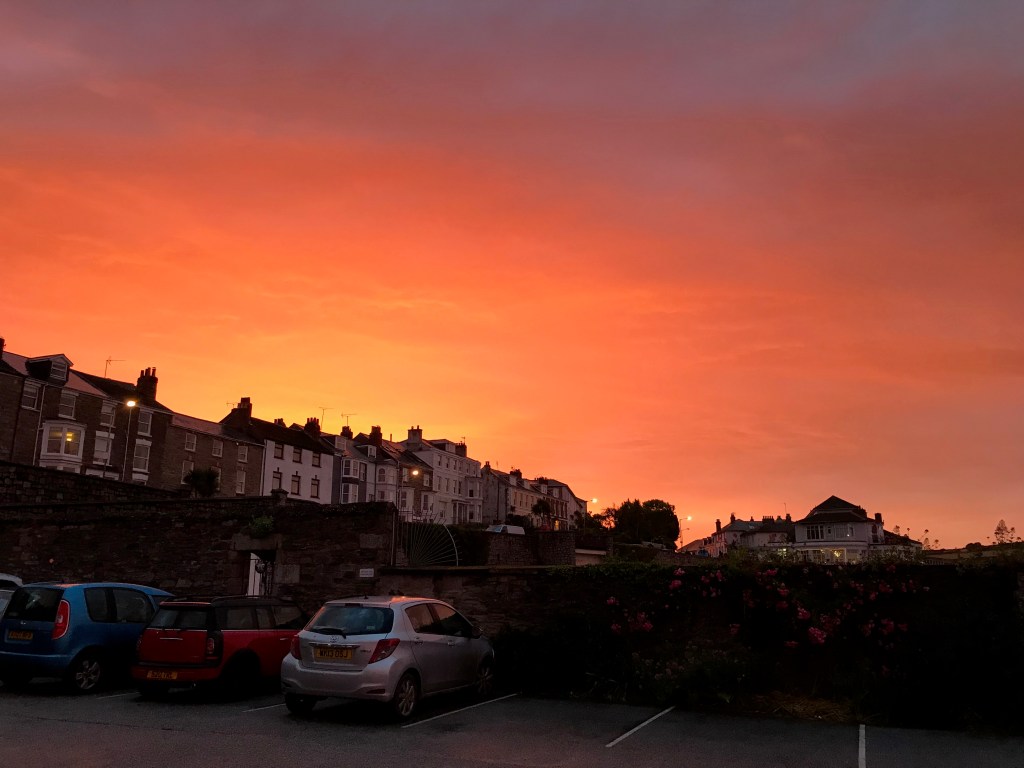
It wasn’t much fun queueing in the driving rain for barbecued sausages and chicken but when the downpour stopped, we were rewarded with a sky to remember. The lawn in front of the Yacht Club was crowded with awestruck sailors holding their phones up to take photos. Even the view from the car park was stunning.
France at last!

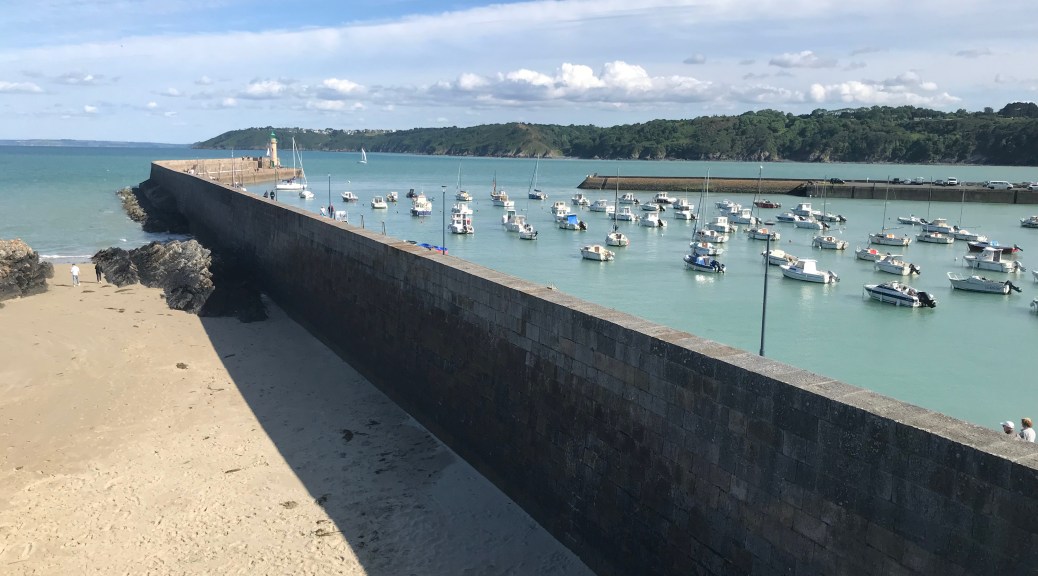
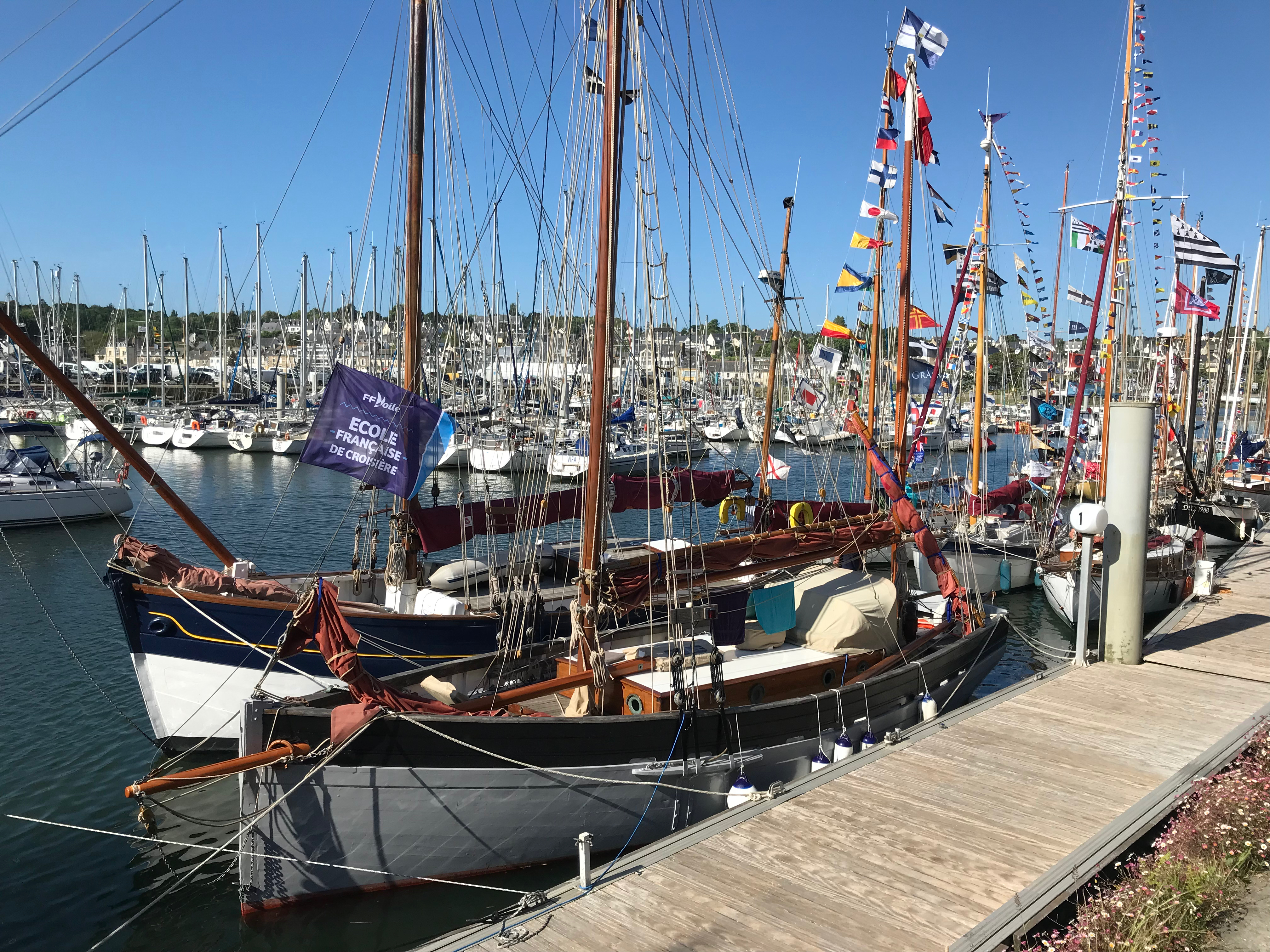
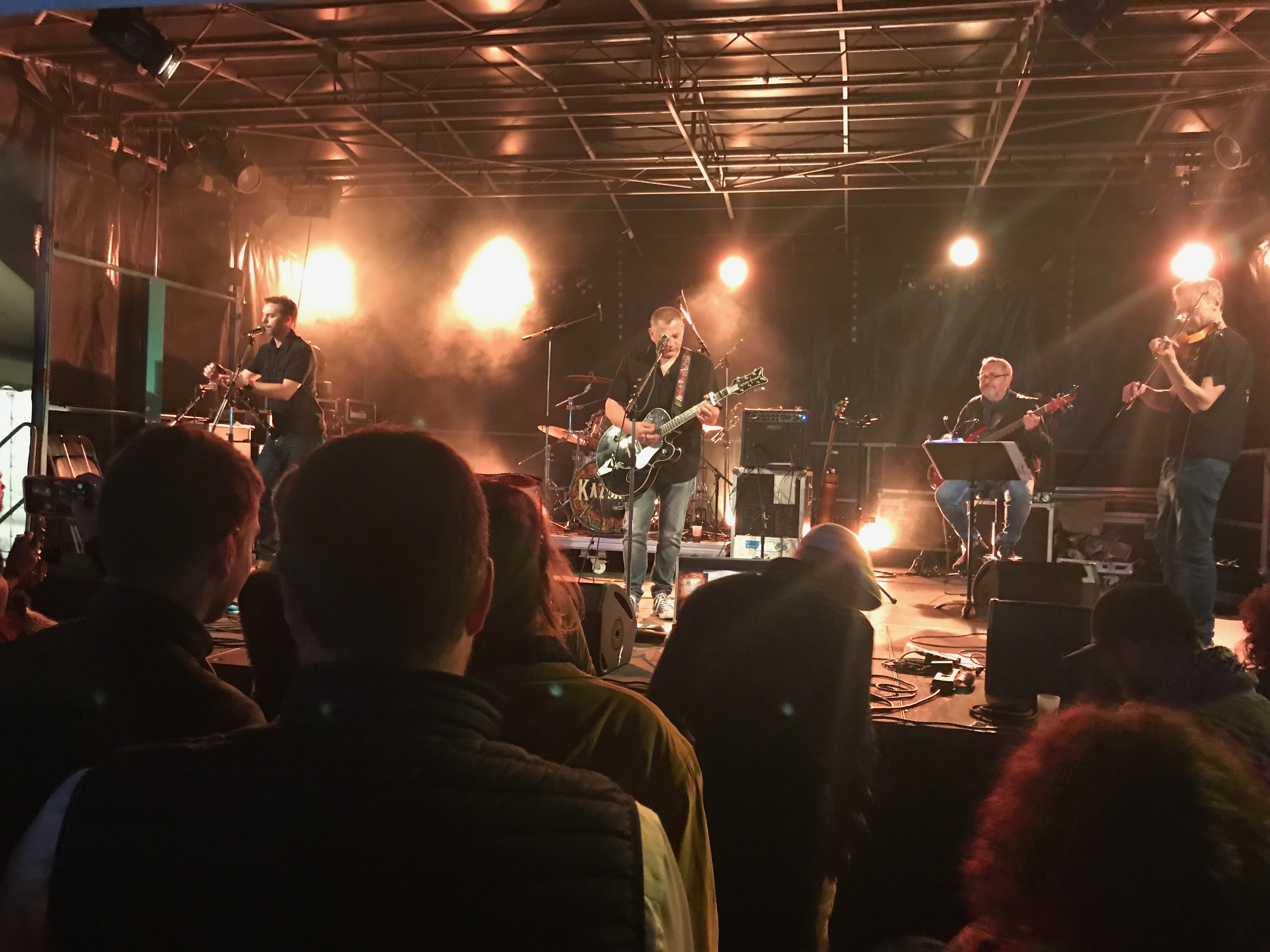
After three years of pandemic lockdowns and uncertainty over post-Brexit passport arrangements, we finally made it to France! We sailed Guiding Star to northern Brittany, to Binic’s friendly annual festival of boats, food and music celebrating the generations of French fishermen who spent six months a year catching cod in the freezing fog off Newfoundland.

We set sail from Plymouth after breakfast, reached straight across the Channel in a steady breeze and warm sunshine, and anchored off Binic at dawn next day to wait for the nine-metre high tide we needed to cross the sandy beach and enter the harbour.

Brexit has added some friction for British sailors: we used to just sail to and fro across the Channel and nobody bothered with passports or boat documents. This time, once we locked in on the afternoon high tide, we had an hour to hunt down the customs police headquarters before they closed. We borrowed a kind friend’s car, Google-mapped our way to a small industrial estate several miles away (thanks to Chris for continual reminders to drive on the right), and made it in time. An overworked customs officer stamped our passports, for me the first French stamp since I went on a school French exchange in 1971.

We should properly have sailed to St Brieuc, six miles down the coast, because non-EU boats should only make land in northern Brittany in one of three ‘ports of entry’ widely spaced along the coast. But the festival organisers persuaded the police to let us sail direct to Binic.

To stamp out of France after the weekend of fun, we should have gone back to the customs headquarters on Monday during office hours, so missing the dawn high tide to set sail. But in an ‘exceptional procedure’, two officers in plain clothes met us in a car park in Binic on Sunday afternoon and stamped our passports in the back of a white van. I hope in another couple of years, someone will have negotiated a pragmatic deal to allow sailors cross the Channel as easily as we used to and let the customs police to get on with catching smugglers.

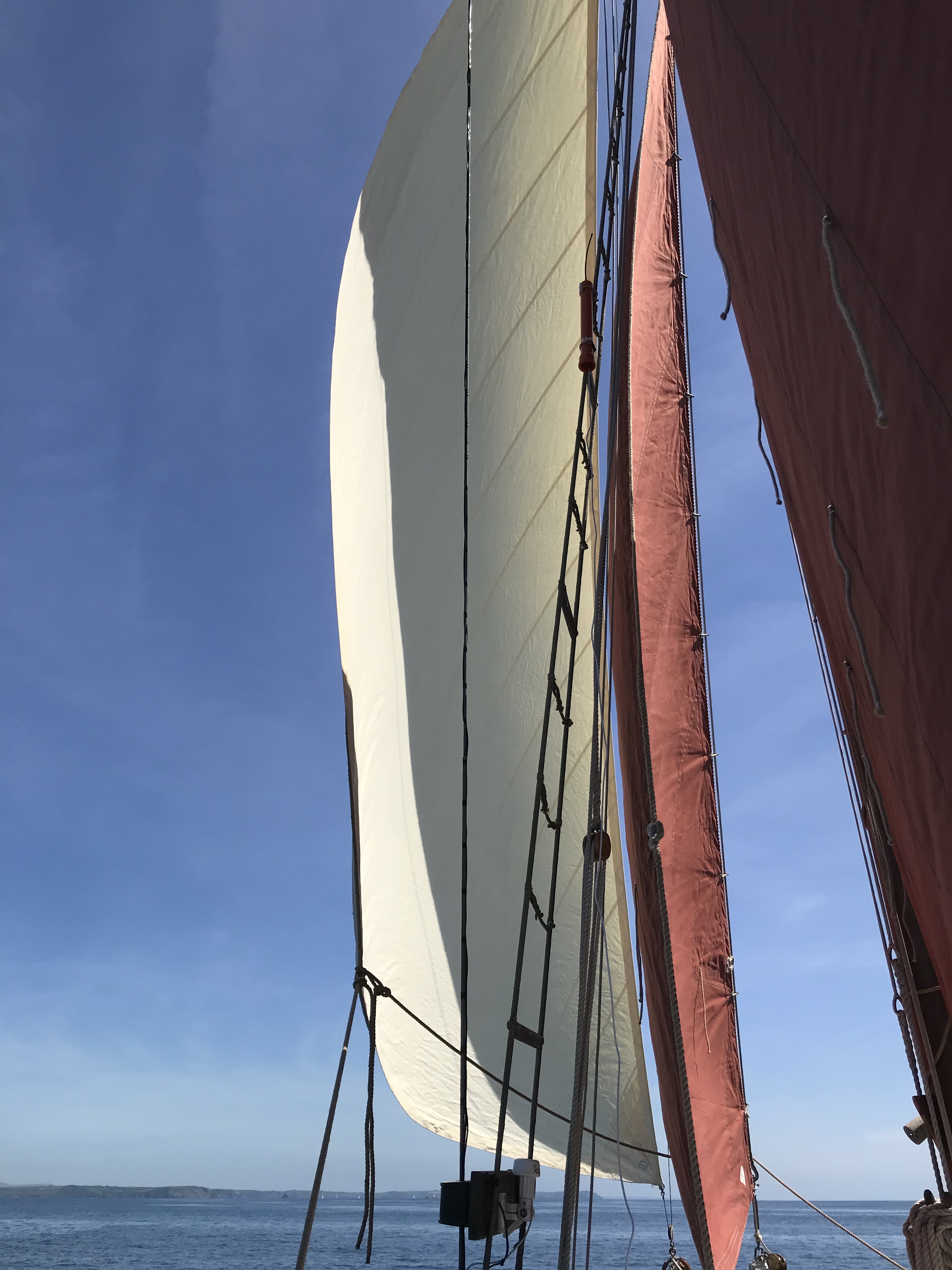
Our passage back took nearly twice as long as the trip over, first motoring for 12 hours through a millpond sea, then beating into a fickle northwesterly blowing from exactly where we wanted to go. But we did hoist Guiding Star’s new topsail for the first time, and it set perfectly. We had last season’s new sail, the big genoa, up as well as 2020’s new main and staysail, so this was the first time we’d had all Guiding Star’s four new sails up at the same time.

I then left the sails up for too long when the wind freshened and let the genoa drag over the side when I thought it was safely tied up on deck, but we recovered well. We berthed in Plymouth after 36 hours at sea and just made it to the pub before the kitchen closed. Many thanks to Chris, John and Martin for a terrific trip.

Lucky in Dartmouth

Rounding Start Point and sighting the rocky entrance to Dartmouth, I wondered why there were so many sails on the horizon. The sea was thick with boats. Then I remembered that it was Bank Holiday Saturday and this was the climax of the Dartmouth Royal Regatta. I despaired of a berth.

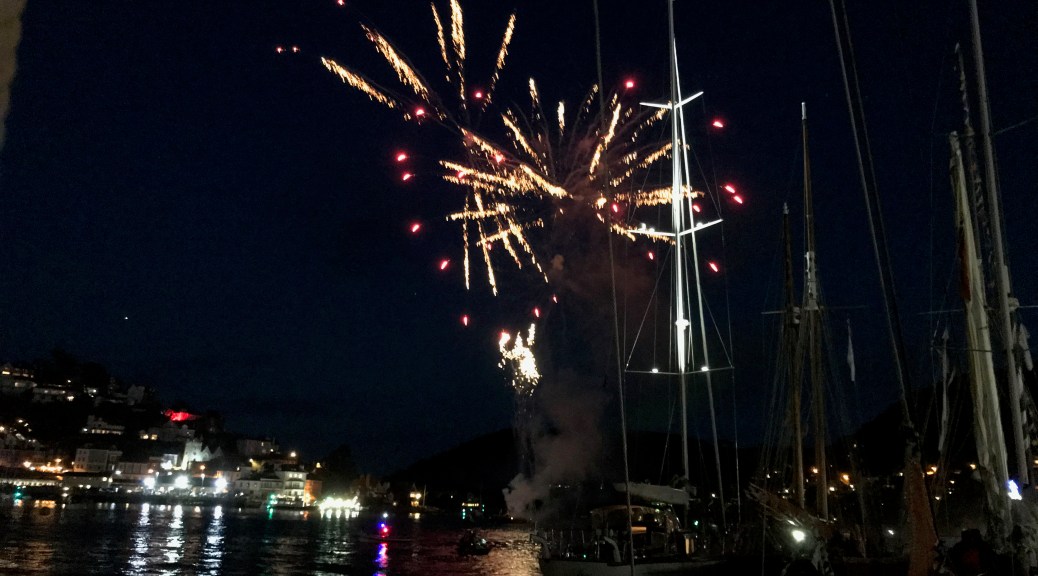
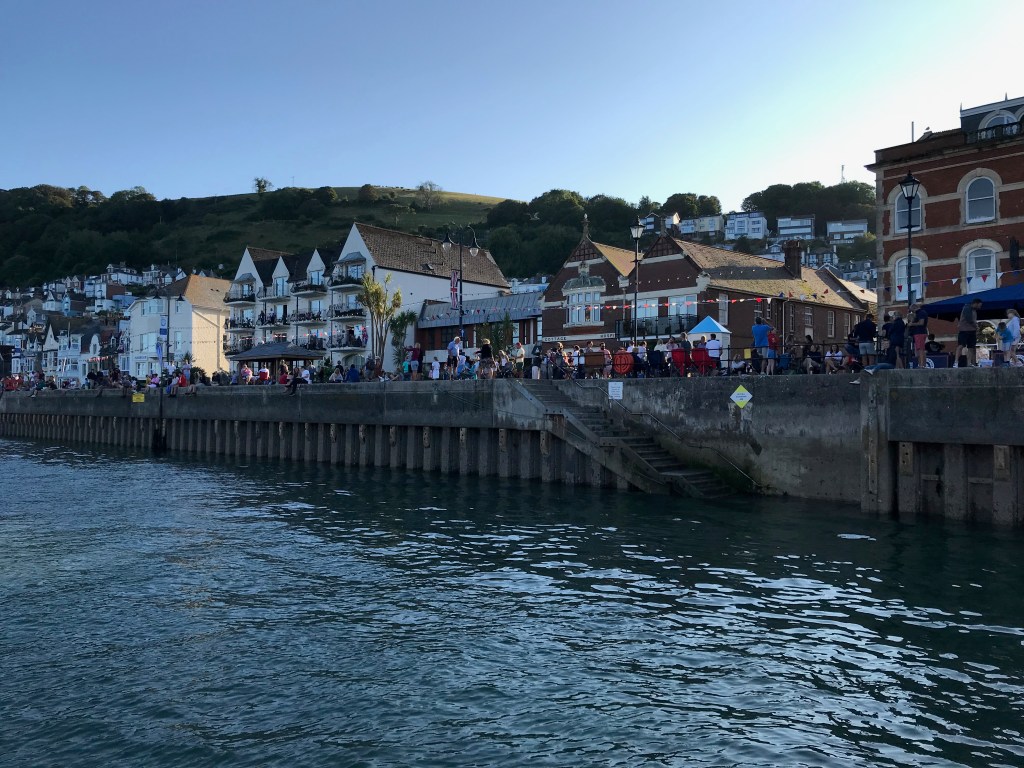
I reckoned without the masterful organisation of the Dart Harbour staff and Regatta volunteers. We were guided to berth on the Town Quay right between the four-deep crowds on the quayside and the barge taking up position in the middle of the river to launch the evening’s fireworks.

Regatta entertainment

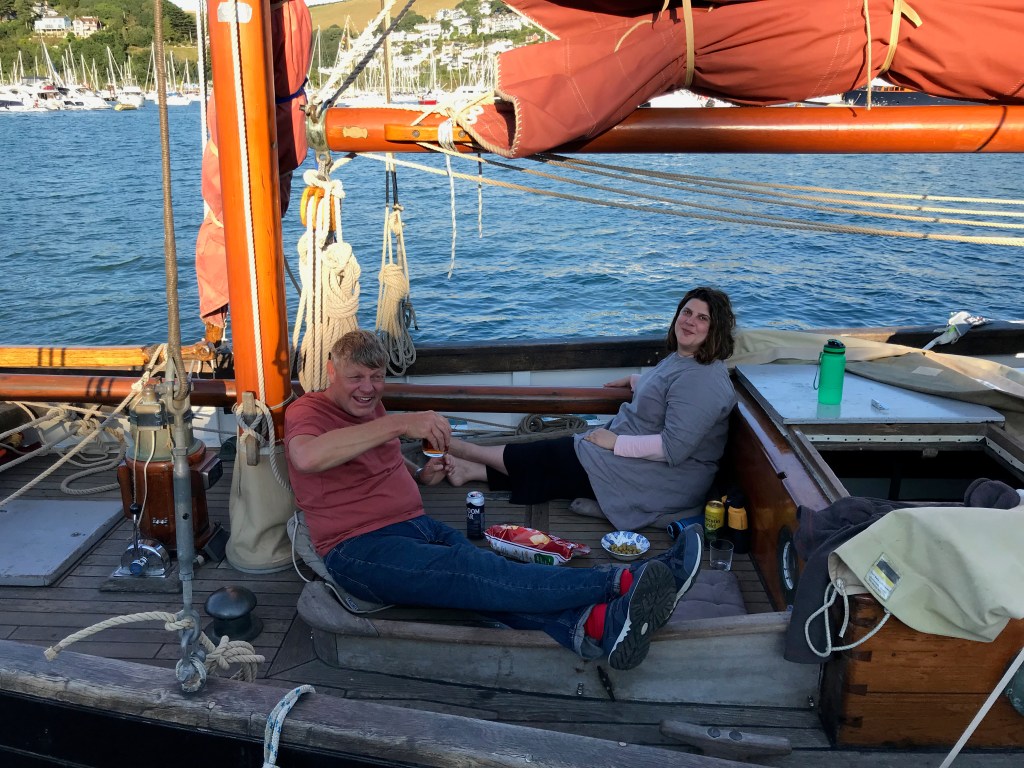
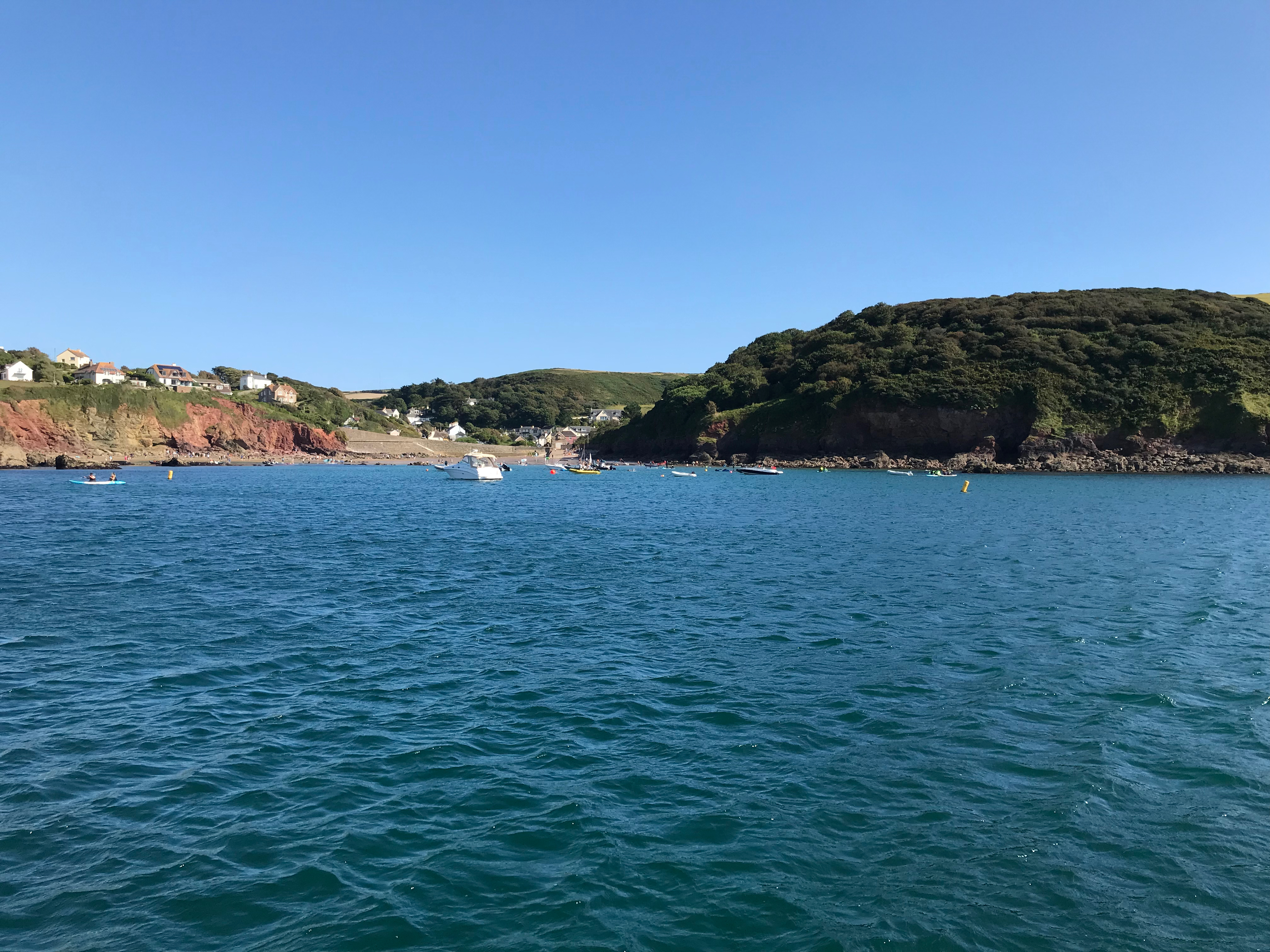
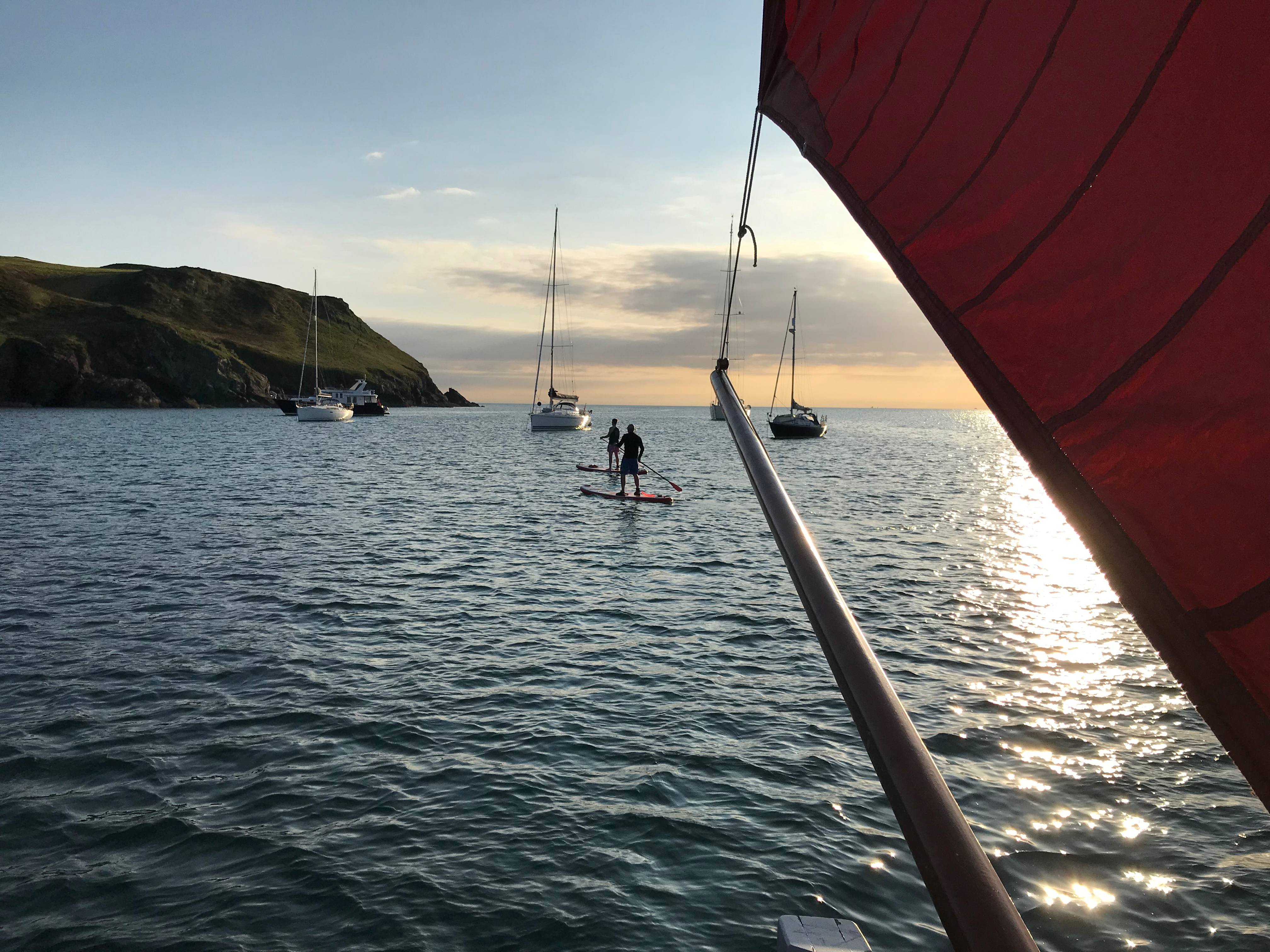
Sailing off Devon and Cornwall, the prevailing wind is westerly off the Atlantic Ocean. But this summer’s high pressure systems gave us several days of an easterly wind which opened up anchorages that would not normally be safe: under the east side of Gribbin Head in St Austell Bay and beautiful Hope Cove tucked under Bolt Tail outside Salcombe.

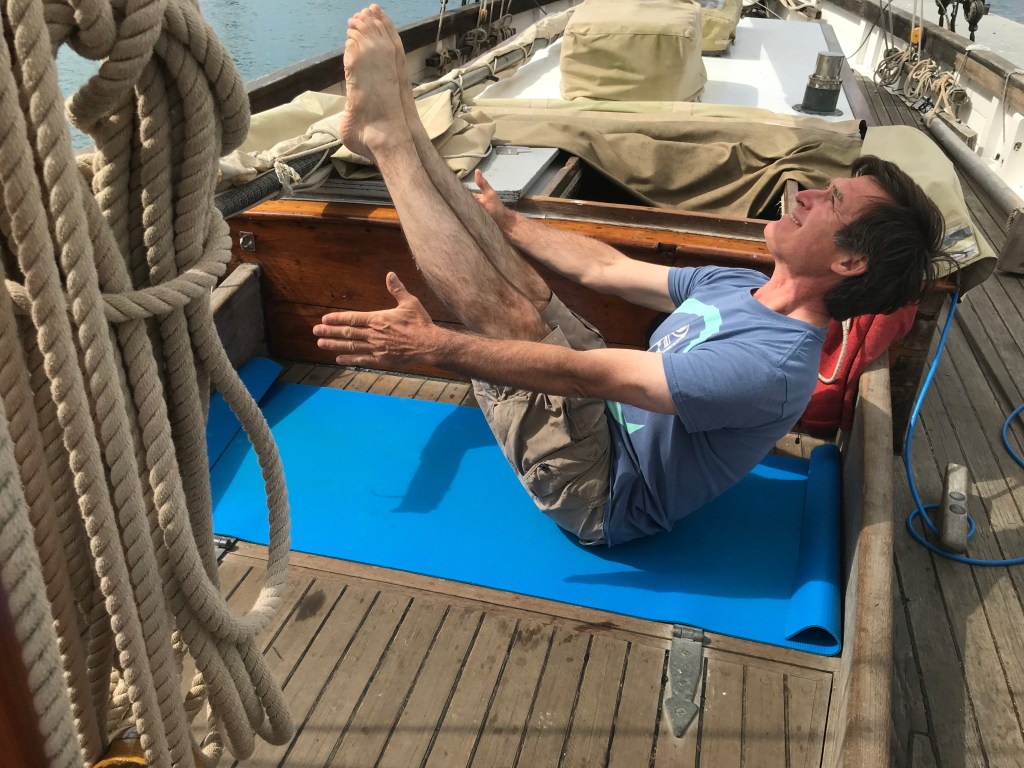
There was one last job before packing up Guiding Star in Plymouth. My yoga teacher wanted to see a photo of me holding “boat pose” on a boat. It was harder than I thought, because even when the boat is tied to a pontoon, it’s not as stable as a church hall floor. Luckily the camera only needed me to stay still for 1/2000th of a second.

Boat pose on a boat

Idyllic Helford

I wanted to go to France for the first time since the pandemic, but after several days of email exchanges to pin down the new post-Brexit arrangements for clearing customs and immigration in Brittany, I gave up. But that brought a chance to sail to one of the most beautiful places on earth, the Helford River.

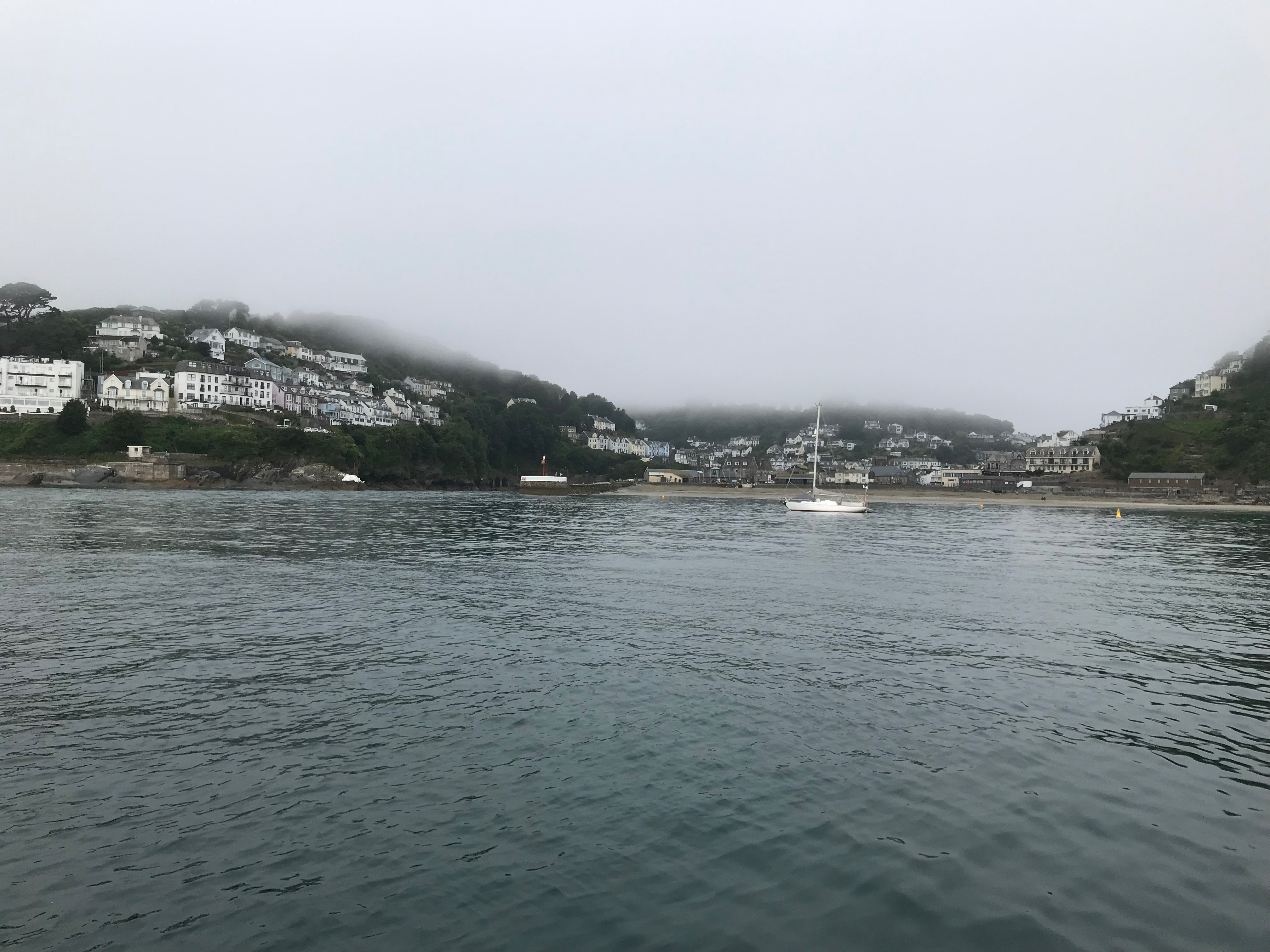
On the passage down, we dodged low cloud and fog. But then the sun came out; and later, an extraordinary orange moon rose in a cloudless night sky.

Moored in Fowey on the way back to Plymouth, we climbed Polruan Hill and watched the tide flood up the river, each boat swinging as the line of darker blue reached her.

By our home marina in Cattewater, the skilled team on the Island Trust’s schooner Johanna Lucretia manoeuvred her against the wharf in Turnchapel to work on her hull at low tide as we were walking to the pub for a celebratory meal.

Two reefs and the storm jib

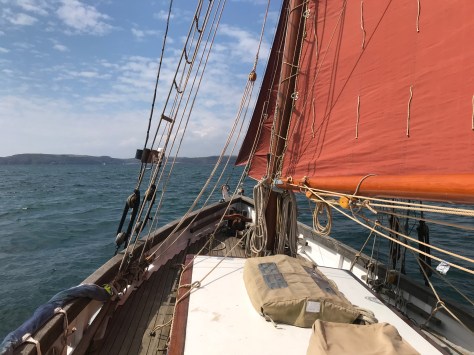
We timed our passage back from Scilly to make Falmouth ahead of a summer gale blowing in from the Atlantic. Strong winds ahead of the gale gave us the chance to try Guiding Star’s new mainsail with two reefs in. The boat went like a train with reefed main, the staysail and the storm jib.

We reached up and down the coast south of Falmouth and then scurried to Fowey before the gale made land. The harbourmaster put us on a pontoon well up the river but the wind was southerly so blowing right through the harbour entrance. The pontoon was heaving up and down as you can see in the video.

The boat went splendidly without the storm jib; the new staysail made by Steve Hall pulled strongly on its own. The main is so powerful, though, that we’re going to need that third reef more often than I expected. I need to buy a roll of Hempex and tie on the points.

The magic of Scilly

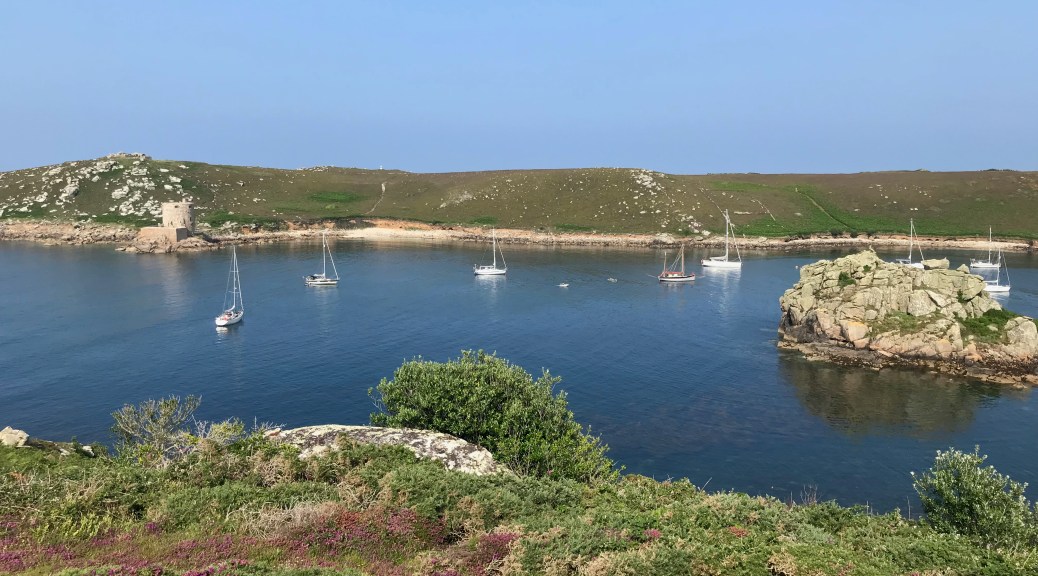
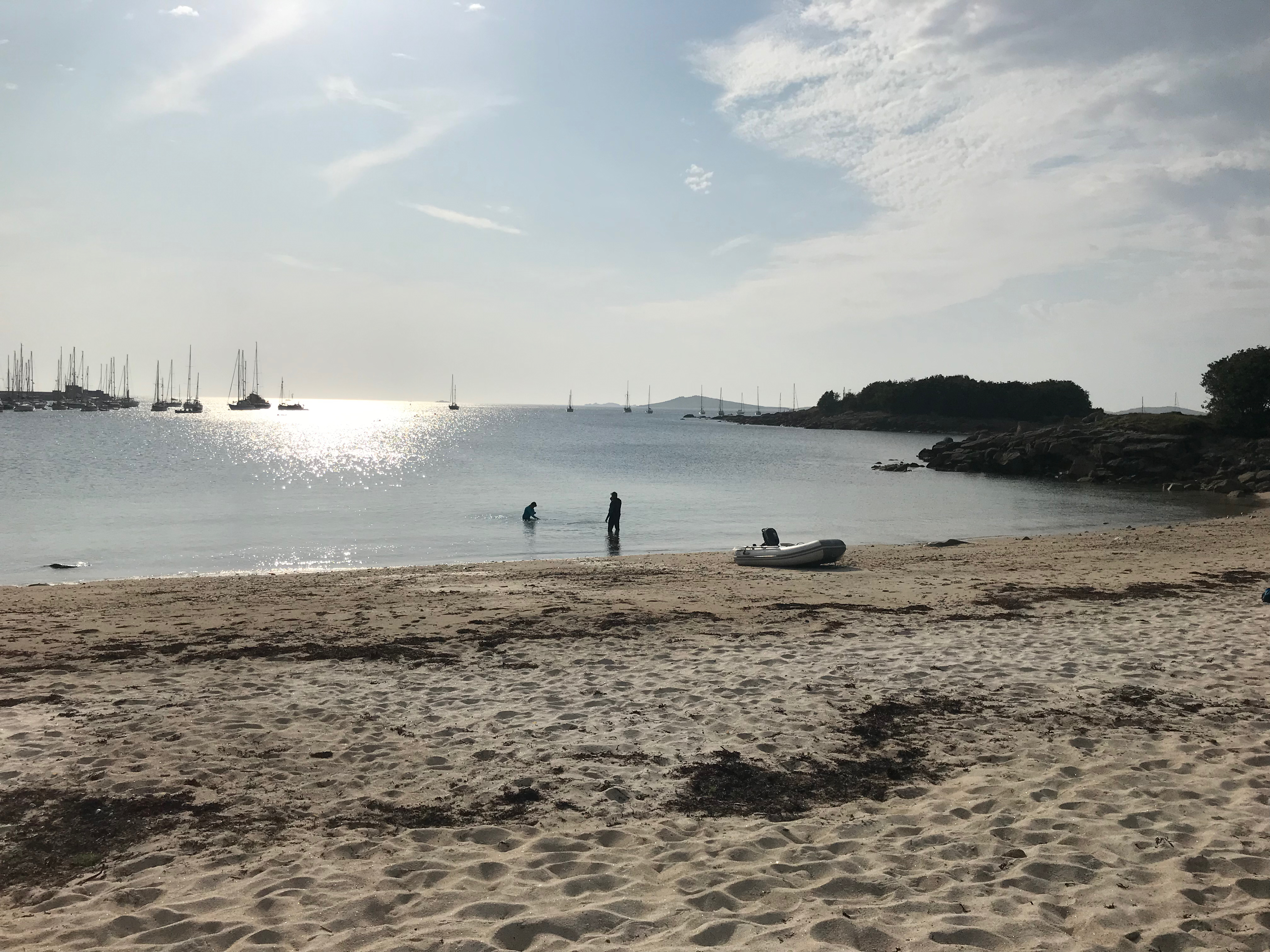
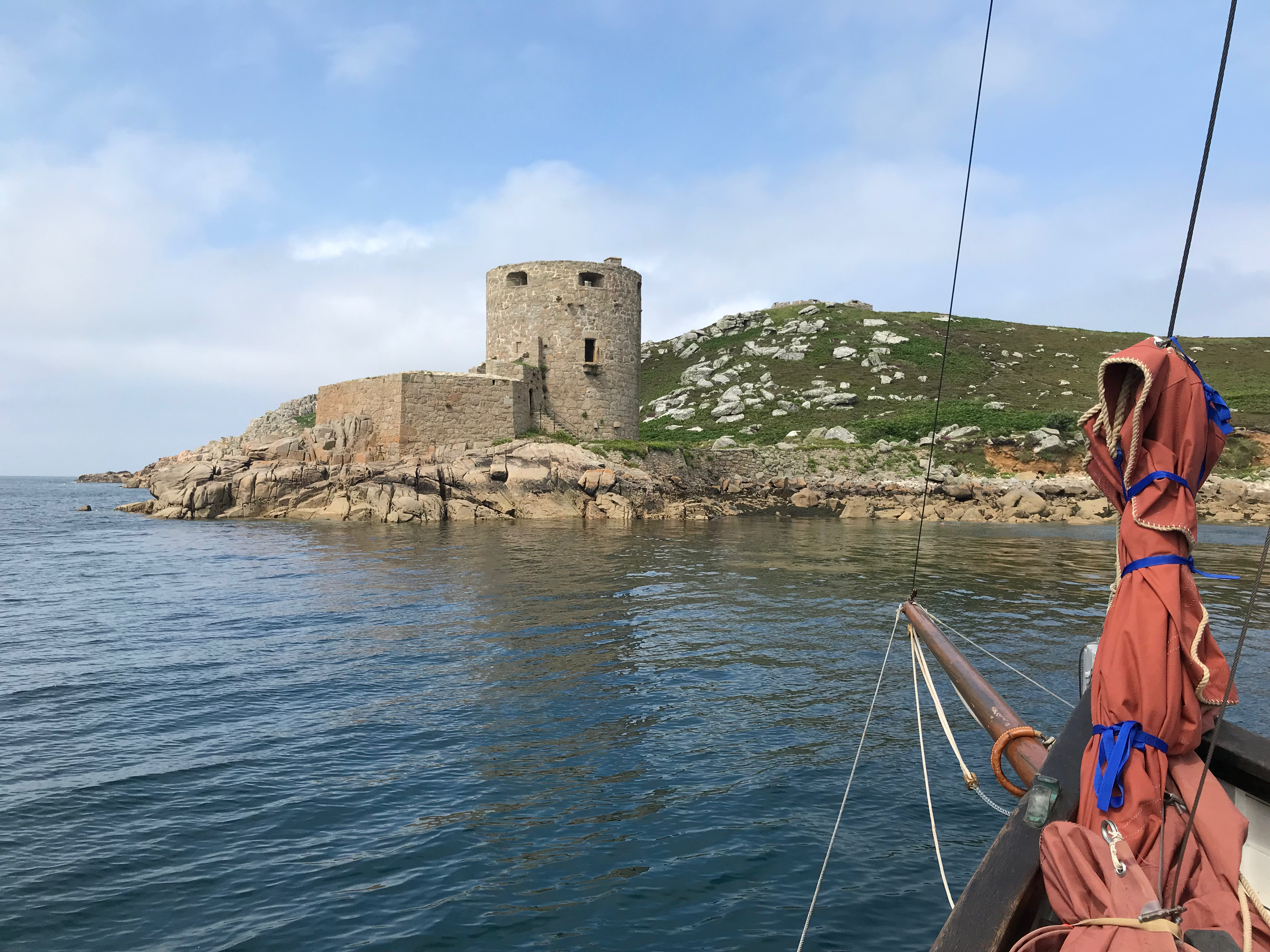
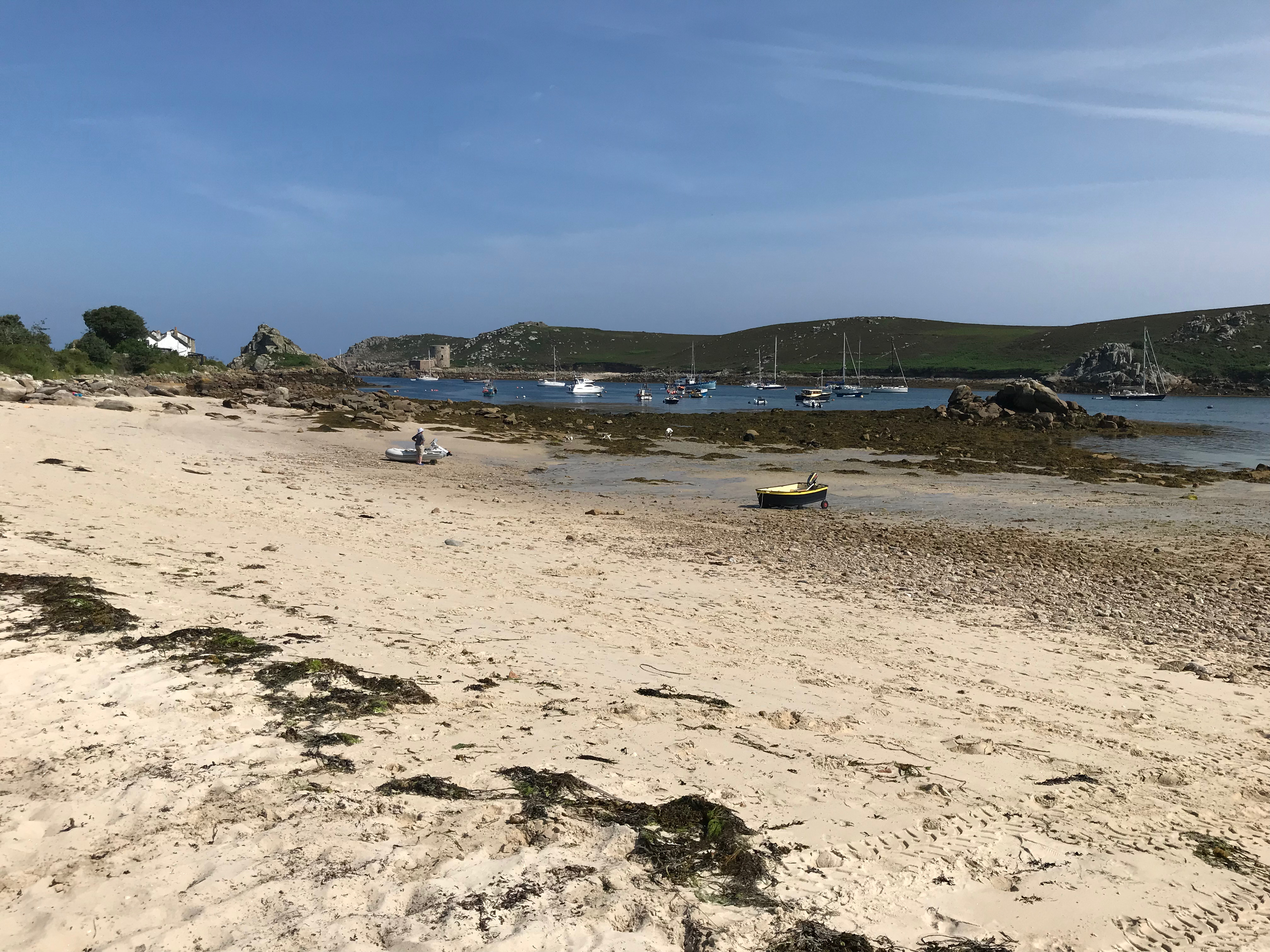
I’ve never been anywhere quite like the Isles of Scilly: smaller, lower, and more exposed to the ocean than I had ever imagined. When I was a child, snobbish newspapers used to mock the Prime Minister, Harold Wilson, for spending all his summers on Scilly, as if he lacked imagination or class to travel further. How wrong they were.

St Mary’s
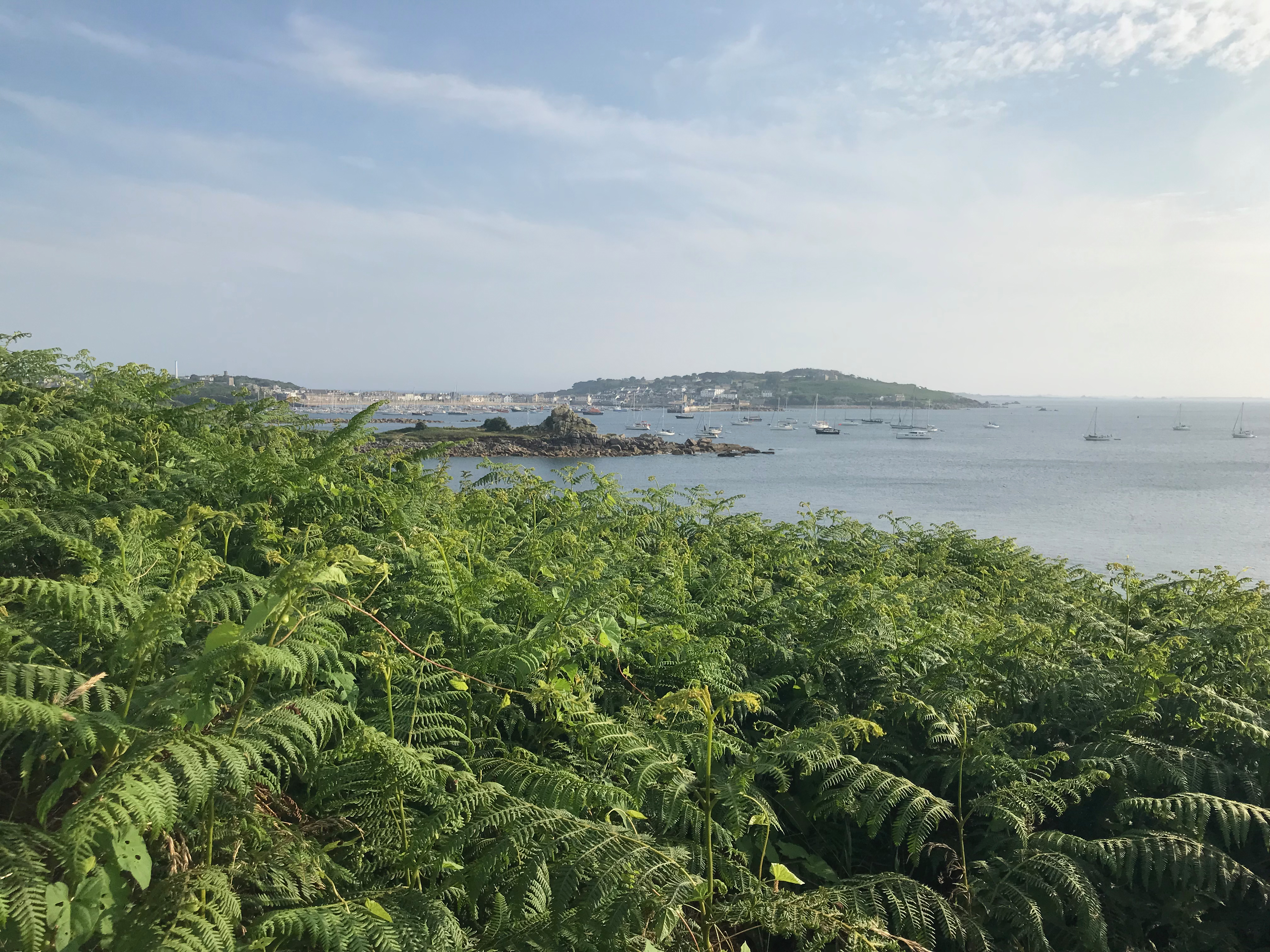
Looking back at the anchorage and Hugh Town
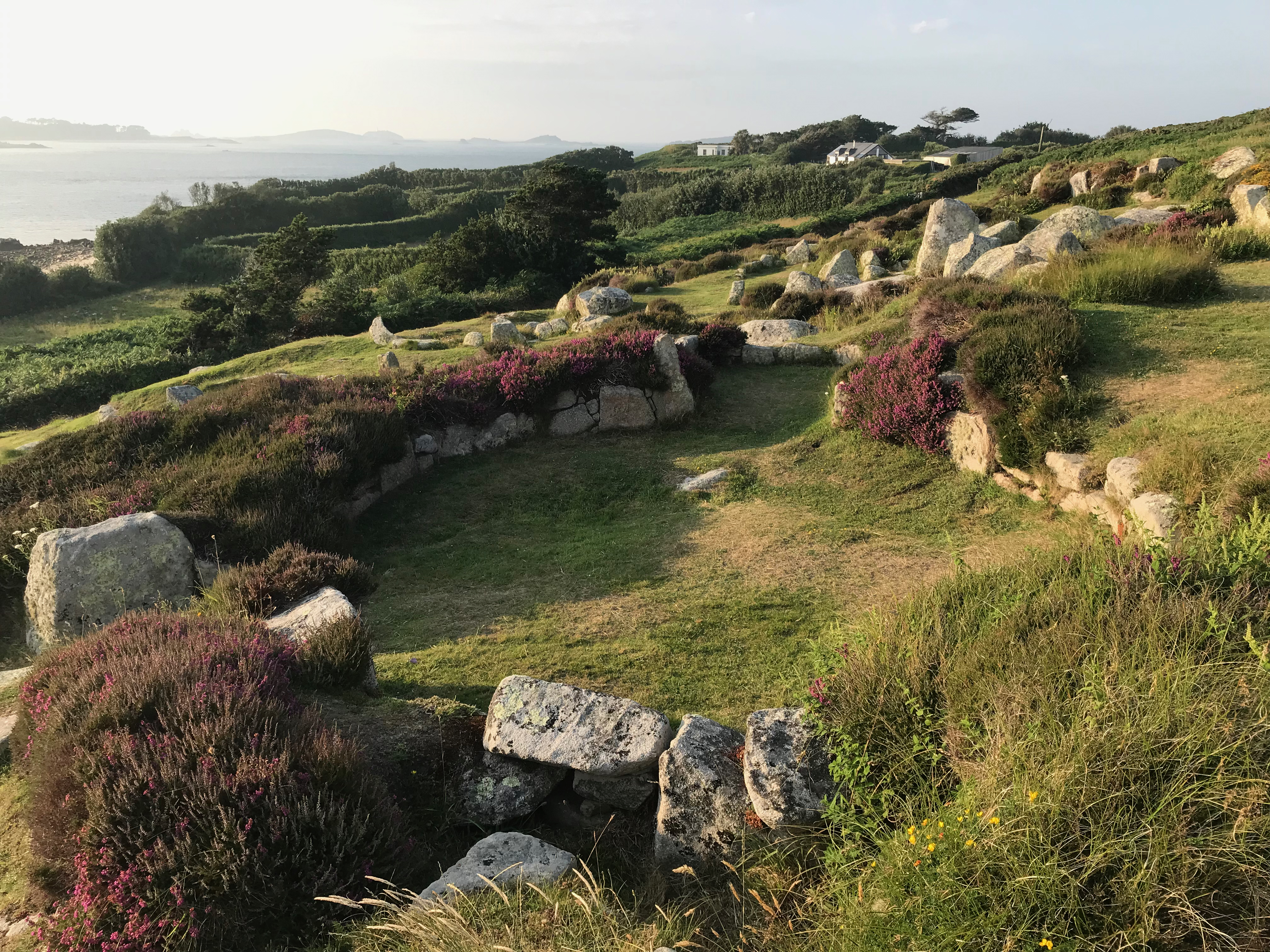
Halangy Ancient Village, where the first stone houses were built in the Iron Age

Sailing to Scilly, we were entranced by a minke whale swimming off the port side of the boat. So entranced that I was slow to get the camera out, but I did record a glimpse.

More sail, more speed

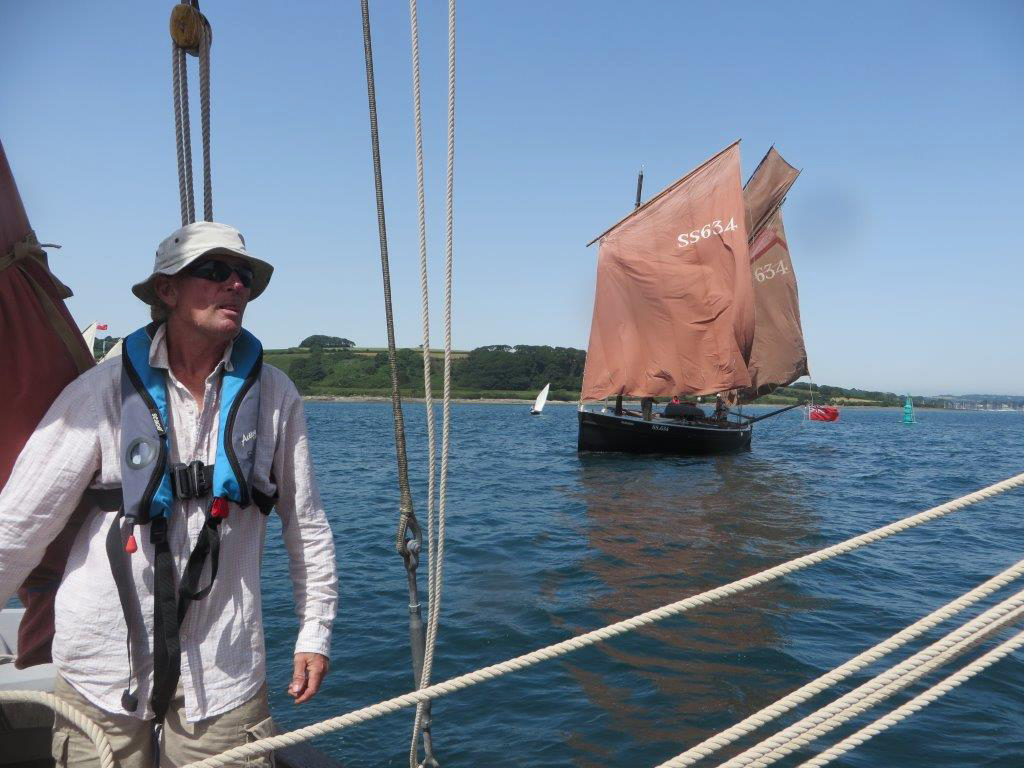
Three years ago at the Falmouth Classics, we drifted round the course in hot sunshine lagging behind luggers with bigger sails (and more skilled crews) and I came away wondering how to make Guiding Star sail faster in light wind.

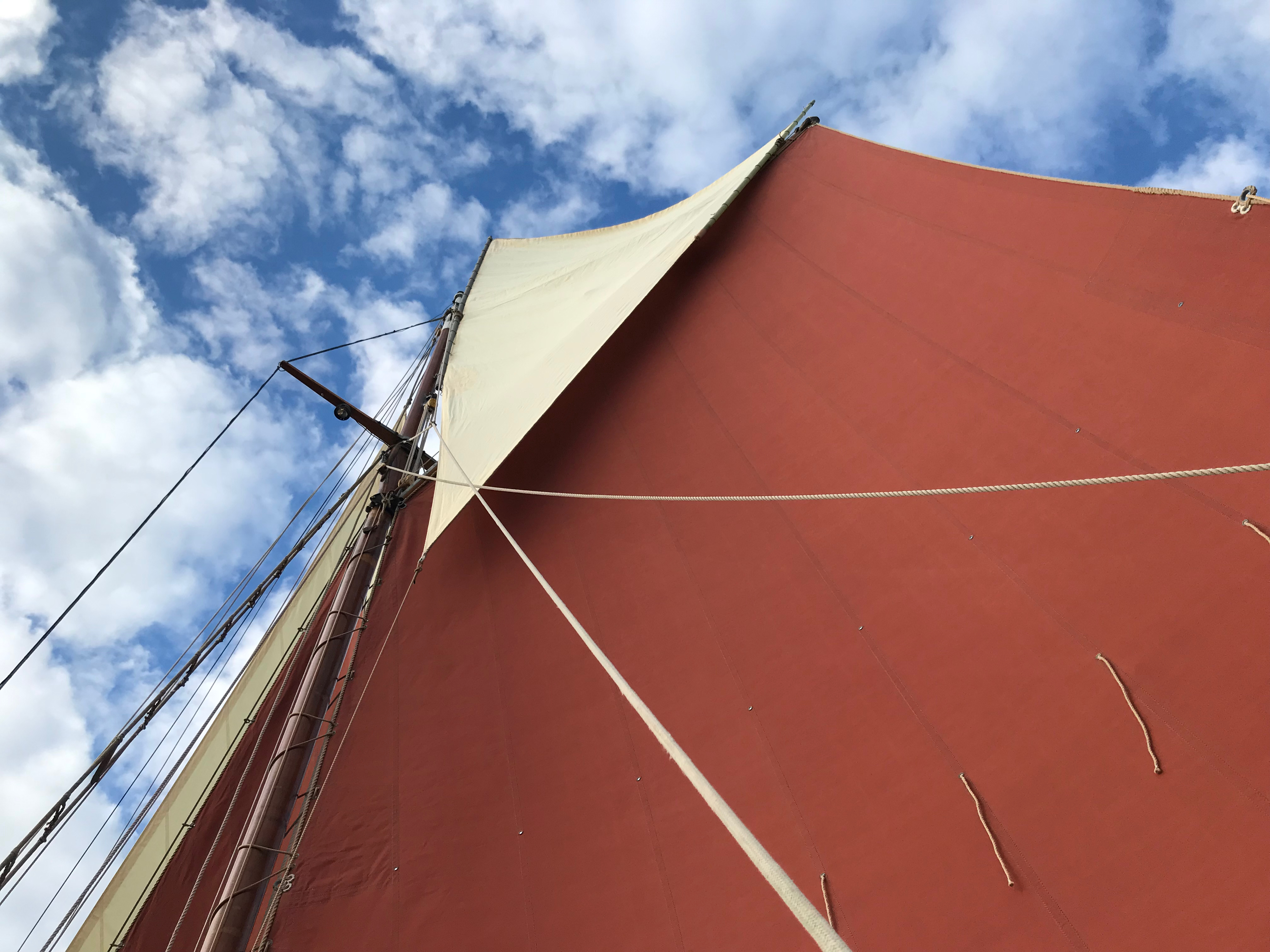
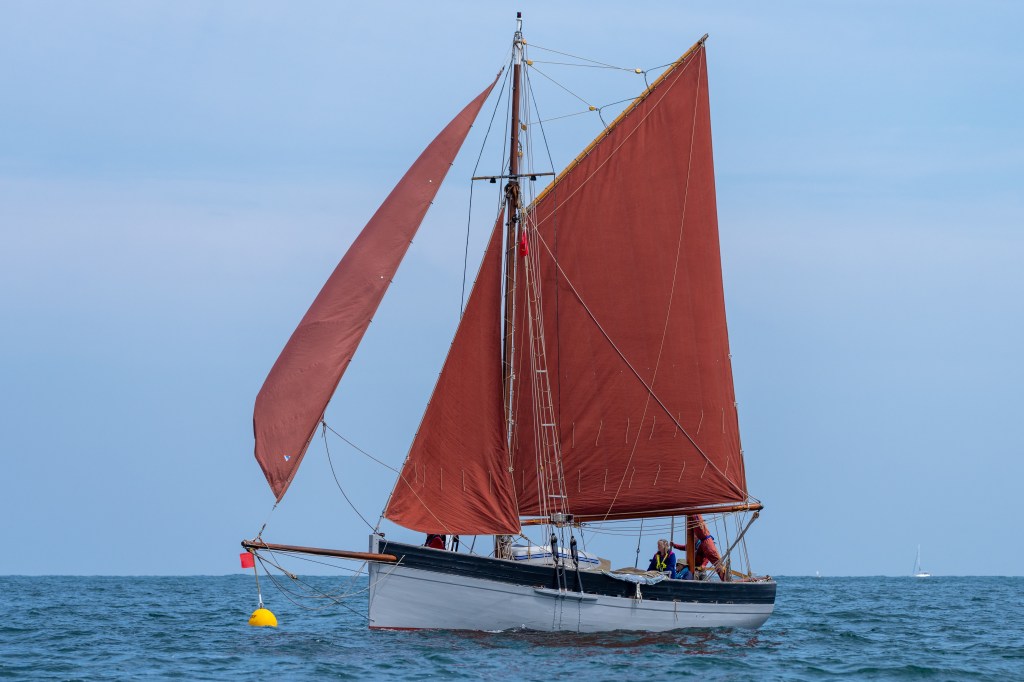
The result was a new sail plan designed by Chris Rees, the shipwright who built Spirit of Mystery and Grayhound, and new sails cut by Steve Hall in Tollesbury. This year we kept moving in all but the lightest and most fickle breeze.

We enjoyed some good close racing with Our Boys, the one other lugger to take part in all three races . Phil and Liz sailed her superbly and even after their outrigger broke and they had to take their mizzen sail down, they beat us over the line. Still, Phil said we had them worried at times.

Guiding Star’s new sail plan working at the Classics Parade of Sail

For a morning, we had wondered if we’d ever reach Falmouth. We sat in Fowey in fog so thick we couldn’t see the rocks at the entrance of the harbour. When it lifted briefly, we made a dash south.

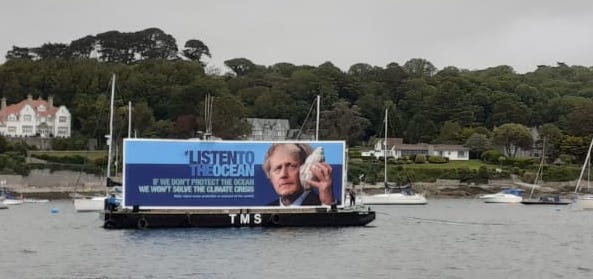
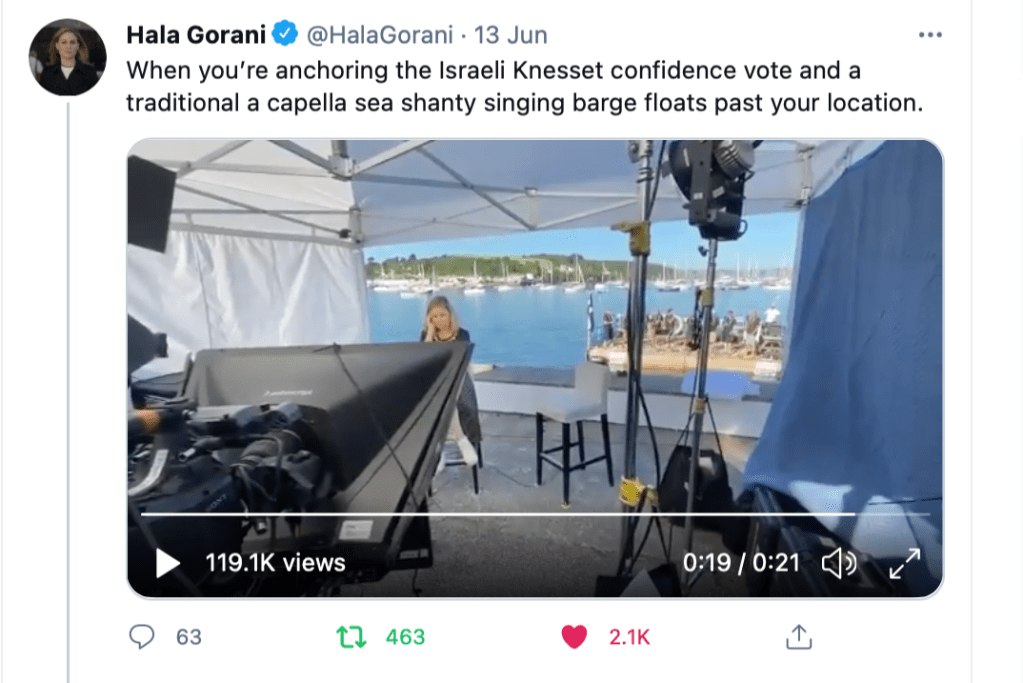
The Falmouth Classics coincided with the G7 summit at Carbis Bay on the north Cornwall coast, and reporters covering the meeting were based in a two-storey temporary building in the car park outside the National Maritime Museum. We motored to our mooring past a barge carrying what I thought at first was a shameless attempt by Boris Johnson to pre-empt protests by climate activists.

It did look too good to be true, though, and when I saw workers in hi-vis vests taking the billboard to pieces the next day, I realised it was actually a shameless attempt by climate activists to get their message into the background of broadcasters’ live shots. In the event, the people who made it on camera most dramatically did so entirely by accident.

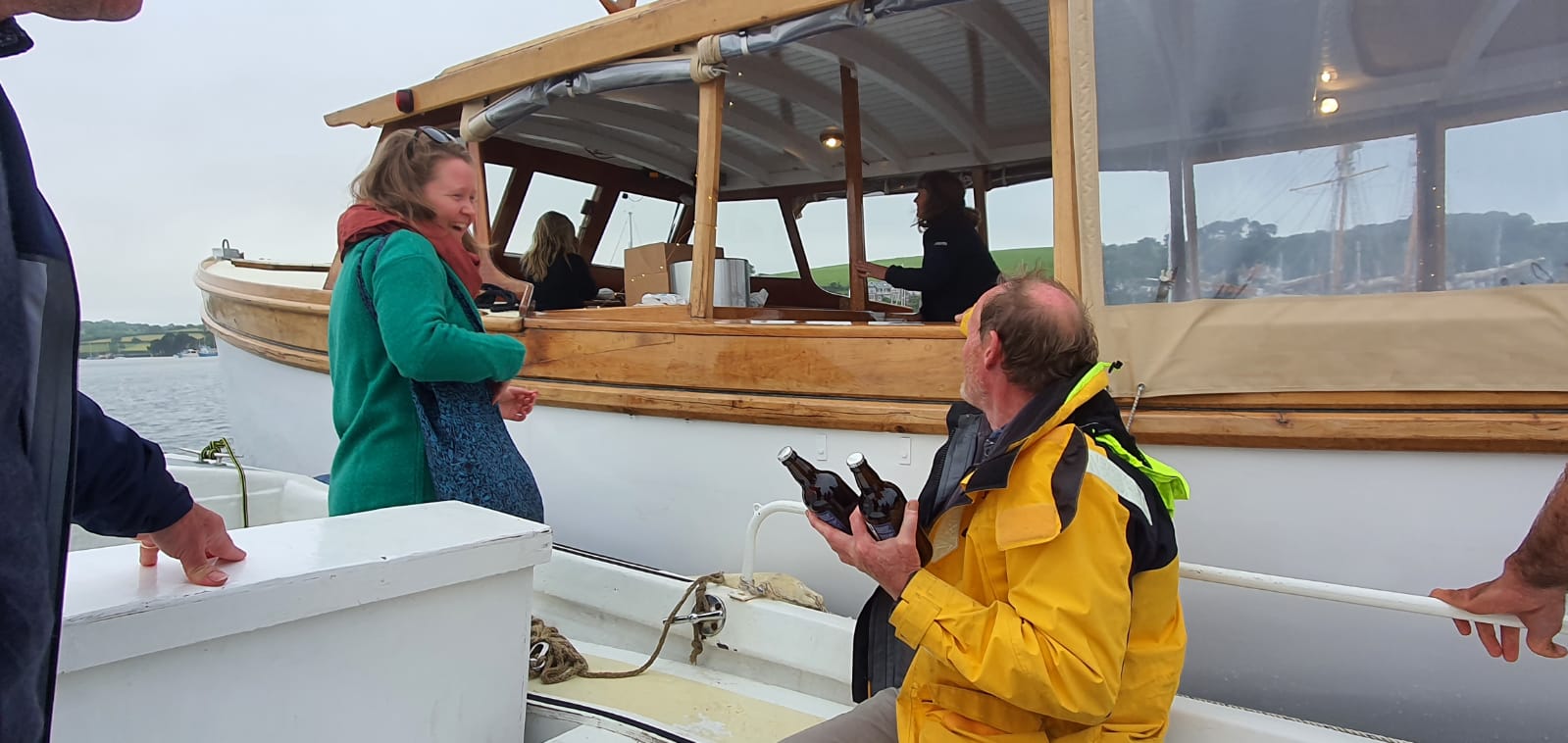
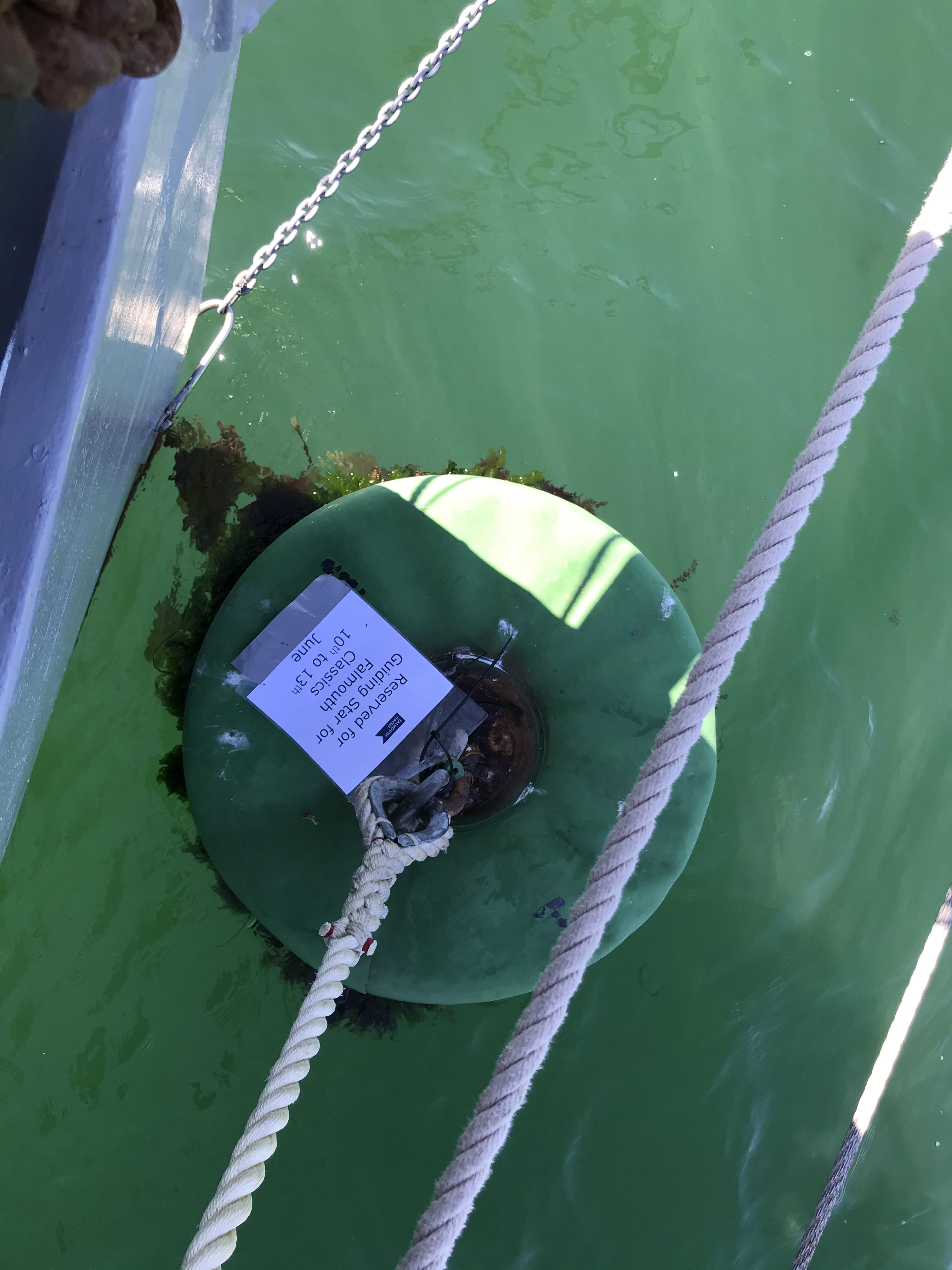
The Falmouth Classics had to be cancelled last year because of the pandemic and the organisers went an extra mile to welcome us all. When we picked up our mooring buoy, I was touched to find it had a label with the name of the boat. In the water taxi heading for the first evening’s pontoon party, we were hailed two women who I thought wanted to go ashore. In fact, they wanted to hand us bottles of beer and warm pasties.

This was Charlotte and Jess, who have turned Tethra, a 36-foot fishing boat built in Looe like Guiding Star, into a beautiful floating restaurant. The only sad part was that Charlotte was too busy to enter her own engineless lugger Gladys in the Classics racing. On previous form, she’d have beaten us all.
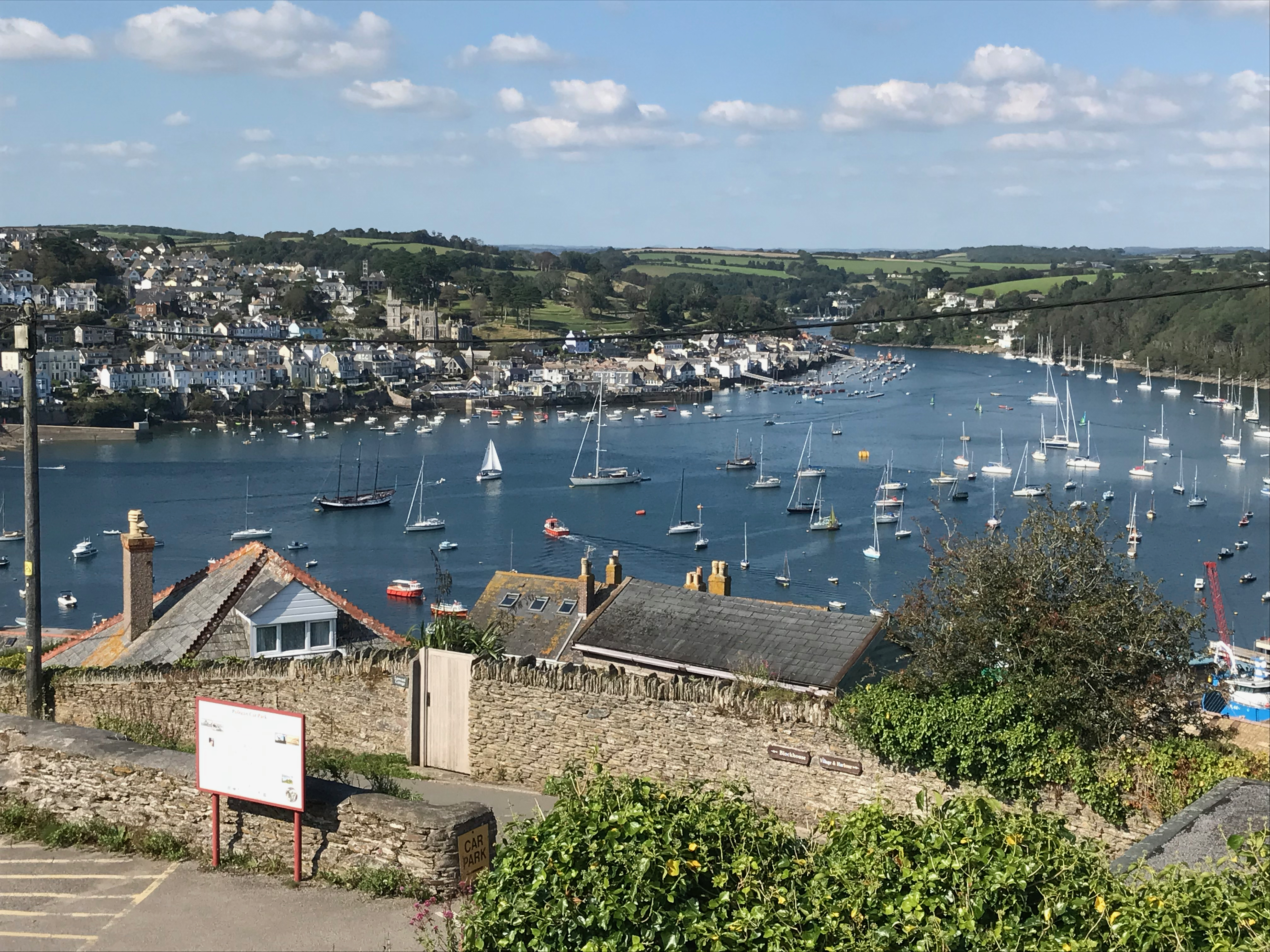
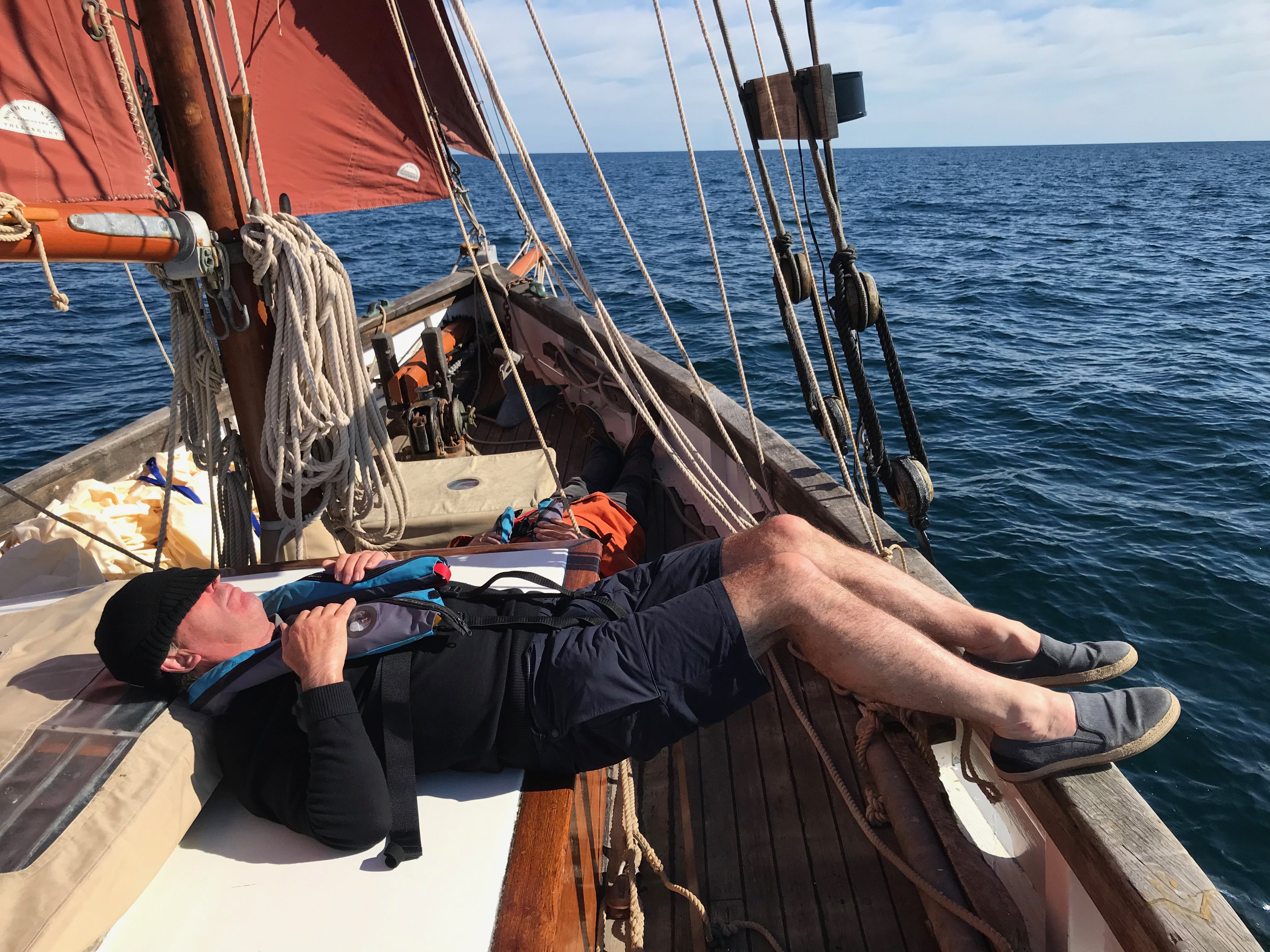
The passage back to Fowey after the regatta gave us one of Guiding Star’s best days: hot sun, a cloudless sky and the satisfaction of beating to windward in only a breath of breeze. By the end of the day, John was the same colour as his shorts and we tumbled into Sam’s bistro for a giant fish stew.

Many thanks to Ezster and Cathy for photos, Ezster on the boat and Cathy on shore watching the Parade.

Among the cruise ships

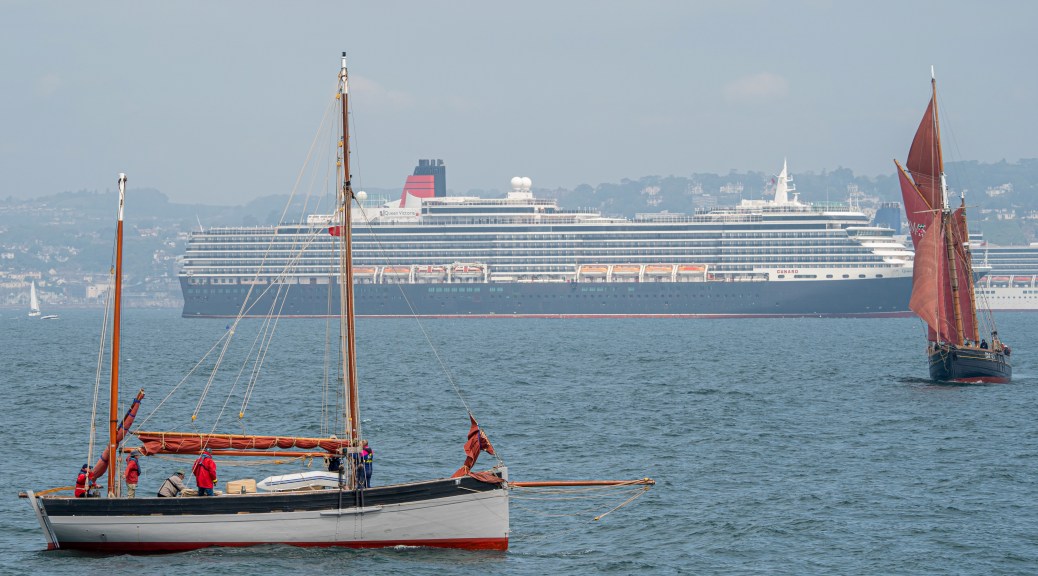
We had to weave among cruise ships laid up because of Covid when we sailed round Torbay at the 2021 Brixham Heritage Regatta. They’re very big when you’re up close, and we did put the engine on to clear the bow of one Cunarder.

It was sheer pleasure, though, to be on the water with friends after the pandemic-hit season the year before, when all the festivals were cancelled.

One of the delights of the Heritage Regatta is the quality of the photos taken of us by Alex and Stuart. Here are three of this year’s best of Guiding Star.

Rounding the downwind mark
Discussing what to do next
Romping home

Back on the water

Guiding Star has been relaunched after much painting and varnishing and a long list of small maintenance jobs. We’re planning some day sails in May, the Brixham Heritage Regatta is going ahead at the end of the month and the Falmouth Classics is on for mid-June – on the same weekend as the G7 summit a few miles away at Carbis Bay, so Falmouth will be full of journalists.

Plans after the Falmouth Classics are uncertain. I would like to go to France, which according to the government’s roadmap out of lockdown will open to visitors who’ve had Covid-19 vaccinations from 9th June. We’re registered for the Paimpol Festival and to judge from their Facebook page, the organisers are determined to go ahead.

However, if France is closed, we could consider a trip to Scotland or just staying on the south coast of England with forays to Scilly and/or the Channel Islands.

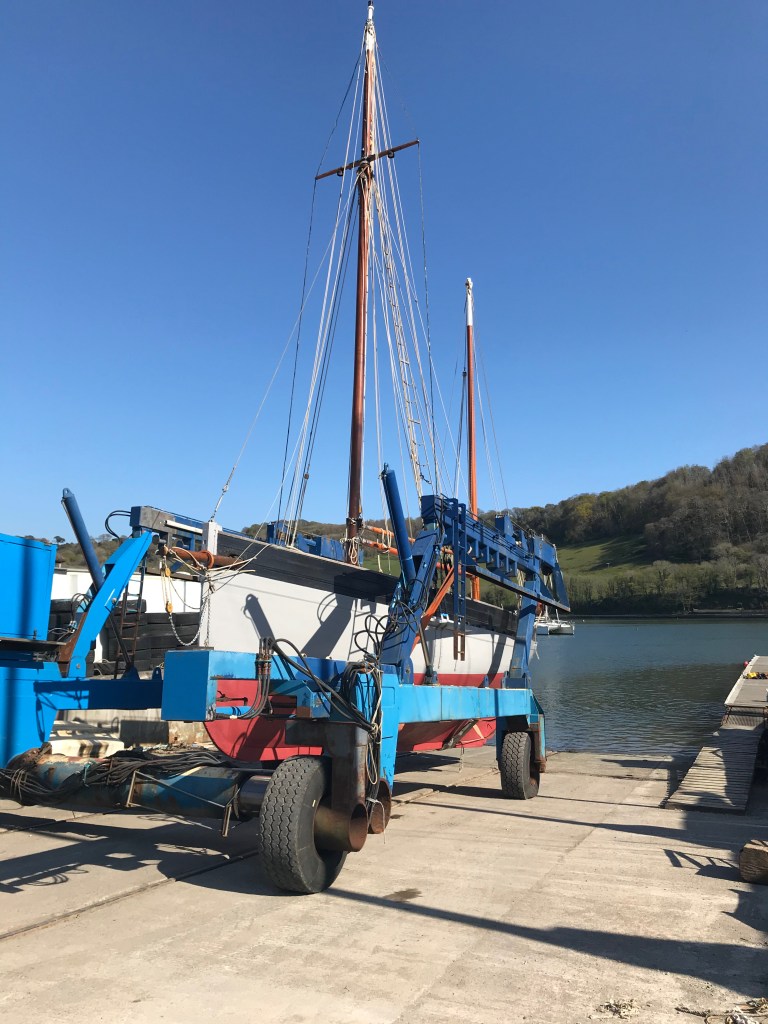
There couldn’t be a more beautiful place in the world to work on a wooden boat than Millbrook, up a muddy creek on the west side of Plymouth Sound. You can see the city across the water but the Rame peninsula, isolated on two sides by the sea and one side by the river Lynher, is a quiet world of its own.

Many thanks to Graham Butler for a host of small shipwright jobs, Alex Smerdon for painting and varnishing, and Nick and Adam from Fowey Harbour Marine for a new prop shaft coupling.
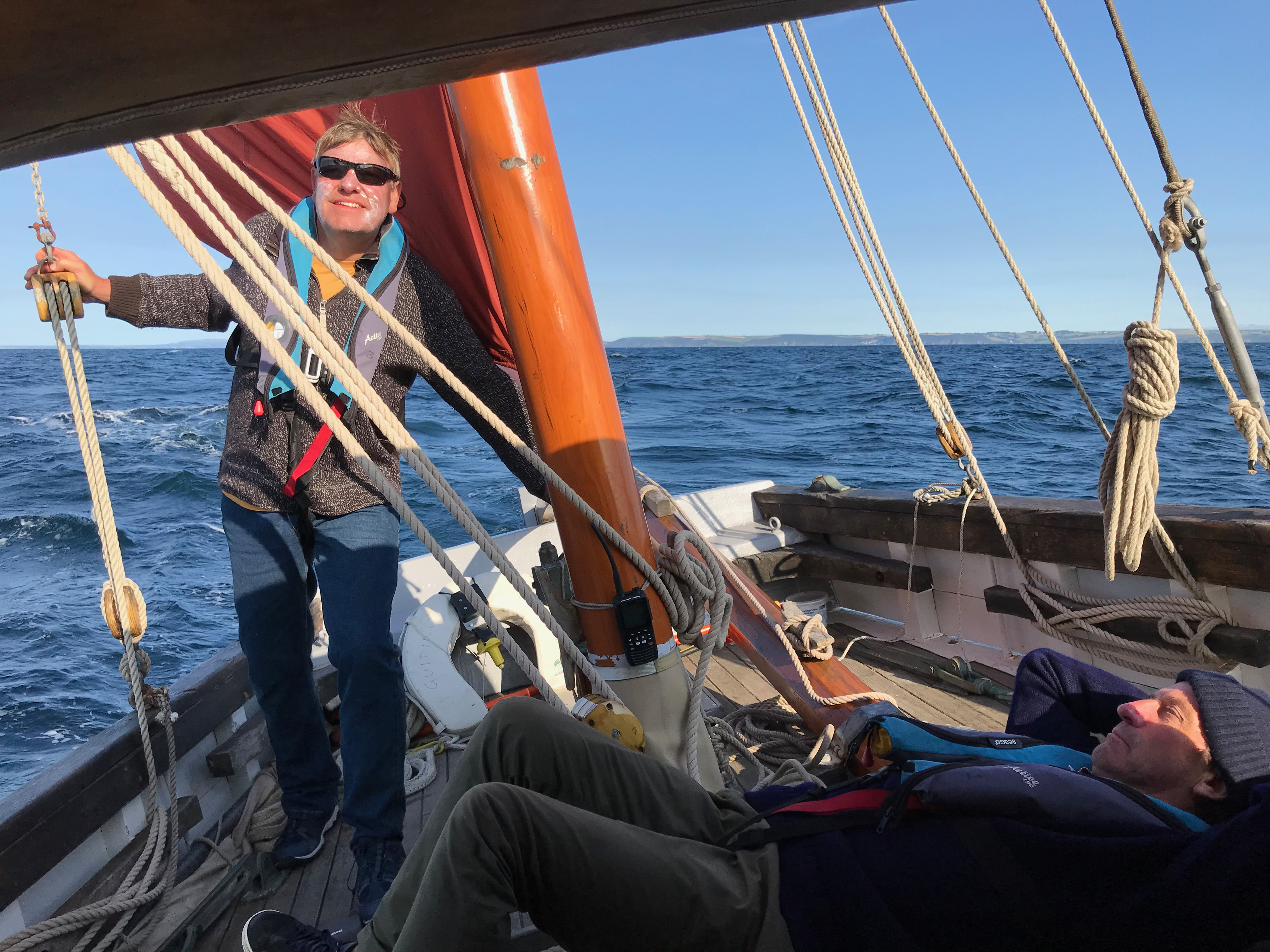
The first half-day sail of the season was a delight after the months of lockdown. We sailed a grand total of 16 miles out of the Sound to the Mewstone and back in bright sunshine and light breeze. Let’s hope for much more of that in the weeks ahead.

Until We Sail Again

Squinting at a smartphone is no substitute for sailing. But the coronavirus lockdown has inspired some imaginative online events which have been so enjoyable that I hope they continue even after we’re back on the water.
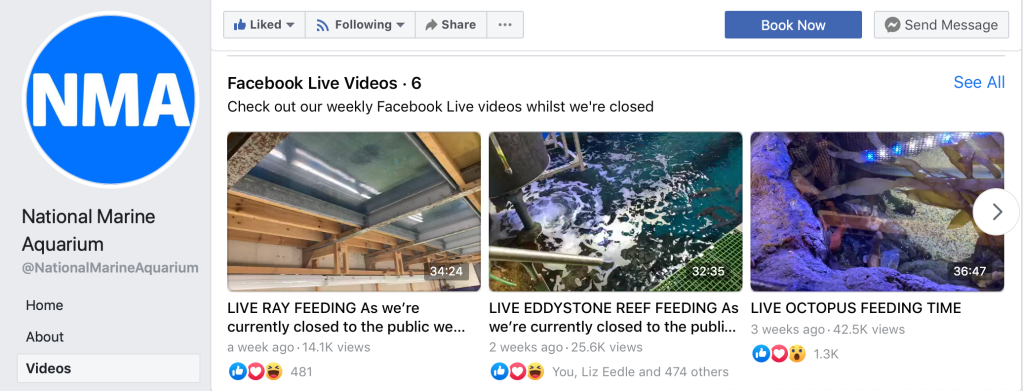
My favourite is the National Marine Aquarium in Plymouth’s live fish feeding on Wednesdays at 2pm. Who knew there was so much to this? They train big groupers and sharks to swim up to a target held in the water to make sure each fish eats its fair share. They hide the octopuses’ food in a wooden toy because the animals are so intelligent that they need an intellectual challenge.

Imray, publishers of charts and pilot books, have started live chats with their authors on Fridays, also at 2pm. I was fascinated to learn from an enthusiastic video by Tom Cunliffe, who’s one of their authors, that the company is still a family business and prints its charts on a giant digital machine that looks a bit like a grand piano. Since the Admiralty has announced that it wants to stop printing its series of charts for leisure sailors, it’s exciting to see Imray’s Managing Director, Lucy Wilson, and her small team so passionate about keeping us all afloat.

Lucy Wilson shows Tom Cunliffe round her family firm

Imray’s first live chat featured Rod and Lu Heikell, who have written six pilot books covering the Mediterranean from the coast of France to Turkey. They sailed round the world a few years ago and wrote a recipe book, The Trade Wind Foodie, which I bought as a lockdown bedtime read and found to be terrific. The recipes are all what you’d realistically cook on a boat, mixing and matching ingredients and not trying anything too elaborate. There are helpful suggestions about how to make yoghurt on board and keep vegetables fresh on long passages (wrap in newspaper), and a useful three-page Provisions List for Ocean Passages at the end.

My other treasured boat cook book is one I found in a secondhand shop in Brittany last year, Le Plaisir de la Cuisine en Mer (The Pleasure of Cooking at Sea). This also has a valuable list of basic provisions which starts: ‘Flask of port, half bottle of Cognac, flask of Pastis, bottle of dry white wine, bottle of Noilly Prat. This small cellar is to be carefully guarded, in fact hidden.’

The nearest I’ve been able to get to Guiding Star since the lockdown began is the marina webcam, which unfortunately for me shows the pontoons furthest from the boat. But I was thrilled when the marina tweeted some photos and I could see her.

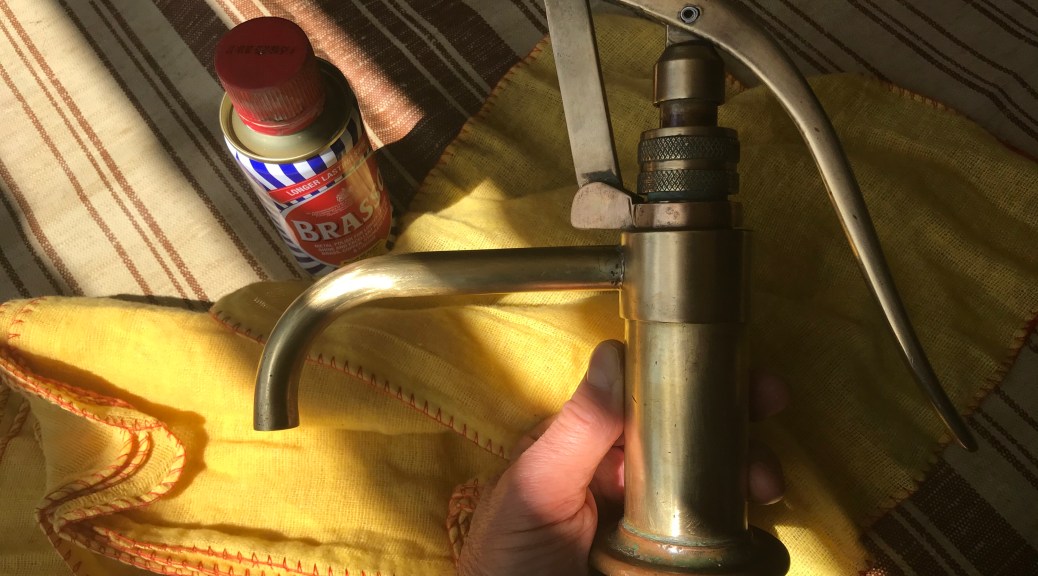
The only pieces of the boat I’ve been able to touch for seven weeks are the galley pump and the handheld VHF, both of which I brought home to send for repair. The workshop at Classic Marine did a wonderful job of re-rivetting the pump handle and sent a service kit to replace the 30-year-old leather washer in the barrel with a synthetic rubber one. Standard Horizon repaired the case of the handheld where the charging contact had sunk into the body of the device. They warned me to rinse the device in fresh water before charging: if there’s salt water on the contacts, that creates a slight resistance which produces heat and softens the plastic around the contact so that it sinks into the body. I’d never have guessed.

As soon as we’re allowed to move, I’ll start to get Guiding Star ready for sailing. Coronavirus hasn’t stopped Steve Hall starting to make a new mainsail for the boat, loose-footed this time with the aim of providing more drive without upsetting the balance. The church hall which Steve usually hires to lay out sails hasn’t been taking bookings but he managed to use the local Scout hut instead.

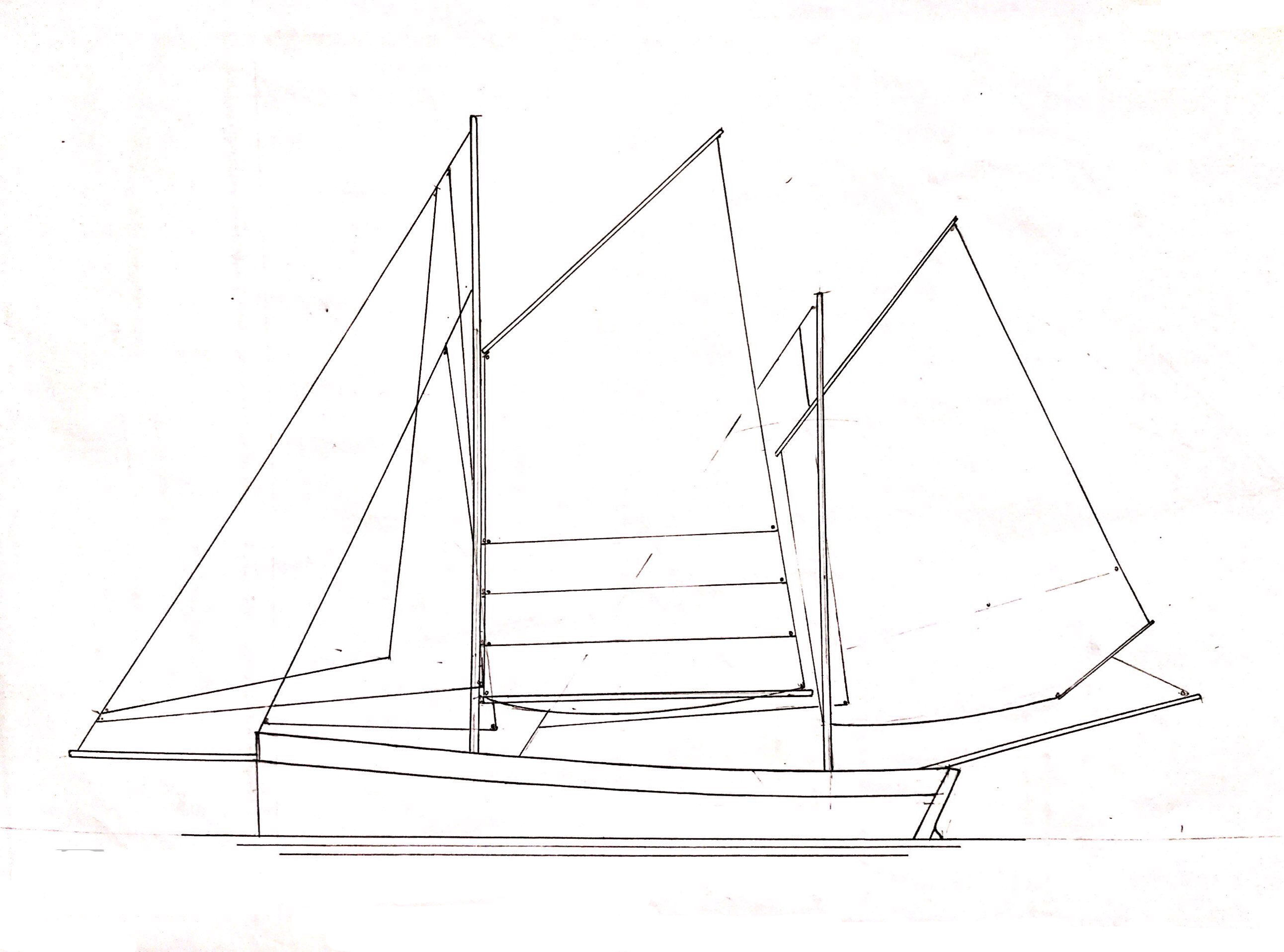
As well has being loose-footed, so it can belly out more than a sail lashed to the boom, the new mainsail will be slightly larger than the old one. Chris Rees, who built the luggers Spirit of Mystery and Greyhound, has designed a new sail plan to increase the overall sail area and give Guiding Star more power in light winds. He’s extended the gaff and drawn a bigger mizzen and a new light-wind jib.

Guiding Star’s new sail plan by shipwright Chris Rees

All the traditional boat festivals we had planned to join this season have now been cancelled, except for the big Brest Festival which is still saying it’s only postponed. However, if we’re allowed to go anywhere at all while the weather’s good, I’m still planning to sail to Brittany and down the Atlantic Coast of France to La Rochelle and back. I’ll keep the Sailing Dates page updated and send a message to the crew email list as soon as anything is fixed.

In the meantime, please stay safe and keep watching the fish feeding.